England vs Norway: The Rating Dilemma Nobody Wants to Address
Player ratings reduce nuance to decimals, yet England vs Norway demands the autopsy only numbers can provide. Here's the real breakdown.
The Rating Trap
Player ratings are the football fan's guilty pleasure. We mock them, we debate them, we refresh the page thirty minutes after full-time to see if the aggregate mob agrees with our individual verdict. The exercise is inherently reductive. Yet when England face Norway, the rating system exposes something far more interesting than any single number: the fundamental tension between reputation and actual contribution.
England's squad depth is such that a 7.0 performance from a fringe player gets flagged as underwhelming, while the same rating for a Norwegian counterpart represents a career highlight. The mathematics of rating systems collapse under the weight of expectation. This is the structural flaw nobody talks about when we ask fans to score players out of ten.
The Context That Shapes the Numbers
Norway walked into this fixture with a specific and well-documented problem. They have one of the most devastating strikers in world football and a supporting cast that would struggle to start for mid-table Premier League sides. England, by contrast, has depth so absurd that their third-choice right-back would walk into most international starting XIs.
The rating exercise, then, becomes an exercise in curve manipulation.
- A Norwegian defender who makes 6 clearances and wins 68% of aerial duels gets a generous 7.5
- An English defender with identical stats but higher name recognition might scrape a 6.0
"The rating system punishes reputation. Nobody expects the Norwegian centre-back to be Virgil van Dijk, so he gets credit for merely competent work."
The Haaland Factor
Erling Haaland's presence distorts everything. He is the gravitational center of Norwegian football, the player who transforms a modest international side into something opponents must actively game-plan for. His rating in any match is a referendum on the entire Norwegian tactical system.
Here is the uncomfortable truth about rating Haaland: his success is so deeply intertwined with service that judging him in isolation is analytically dishonest. When Norway's midfield cannot progress the ball past the halfway line, no striker on earth can compensate.
Haaland's historical numbers for Norway tell a grim story.
- In 2024, he averaged 0.68 goals per 90 for Norway
- His shot volume dropped to 1.9 per game, down from 2.7 at Manchester City
- His xG per 90 sat at 0.35, reflecting a service deficit that borders on dereliction
The Bottom Line: Rating Haaland without accounting for Norway's structural limitations is like rating a Formula 1 car on a dirt road. The conditions are the story, not the driver.
Structural Imbalance
England's approach to this match tells us everything about modern international football. The talent pool is so concentrated that tactical decisions almost feel like optional extras. Norway's approach, meanwhile, is a study in maximising limited resources.
The English midfield operates with the kind of positional fluidity that makes individual ratings fundamentally absurd. When Jude Bellingham drops deep to receive, when Phil Foden drifts infield, when the full-backs invert, who gets credit for the chance created? The assist? The pre-assist? The third-man run that dragged a defender out of position?
A number out of ten was never designed to capture this.
What the Modern Fan Watches For
Most ratings are decided within three or four isolated moments. A goal, a defensive lapse, a Booking, a moment of individual brilliance. They are event-driven verdicts on a game that is fundamentally about space and structure.
- Chance creation often goes unrated because it is structural, not individual
- Defensive positioning is invisible until it fails
- Ball retention under pressure rarely registers in the emotional shorthand of the rating system
The fan who rates players thirty minutes after full-time is not performing analysis. They are calibrating their emotional response to ninety minutes of football.
Norway's Narrow Ceiling
Stale Solbakken has built something functional with Norway. The word might be damning, but the reality is clear. Norway does not have the personnel to dominate possession against elite opposition. Their xG against top-tier international opposition in recent fixtures sat at 0.72 per game, a number that tells you everything about their attacking ambitions.
When fans rate Norwegian players, they are rating a team that has accepted its limitations. A 6.5 for a Norwegian full-back who sat deep and defended his channel competently is not a poor rating. It is an honest reflection of a tactical system that asks its wide players to be defenders first and anything else second.
England's full-backs get different treatment entirely. A 6.5 for Kyle Walker or Trent Alexander-Arnold is a minor scandal. The expectation is 8.0 or nothing.
Verdict: Rating systems measure expectation as much as execution. Norway gets graded on a curve and England gets graded on a pedestal.
The Individual Decisions That Define the Narrative
Consider the specific challenge of rating England's attacking players against Norway. The defensive organization of Solbakken's side means chances come in patterns.
The first half is typically cagey. Norway drops into a low block, England rotates the ball across the back four, and the stadium hums with the low anxiety of a team whose supporters have been promisedfluid attacking football. The xG accumulates slowly, trickling rather than gushing.
Then the breakthrough comes, usually from individual quality rather than systemic collapse. This is the moment that spikes the ratings. A moment of individual quality from a player earning £300,000 per week at club level suddenly gets rewarded for doing what he is paid to do.
"We judge the stars harsher because they make the impossible look routine. That is the inherent flaw in every fan rating system ever devised."
When the Wait for Ratings Ends
Thirty minutes after full-time feels like an eternity in the modern attention economy. It suggests the rating platform is performing some sort of rigorous aggregation, weighting votes, filtering outliers. In reality, it is waiting for the volume to reach a sample size that looks respectable.
The median rating is what matters here, not the average. A player who commits a glaring error will receive a flood of 1s and 2s from emotionally compromised fans, dragging the average down to 4.3 when their actual performance was a perfectly reasonable 6.0.
We wait the extra thirty minutes for the anger to subside and the numbers to settle.
The Bigger Picture
England's player ratings against Norway tell us more about the state of English football discourse than they do about individual performance. The obsession with assigning a decimal grade to a human being's performance over ninety minutes is uniquely modern, uniquely reductive, and uniquely compelling.
We want clean answers to messy questions. Was Bukayo Saka better than Phil Foden? Did Declan Rice justify his selection? Did Haaland go missing or was he systematically removed by the opposition?
The answer is always both and neither.
International football strips away the club context that gives player ratings their only real analytical validity. At club level, we see players 38 times per season in a stable tactical system. At international level, we see them 6 to 8 times in a system that changes with every qualifying cycle.
Rating players in that context is not analysis. It is sport as a consumer product, packaged and delivered in tidy numerical bundles.
The Bottom Line: England vs Norway will produce ratings that satisfy nobody and convince everybody of their own correctness. The match will be remembered not by a number, but by the moments that defied numerical capture. And that, perhaps, is the point the rating system was always trying to make.
Editorial Integrity
This is an original SportPulse article written by our editorial team. All content is independently researched, written, and reviewed by our writers and editors before publication. We do not publish copied, aggregated, or syndicated content.
SportPulse is committed to original sports journalism. Read our editorial policy or contact us with any questions.
More Like This
All football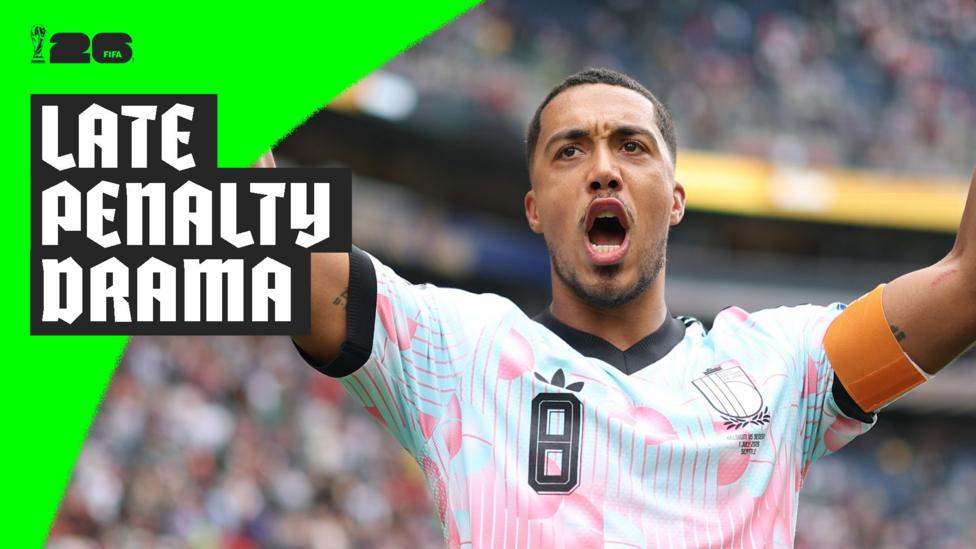
Ice in His Veins: Tielemans Penalty Sends Belgium Past Senegal in Extra-Time Epic
Youri Tielemans kept his nerve from the spot to drag Belgium into the last 16 after a pulsating 3-2 win over Senegal.

Keating Rejects Man City Deal: A Goalkeeper Market Reshuffle
Khiara Keating's Man City rejection signals a shifting WSL landscape where elite ball-playing goalkeepers demand tactical centrality over squad security.

Tuchel Rolls the Dice: England's Radical Overhaul for France Bronze Match
Thomas Tuchel fields a virtually unrecognizable England side against France, leaving stars on the bench and raising the stakes for his tenure.