England Must Contain Panama's Contrasting Strike Duo
England's World Cup hopes hinge on neutralizing Panama's physical and technical threats in a high-stakes Group L decider.
The Overlooked Threat in Group L
England approach their final Group L fixture against Panama as firm favourites, a status that historically breeds complacency rather than dominance. The assumption that the Central American side will simply roll over ignores the specific, volatile threats they possess. Panama did not reach this tournament by accident, and their tactical blueprint is tailor-made to frustrate superior opposition. If England treat this as a procedural walkthrough rather than a competitive decomposition, they will bleed points.
The margins at a World Cup are defined by how handles discomfort. Panama generate discomfort in volumes. Their defensive structure is obstructive, their transition play carries genuine venom, and crucially, their forward line offers a dual threat that English defenders rarely face in domestic football. Understanding these specific individuals is not tactical homework. It is survival.
The Dual Strike Threat
Panama rarely monopolize possession. Their average ball retention in the tournament sits at a dismal 38.6%, meaning their forwards must maximize isolated half-chances. This necessitates a highly specialized profile, and manager Thomas Christiansen has crafted a strike partnership that operates on contrasting wavelengths.
The Physical Anchor: José Fajardo
Fajardo is the blunt instrument around which Panama's attacking rotations pivot. He is not a striker who drops deep to link play or drifts wide to isolate full-backs. His game is elemental: occupy the centre-backs, win the first contact, and destabilize the defensive line.
In the Group L fixtures so far, Fajardo has contested 14 aerial duels, winning 8 of them. That 57.1% success rate against elite international centre-backs is a glaring warning sign for an England defence that has historically struggled against physical number nines. Fajardo's presence forces defenders to commit to the aerial duel, thereby creating the half-yard of space for the secondary runners to exploit.
His hold-up play is rarely aesthetically pleasing, but it is brutally effective. When Panama clear their lines, the ball typically finds Fajardo. He absorbs the pressure, draws the foul, or flicks the ball into the transition channels. Against an England side that will push their full-backs high up the pitch, Fajardo's ability to pin the central defenders will be the trigger for Panama's counter-attacks.
The Bottom Line: England's centre-halves cannot afford to engage Fajardo in isolated physical duels. The first defender must delay, forcing Panama to play sideways rather than straight through the heart of the defence.
The Technical Pivot: Adalberto Carrasquilla
If Fajardo is the sledgehammer, Carrasquilla is the lockpick. The Houston Dynamo midfielder operates in the inside channels, drifting between the opposition's midfield and defensive lines. He is the single most important player in Panama's transition architecture.
Carrasquilla's tournament numbers reveal his influence: 3.4 progressive passes per 90, an 87.2% pass accuracy in the opposition half, and 2.7 ball recoveries per 90. He is simultaneously Panama's creative catalyst and their first line of counter-pressing resistance.
His spatial awareness is exceptional. He identifies the blind spots of Premier League-calibre defenders who are accustomed to facing structured, positional attacks. Carrasquilla does not play in structured patterns. He drifts, he probes, and he exploits the seams left by England's high defensive line. Crucially, his set-piece delivery is pinpoint, boasting a 42% delivery accuracy into the danger zone from dead-ball situations. Against an England side that concedes fouls in deep areas, that statistic is a slow-burning fuse.
Verdict: Marking Carrasquilla with a single defensive midfielder will fail. He requires a rotational pressing scheme that denies him time on the ball, otherwise he will dissect the space between the lines.
The Defensive Obstruction: The Iván Anderson Factor
Analyzing Panama's threat requires acknowledging that their attacking potency is entirely contingent on their ability to keep the score respectable during prolonged periods of opposition pressure. Right-back Iván Anderson is the primary mechanism for this survival.
Anderson operates as a hybrid full-back and third centre-back in low-block phases. His defensive actions average 9.4 per 90 minutes, an extraordinarily high figure that underscores his role as the last line of resistance before the penalty area. He makes 4.2 tackles per 90 and wins 63% of his ground duels.
England's expected approach of overloading the flanks with overlapping full-backs will run directly into Anderson's gravitational pull. He does not dive into tackles; he jockeys, delays, and forces wide attackers into low-percentage crossings. If England attempt to play through the right channel, Anderson will suffocate the space.
The Bottom Line: England must exploit the space behind Anderson rather than attempting to play through him. Rapid ball switches from flank to flank will expose his lack of recovery pace when caught high up the pitch.
Where the Game Will Be Decided
The fundamental tension of this fixture lies in the statistical imbalances between the two sides. England will dominate the ball. They will likely finish with 65% to 70% possession. But Panama have demonstrated a stubborn resilience in absorbing pressure and converting limited opportunities.
Their expected goals against (xGA) in the tournament stands at a threatening 4.12, yet they have only conceded 3 goals. That overperformance of 1.12 goals is not purely luck. It is a reflection of a defensive structure that concedes low-quality chances, forcing opponents into rushed finishes from compressed angles.
Conversely, Panama's own xG sits at a modest 1.8, but they have scored 3 goals, outperforming their metrics by 1.2 goals. They are clinical in transition. They do not need volume to score. They need a single transition trigger, a moment of Carrasquilla brilliance, or a Fajardo knockdown.
Key Tactical Matchups to Watch
- Fajardo vs England's Centre-Backs: The physical duel that dictates Panama's attacking ceiling.
- Carrasquilla vs England's Defensive Midfield: The battle for control of the space between the lines.
- England's Wingers vs Anderson: The wide overloads that must bypass Panama's low-block anchor.
- Set-Piece Execution: Panama's 42% danger-zone delivery versus England's zonal marking scheme.
- Second-Ball Recovery: Fajardo's aerial wins create secondary possession; England must clean up the scraps.
The Outlook
This is not a fixture where England can simply execute their rehearsed positional play and expect gravity to do the work. Panama are architecturally designed to punish the specific complacency that favours often carry. Their strengths map uncomfortably well onto England's vulnerabilities: physical forwards who test concentration, technical midfielders who exploit transitional spaces, and obdurate defenders who refuse to open their bodies to angle-based finishing.
If England approach this as a tactical exercise in breaking down a low block, they will succeed through patience and width. If they approach it as a formality, Carrasquilla will find the pass, Fajardo will win the header, and Anderson will block the shots. The group stage decider demands intensity from the opening whistle, not after Panama have already delivered their first unexpected blow.
"They don't come to play pretty football. They come to take your spot in the next round."
Panama have nothing to lose and a World Cup knockout place to gain. That is a tactical and psychological cocktail that England must respect, or they will be the latest side to choke on it.
Editorial Integrity
This is an original SportPulse article written by our editorial team. All content is independently researched, written, and reviewed by our writers and editors before publication. We do not publish copied, aggregated, or syndicated content.
SportPulse is committed to original sports journalism. Read our editorial policy or contact us with any questions.
More Like This
All football
Halfpenny Returns to Wales as Interim Kicking Coach
Wales legend Leigh Halfpenn crosses from the pitch to the coaching box to fix Wales' dismal kicking ahead of the Nations Championship.

The Man Behind the Paint: DR Congo's Superfan Phenomenon
Before his first World Cup match, the iconic DR Congo superfan embodies a football culture built on resilience and relentless noise.
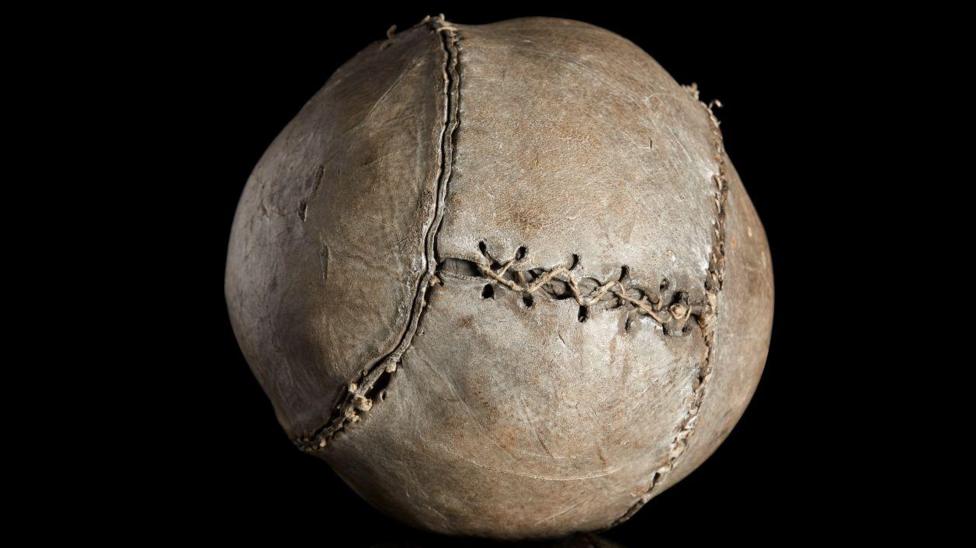
A 500-Year-Old Ball: Scotland's Secret Weapon Against Brazil in Miami
A medieval football discovered in Stirling Castle travels to Miami as Scotland face Brazil — and the symbolism runs deep.