England Must Ignore the Scoreline: Panama Are No Walkovers
Panama's deceptive World Cup results mask a disciplined tactical setup that should worry an England side prone to complacency.
The Deceptive Scoreline
England fans scanning the group standings might already be pencil-checking three points next to Panama's name. That would be a catastrophic misreading of the fixture. Panama's opening results do not remotely reflect the structural discipline and tactical friction they have manufactured on the pitch. For an England side historically vulnerable to the seductive trap of complacency, this matchup carries genuine risk.
The raw data looks damning for the Central Americans. A heavy defeat on their World Cup debut leaves them rooted to the bottom of the group with a goal difference that suggests utter defensive incompetence. That narrative, however, is a convenient fiction. For extended stretches of their opener, Panama executed a highly organized mid-block that choked the life out of the opposition's build-up, only to be undone by moments of individual brilliance and unavoidable fatigue. If Gareth Southgate's team rocks up expecting a turkey shoot, they will walk into a buzzsaw.
The Tactical Anatomy of an Underdog
Panama manager Hernán Dario Gómez has no illusions about his squad's limitations. He has constructed a system designed to maximize physicality and minimize space, acknowledging that his team cannot dominate possession against elite opposition. The foundation is a rigid 4-5-1 out of possession that shifts into a compact 4-4-1-1, with the wingers tucking inside to protect the central lanes.
What makes Panama uniquely annoying to play against is their unapologetic approach to game management. They are perfectly comfortable surrendering 65% or more of possession and camping in their own half. They do not press aggressively. Instead, they employ a patient, retreating mid-block that forces opponents into sterile possession around the attacking third. According to tournament tracking data, they allowed an average of just 9.2 high turnovers per match in qualifying, indicating a refusal to engage in chaotic transition battles where their defensive frailties could be exposed.
The Physical Paradigm
Panama's defensive methodology relies heavily on sheer physical imposition. This is not a team that intercepts passing lanes with surgical precision. It is a team that disrupts rhythm through bodily contact, tactical fouling, and aerial dominance. Their defensive actions breakdown is staggering in its simplicity:
- Won 58.7% of aerial duels in their opening match
- Committed 18 fouls, consistently disrupting attacking momentum
- Allowed zero clear-cut chances from open play inside the first 60 minutes
England's forward line, which thrives on fluid rotation and quick interchanges in tight spaces, will find the physical milieu deeply uncomfortable. The CONCACAF champions are happy to make the game ugly. If the referee allows the game to breathe physically, Panama's defensive structure becomes exponentially more difficult to penetrate.
The Gaps England Can Exploit
For all their grit, Panama are not without fatal flaws. Their defensive shape, while disciplined for an hour, degrades severely as the match wears on. The 4-5-1 relies on the wide midfielders tracking back relentlessly, but as lactate builds, those wingers stop recovering their positions. This creates vast acreage in the half-spaces and out wide, exactly where England's wing-backs and inside forwards operate.
Fatigue is the ultimate betrayer of low-block systems. Panama's starting XI against Belgium had an average age of over 30 years old, making them one of the most geriatric squads in the tournament. Against high-tempo pressing, their legs simply give out. Once the block is breached, the lack of recovery pace is glaring. Panama's center-backs, while commanding in the air, are notoriously flat-footed when forced to turn and retreat. Their sprint distances dropped by 22% in the final twenty minutes of their opener.
"They are a team that fights like they have nine lives, but eventually the clock runs out on that kind of physical exertion." — Tactical assessment of Panama's second-half collapse
Southgate's Selection Dilemma
The tactical chess match rests entirely on whether Southgate respects the threat Panama pose. If England deploy a double pivot of Jordan Henderson and Declan Rice, they risk playing directly into Panama's hands. A deep-lying midfield duo will find themselves suffocated by the sheer number of blue shirts clogging the center.
Instead, England must demand pitch geometry that stretches Panama's block horizontally. The 3-4-3 system provides this naturally. Pushing the wing-backs high and wide forces those aging Panama wingers to make an impossible choice: stay narrow to protect the center and concede the crossing positions, or step out to close down the wing-back and leave chasms in the half-spaces for England's inside forwards to exploit.
Furthermore, Southgate must consider the profile of his attacking substitutions. Panama can handle brute force. They spent years navigating the physical gauntlet of CONCACAF qualifying against similarly imposing opponents. What they cannot handle is agility and pace. Introducing quick, dynamic ball-carriers around the 60-minute mark, when Panama's legs begin to seize up, is the optimal strategic pivot.
Key Matchup: The Transitional Trap
Panama are not a zero-threat attacking entity. When they win the ball, their primary objective is a direct vertical thrust to their target man, Blas Pérez. The forward is an expert at backing in, holding play, and waiting for overlapping support from the full-backs. If England's center-backs step out aggressively to press him, Pérez has the nous to lay off into the channel for a runner breaking from midfield. England's defensive line must maintain discipline and not over-commit in their attacking euphoria.
The Bottom Line: England's attacking talent will ultimately overwhelm Panama's defensive resources. But the notion of a routine, early capitulation from the underdogs is a media construction. Panama will force England to work for every yard of space. If Southgate's side attempts to walk the ball into the net, they will be chopped down and frustrated.
What's Next
This fixture effectively decides the group. A comfortable, ruthless England victory secures progression and builds crucial goal difference for the knockout seedings. A stumble, however, transforms the final group match into a high-pressure, winner-takes-all scenario.
For Panama, this is the last stand. Realistically, they need a result here to have any mathematical hope of reaching the round of 16. Expect them to empty the tank completely, employing a level of desperate physicality that England has not encountered since the volatile stages of qualifying. Respecting the scoreline over the substance is the quickest path to an almighty World Cup scare.
Editorial Integrity
This is an original SportPulse article written by our editorial team. All content is independently researched, written, and reviewed by our writers and editors before publication. We do not publish copied, aggregated, or syndicated content.
SportPulse is committed to original sports journalism. Read our editorial policy or contact us with any questions.
More Like This
All football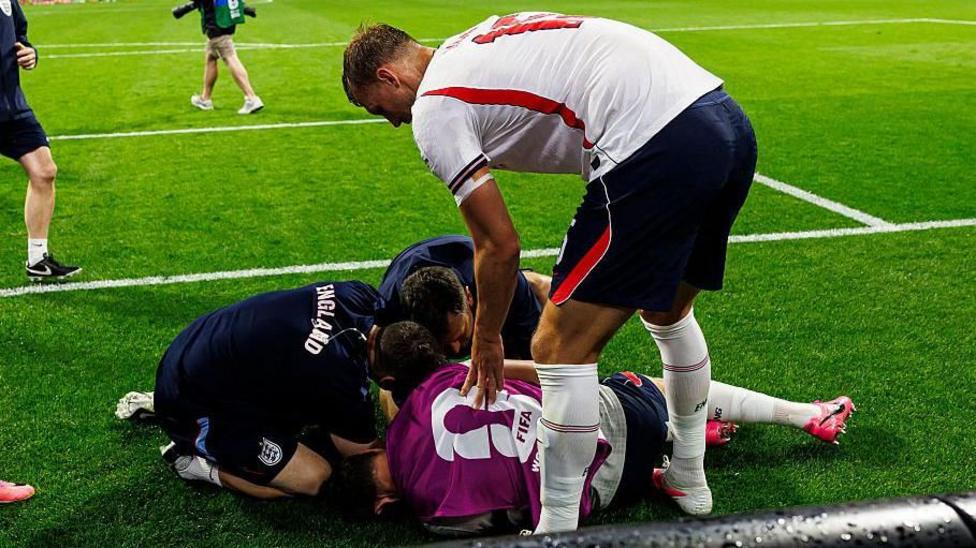
England Warn Players Against Hoardings After Henderson Mishap
Gareth Southgate orders players to stop jumping advertising boards following Jordan Henderson’s freak injury.

Scotland's Brutal Summer: Altitude, Air Miles, and the Nations Championship Gauntlet
Scotland face a punishing Nations Championship schedule demanding deep tactical adaptation from Townsend.

The Tactical Labyrinth: World Cup Quarter-Final Battle Lines
Eight teams remain, each carrying a distinct tactical identity into the quarter-finals where coaching philosophy meets tournament survival.