England Through to 2026 — But the Azteca Is a Different Beast Entirely
England have booked their World Cup place, but the altitude and atmosphere of Estadio Azteca demand a complete tactical rethink.
The Job Is Done — Now the Real Test Begins
England have sealed their passage to the 2026 FIFA World Cup, and in the grand calculus of modern international football, that was the baseline expectation. The Three Lions have become relentless qualifiers, a machine built to navigate UEFA's group stages with clinical efficiency. But this time, the qualification itself feels like a prelude. The real question isn't whether England can reach the tournament. It's whether they can survive the single most hostile venue in football history when it matters most.
The Azteca awaits.
Estadio Azteca in Mexico City, sitting at an elevation of roughly 2,200 meters above sea level, is not just a stadium. It is a physiological gauntlet, a tactical puzzle, and a psychological crucible rolled into one concrete colosseum. As one analysis notes, players "can't catch their breath," a vivid description of the profound physiological and mental strain. For all of England's progress as a footballing nation — and there has been considerable progress over the past decade — their record at altitude in hostile environments remains a stubborn, unresolved chapter.
Why the Azteca Changes Everything Tactically
The conventional tactical frameworks that dominate European international football operate on a fundamental assumption: that the air you breathe will be roughly the same from minute one to minute ninety. At the Azteca, that assumption evaporates. At 2,200 meters, the reduced oxygen density means players' aerobic capacity drops by an estimated 10-15%, and the ball itself travels differently — faster through the thinner air, with less drag on long-range strikes and lofted passes.
This has cascading tactical and physiological consequences. The body's struggle for oxygen directly impacts decision-making and reaction times, turning mental fatigue into a physical opponent. The high press that has become the default mode for elite European sides under coaches influenced by the gegenpressing school becomes exponentially more expensive. Each sprint to close down a defender costs more recovery time. The pressing traps that work beautifully at sea level in Wembley or the Allianz Arena become death traps of fatigue when the altitude punishes every burst of intensity.
England's coaching staff will be acutely aware that the 4-2-3-1 and 4-3-3 shapes they have deployed with regularity under Thomas Tuchel demand enormous energy from the midfield engine room. The double pivot or single pivot — depending on the phase of play — needs to cover vast lateral and vertical spaces. At the Azteca, those spaces feel twice as large. A slow start or a lapse in concentration—the kind of "shameful first 15 minutes" that Tuchel knows could spell humiliation—becomes even more dangerous when the opposition is fueled by the altitude and the roar of 87,000 fans.
The Tactical Shift
The most intelligent tactical adjustment England could make for a high-stakes match at the Azteca is a deliberate reduction in pressing intensity during the first 20-25 minutes, transitioning to a more conservative mid-block that conserves energy while still denying central channels. The temptation — especially for a side with England's attacking talent — will be to impose their game from the opening whistle. That is precisely the trap the Azteca sets, and the trap Tuchel is now urgently trying to solve: avoiding a catastrophic opening that leaves England chasing the game.
Consider the historical precedent. When European sides have traveled to Mexico City for competitive fixtures, the pattern is remarkably consistent: they start brightly, dominate possession in the opening exchanges, and then hit a wall somewhere around the 55th-65th minute. The legs go. The pressing shape collapses. The home side, acclimatized and energized by 87,000 screaming supporters, finds the gaps that didn't exist before.
The tactical countermeasure is counterintuitive for a team built to control games through possession dominance. England may need to be comfortable without the ball for extended stretches, sitting in a disciplined 4-4-2 mid-block, protecting the space between the lines, and relying on rapid vertical transitions rather than sustained build-up play. The wide forwards — whoever Tuchel selects — must be prepared to defend deep in their own half before exploding into counter-attacks.
The Personnel Equation
This is where squad depth becomes not just a luxury but a structural necessity. Tuchel's ability to rotate effectively during the group stages will be critical, and his personnel choices will be directly informed by the need to fix specific vulnerabilities exposed in qualifying. Players who have logged heavy minutes across a grueling European club season — Champions League campaigns, domestic title races, the relentless fixture calendar — will arrive at a World Cup already carrying accumulated fatigue. Add altitude to that equation, and you have a recipe for muscular injuries and cognitive lapses.
The midfield selection becomes paramount. England will need players who can operate efficiently in reduced oxygen: intelligent runners who manage their energy output, not box-to-box athletes who rely on volume of sprints. The profile shifts from the dynamic to the efficient. A player who covers 10.5 kilometers with intelligent positioning is worth more than one who covers 12 kilometers through sheer physical exertion at sea level but cannot sustain it at altitude.
In defense, the center-back pairing must be comfortable receiving the ball under pressure in deeper positions, because the build-up from the back will be more measured. Long diagonal passes, which travel farther in the thin air, become a genuine weapon. England's ability to switch play and exploit the width of the Azteca pitch could be a decisive tactical lever.
The Historical Weight
The Azteca carries a mythology that no other stadium in world football can match. Diego Maradona's Hand of God and Goal of the Century both unfolded on this turf in 1986. It has hosted two World Cup finals. The building itself seems to generate a force field of intimidation that transcends tactical preparation.
For England, the psychological dimension is non-trivial and is directly intertwined with the altitude's physical effects. The sensation of breathlessness and physical strain can amplify mental pressure, turning the stadium's roar into a disorienting cacophony. A torrid opening spell, a "shameful first 15 minutes" where the team is overrun, could hand the initiative to the hosts and create a deficit from which recovery is nearly impossible. Their tournament history is littered with moments where the occasion overwhelmed the game plan. The penalty shootout failures. The inability to break down deep-block sides in knockout rounds. The moments of collective paralysis under pressure. The Azteca amplifies every one of those vulnerabilities by first exhausting the body and then taxing the mind.
Yet there is reason for genuine optimism. This generation of England players has matured through deep tournament runs — a Euro 2020 final, a World Cup semi-final in 2018, a Euro 2024 final. They have been forged in high-pressure environments. The question is whether they can translate that experience into tactical discipline when the altitude is sapping their lungs, clouding their judgment, and the noise is rattling their concentration.
What Comes Next
The draw for the 2026 World Cup group stage will determine whether a fixture at the Azteca is a group-stage reality or a potential knockout-round scenario. If England find themselves drawn against Mexico in the group phase, the preparation timeline shifts dramatically. Tuchel and his staff would need to begin altitude acclimatization protocols weeks in advance, potentially staging training camps at elevated locations to begin the physiological adaptation and help players acclimate to the mental fog that altitude can induce. The work to avoid any repeat of those potentially humiliating early minutes starts now.
Beyond the Azteca specifically, the broader challenge of a 48-team World Cup spread across three nations — the United States, Mexico, and Canada — introduces logistical complexity that no previous tournament has matched. Travel distances between venues could be enormous. Climate zones shift from the humidity of Miami to the dry heat of Dallas to the altitude of Mexico City. England's medical and performance staff will be managing a multi-variable equation that extends far beyond the football pitch.
The qualification is confirmed. The expectation is set. Now the work of building a tactical framework that can withstand the most demanding environment in international football begins in earnest, with a specific focus on solving the issues that could lead to an early capitulation. The Azteca does not care about your FIFA ranking, your squad depth on paper, or your tactical reputation. It demands adaptation, humility, and a willingness to play a different kind of football. Understanding its specific physiological and psychological toll is the first step to overcoming it.
England have the talent. Whether Tuchel can solve the pressing problems, shore up the fragile starts, and instill the tactical flexibility and mental fortitude remains the defining question of their 2026 campaign.
Updated: 2026-07-02 — Integrated focus on Tuchel's specific issues to solve, including the threat of a "shameful first 15 minutes" and the urgency of avoiding early humiliation.
Editorial Integrity
This is an original SportPulse article written by our editorial team. All content is independently researched, written, and reviewed by our writers and editors before publication. We do not publish copied, aggregated, or syndicated content.
SportPulse is committed to original sports journalism. Read our editorial policy or contact us with any questions.
More Like This
All football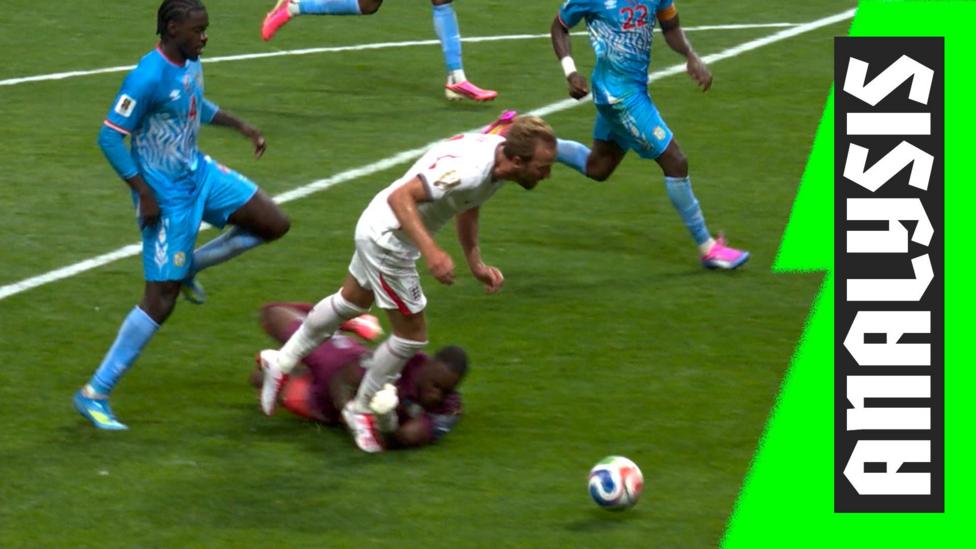
Kane's Penalty Claim Sparks Fiery Pundit Split
Richards, Hart, Rooney, and Cann clash over whether Kane was denied a clear penalty against DR Congo.

Vaughan: Stripping Stokes of Captaincy Would Be a Travesty
Michael Vaughan blasts suggestions Ben Stokes could lose the England captaincy over a midnight curfew breach as an absolute travesty.

Japan and Sweden Meet With Group F Survival on the Line
A pivotal Group F clash pits Japan's technical revolution against Sweden's disciplined rebirth in the expanded 2026 World Cup.