Tuchel Channels Ramsey: England's 35 Crosses Tell a Tactical Story
England's 35 open-play crosses against DRC signal a deliberate tactical shift echoing Alf Ramsey's 1966 blueprint under Thomas Tuchel.
A Ghost From 1966
The numbers leap off the Opta spreadsheet. England attempted 35 crosses in open play against the Democratic Republic of the Congo.
Not since 1966 had an England side delivered that many balls into the box in a World Cup match. Not since Sir Alf Ramsey's wingless wonders parade down Wembley Way.
Before you swallow the easy parallel whole, understand the irony. Ramsey's legacy is famously built on abandoning wingers to dominate the centre. Yet the statistical lineage connecting Tuchel's England to that 1966 campaign is real, deliberate, and quietly fascinating.
A Comeback Six Decades in the Making
The DRC took the lead. England trailed 1-0 at the World Cup.
These two sentences strung together have historically functioned as an epitaph for the Three Lions. Before this match in America, England had played 22 World Cup matches in which they had conceded the first goal.
They had lost 17 of them.
1966 was the only time an England team had overcome a deficit to win at a World Cup. West Germany went ahead in the final, and the rest is history painted on every pub wall in the country. For six decades, that comeback stood entirely alone.
"The 1966 final was the only previous instance, with England losing 17 of the other 22 matches in which they conceded the first goal in the competition."
Now Tuchel has matched Ramsey again. A 2-1 victory against a dangerous DRC side did not merely advance England in the tournament. It shattered a psychological barrier that had weighed down every generation since Geoff Hurst's hat-trick.
Overcoming adversity at this tournament is no longer a ghost story. It is a proven, recent benchmark.
The Tactical Revelation
Thirty-five crosses from open play is a staggering volume. Modern international football typically averages between 15 and 20 crosses per match in open play.
This was a tactical choice, not an accident born of blunt frustration.
Tuchel arrived with a clear, stratified plan. England's buildup was patient, probing the lines until they could isolate their wide creators in one-on-one situations. Once the wide overload was secured, the instruction was unambiguous: deliver.
High delivery, low delivery, early crosses pulled back from the byline. The variety was relentless. To understand the tactical logic, look at how opposing deep blocks operate against Tuchel sides.
They compress the central channels. They pack the penalty area with bodies. The space exists out wide, vacated by nervous fullbacks who tuck inside to protect the most dangerous zones.
What the Numbers Say
- 35 crosses attempted in open play against the DRC
- 0 instances of England reaching this crossing volume in a World Cup match since 1966
- 17 defeats from 22 World Cup matches where England conceded the first goal prior to the DRC tie
- 2 comeback victories in World Cup history after trailing: 1966 final vs West Germany, 2026 vs DRC
Deconstructing the Delivery
Quality matters more than raw quantity. Slinging hopeful balls into a crowded area is the graveyard of ambitious tournament plans.
Tuchel will have spent hours reviewing the tape of each delivery from the DRC match. The angles of the approach, the weight of the pass, the movement patterns of the attackers arriving in the box.
The victory ensured the execution matched the blueprint. England's attackers demonstrated varied, adaptable runs. They did not stand stationary waiting for the ball to find their head.
They peeled off the shoulder of the last defender. They attacked the near post. They made cunning late runs to the back stick.
The chaos created by these intelligent runs is what makes heavy crossing viable. Against a packed DRC defence that had successfully absorbed pressure and struck first,England persisted with a method that has demonstrably proven effective against deep blocks.
Behind the Deal: Tuchel's Contract Against the Clock
The tactical story is compelling because it is the perfect projection of the man on the touchline.
Tuchel was never hired to_tokenize the“Yes” moments. He was hired to solve the exact mechanical failures that haunted Gareth Southgate's era. For all the grace of Southgate's reign, England repeatedly faltered when asked to break down sophisticated tactical blocks.
England's crossing volume is a statement of strategic intent under Tuchel.
The German's tenure is built on guaranteed pragmatism. When Plan A falters against disciplined opponents, the operational mentality shifts immediately to structural width and aerial dominance. It is a pivot grounded in necessity.
Opta confirmed this was not merely a statistical anomaly but the clearest highlight of an important aspect of England's tactical story this summer.
The Shadows of Vulnerability
Tuchel will not be fooled. The victory was a vital show of character.
The deficit itself remains a ferocious concern for a side harbouring genuine ambitions of going deep into this tournament. A team obsessed with crossing dominance invites a specific brand of risk.
Commit a body forward to deliver a wide ball, and the transition lanes behind open up instantly. A counter-press can mitigate the risk. It cannot eliminate it against opponents with explosive pace.
The Road Ahead
The 2026 World Cup bracket now opens up for England, and they have rediscovered an old weapon in their new arsenal.
Tactical flexibility has always been the hallmark of tournament-winning sides. The ability to hold possession, probe patiently, and then pivot to relentless aerial bombardment when the central lanes become too congested is a valuable asset.
Tuchel has proven his players can adapt their shape and identity to survive in America.
England have been Here before, dragging their way back into a World Cup after falling behind. But the last time they managed it, Ramsey was the architect, and the ghosts of 1966 have lingered over every tournamentнивационnal failure since.
Tuchel has rewritten the narrative. The question now is how much further the throwback to Ramsey's era can carry them.
The crossing game is back. And it might be the most modern thing happening at this World Cup.
Editorial Integrity
This is an original SportPulse article written by our editorial team. All content is independently researched, written, and reviewed by our writers and editors before publication. We do not publish copied, aggregated, or syndicated content.
SportPulse is committed to original sports journalism. Read our editorial policy or contact us with any questions.
More Like This
All football
Australia and Paraguay Embrace Pragmatism in Tactical Stalemate
Both sides prioritized tournament survival over spectacle in a San Francisco draw that sealed progression for Australia.
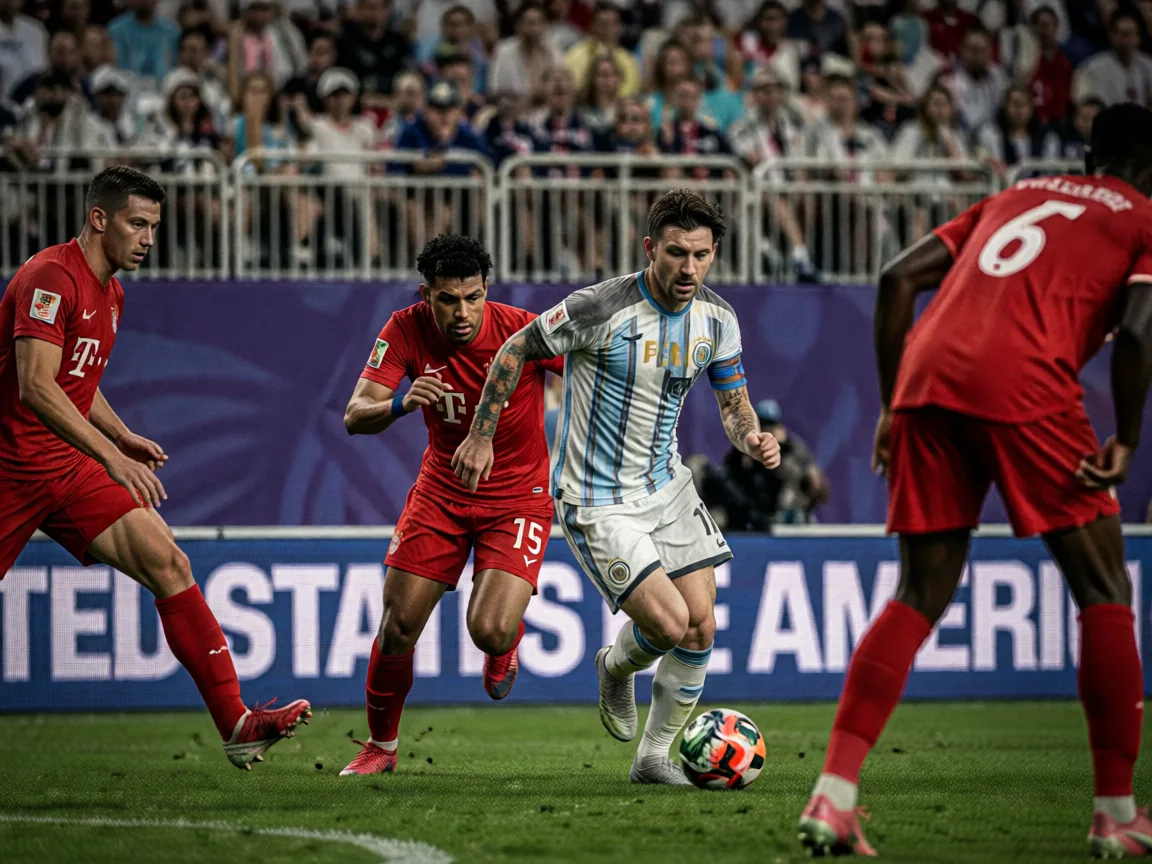
Messi's Sprint Speed Still Terrorises England at 39
At 39, Lionel Messi ambles then explodes. England's defenders face a sprint-speed nightmare in their World Cup semi-final.

Bogdanovic Racist Remark Exposes Serbian Broadcasting Crisis
Rade Bogdanovic's racist on-air generalization about Black players exposes systemic failures at Serbia's public broadcaster during the World Cup.