Tuchel's England Hit the Wall Against Ghana — And the Alarm Bells Are Ringing
A sterile 0-0 draw with Ghana exposed England's creative drought and put Tuchel's squad selection under the microscope.
The Honeymoon Is Over
One week, Thomas Tuchel looked like a man who had cracked the code. One week later, England's new manager was staring at the same stubborn problem that haunted Gareth Southgate for the better part of a decade: what do you do when a well-organized, deeply disciplined opponent simply refuses to let you play?
Tuesday's 0-0 draw with Ghana at Boston Stadium was not a catastrophe. Group stages rarely produce them in isolation. But the manner of the stalemate — sterile, ponderous, devoid of the cutting edge England needed to break down a team sitting in a compact low block — raises questions that Tuchel cannot afford to ignore heading into the knockout rounds.
This is the part of the tournament cycle that every England manager dreads. The second group game. The one where expectations collide with reality. Southgate lived through it repeatedly, and now Tuchel has experienced it firsthand. The anxiety doesn't arrive from nowhere. It arrives because the performance demanded it.
A Creative Vacuum in Boston
Ghana came to defend. That was obvious from the opening whistle. Their shape was disciplined, their midfield compact, their willingness to commit bodies forward virtually nonexistent. Against such a setup, England needed guile, invention, and players capable of producing a moment of individual brilliance to unlock the door.
They had none of it.
The core problem is structural. Tuchel's squad is overloaded with players who occupy similar spaces and offer similar profiles. Hard-working, technically sound, positionally disciplined midfielders. What it lacks, glaringly, is the kind of unpredictable creative force who can receive the ball between the lines, turn, and thread a pass that no one else on the pitch sees coming.
England dominated territory and possession. That was never in doubt. But possession without penetration is just exercise. Ghana's back line was rarely troubled, rarely stretched, rarely forced into the kind of desperate last-ditch defending that separates a controlled defensive performance from one that eventually cracks.
The Missing Names
The post-match discourse predictably turned to the absentees. And for once, the pundits have a legitimate case.
Trent Alexander-Arnold offers something no other full-back in the England setup can: elite-level passing range from deep positions. His ability to switch play with pinpoint diagonals or slide defence-splitting balls into the final third could have been the antidote to Ghana's narrow, compact shape. Instead, England's build-up play was safe, predictable, and easy to read.
Phil Foden brings the capacity to drift into half-spaces and manufacture chances where none appear to exist. His movement between the lines, his quick feet in tight areas, his willingness to attempt the audacious — these are precisely the qualities England lacked against a team giving them no time or space to breathe.
Cole Palmer is arguably the most in-form creative talent in English football. His ability to carry the ball under pressure, draw fouls in dangerous areas, and produce moments of individual magic makes him a natural fit for exactly this type of fixture. A game where the collective system fails to break the lock, you need someone who can pick it.
And then there is Adam Wharton, a player whose passing range and vision from a deeper midfield position could have provided the tempo changes England desperately needed. Too often the ball moved at the same speed, in the same patterns, with the same predictable angles.
Tuchel chose differently. That is his prerogative and his responsibility. But the selection must now be interrogated honestly, because the evidence on the pitch suggested England had the wrong tools for the job.
Verdict: The creative void was not incidental. It was a direct consequence of squad construction. Tuchel's selection favoured balance and defensive solidity over attacking invention. Against a team with no interest in attacking, that trade-off became a liability.
The Tuchel Paradox
Here is the uncomfortable truth about Tuchel's appointment: he was hired to win the tournament, not to entertain in the group stages. His tactical pedigree, forged in the Champions League with Chelsea and refined across Europe's elite clubs, is built on structure, pressing triggers, and the ability to suffocate opponents in transition.
That approach works brilliantly against teams who come to play. Against teams who sit deep and dare you to find a way through, it can look exactly like what we saw against Ghana: controlled, organized, and utterly toothless.
The source material makes a crucial point. Tuchel has plans in place for tougher opposition. And this is where the context shifts. England's World Cup campaign will not be defined by their ability to break down Ghana. It will be defined by how they perform against opponents who push higher, commit more bodies forward, and leave the kind of spaces that Tuchel's system is designed to exploit.
Against a France, a Brazil, an Argentina in the knockout rounds, the dynamic flips entirely. England won't need to unlock a low block. They'll need to manage transitions, press intelligently, and punish opponents on the counter. That is Tuchel's comfort zone. That is where his tactical acumen genuinely shines.
The risk, of course, is that England don't get the chance to play those opponents if they stumble again in the group stage.
The Southgate Echo
It is impossible to discuss Tuchel's current predicament without acknowledging the shadow of his predecessor. Gareth Southgate spent years navigating this exact terrain. The second group game. The defensive opponent. The clamour for more attacking players. The accusation that England were too cautious, too conservative, too afraid to take risks.
Southgate's great strength was his ability to block out the noise and trust his process. His great weakness was that the noise was often right. England's tournament exits under his watch were frequently characterised by the same creative deficit on display against Ghana.
Tuchel has the advantage of being a newcomer to international football. The baggage is lighter. The expectations, while enormous, are shaped by his club pedigree rather than tournament scars. But international management has a way of humbling even the most decorated tacticians. The margins are thinner. The preparation time is shorter. The ability to coach intricate attacking patterns is limited by the reality of sporadic international windows.
The Bottom Line: Tuchel is not Southgate. But the problems are familiar because the problems are structural. England's talent pool is deep but skewed toward certain profiles. Until the balance shifts, every manager will face the same dilemma.
What the Second Game Actually Tells Us
Historically, England's second group game stumbles have been more noise than signal. The team has repeatedly recovered to progress through the group and into the knockout rounds, often performing better when opponents come at them rather than sitting deep.
The 0-0 draw with Ghana is unlikely to define this World Cup campaign. What it does is confirm a suspicion: this England squad, as currently constructed, has a ceiling against certain types of opponents. Tuchel knows it. The question is whether he has the personnel available to solve it.
The tactical adjustments for the next fixture will be revealing. Does Tuchel stick with his current approach and trust that tougher opponents will bring better opportunities? Or does he make changes — introduce the creative players who were absent, shift the system to accommodate more invention in the final third?
Both paths carry risk. Sticking means accepting the criticism and betting on the bigger picture. Changing means admitting the selection was wrong and potentially destabilising the dressing room cohesion that Tuchel has worked to build.
The Road Ahead
England's World Cup campaign remains very much alive. A draw in the second group game is not a crisis, no matter how the tabloids frame it. The squad has enough quality to navigate the remaining group fixture and set up a knockout tie where Tuchel's tactical strengths become genuine assets.
But the warning signs from Boston Stadium cannot be dismissed. The lack of creativity against a low block. The absence of game-changers on the bench. The reliance on structure over spontaneity. These are issues that will resurface if England face similar opponents deeper in the tournament.
Tuchel's strategy is built for the very best teams in the world. That is exactly what England hired him for. The test now is whether he can find the balance between his tactical principles and the creative spark that tournament football demands when the opponent refuses to cooperate.
The noise will be loud. The second-guessing will be relentless. Tuchel will need to trust his process, trust his plans, and trust that the bigger games ahead will suit his team far better than a stifling afternoon in Boston ever could.
The Bottom Line: England's draw with Ghana was a reminder that talent alone doesn't win tournaments. Tactically, the squad has a gap that cannot be papered over. How Tuchel addresses it will determine whether this World Cup campaign fulfils its immense promise or joins the long list of English disappointments.
Editorial Integrity
This is an original SportPulse article written by our editorial team. All content is independently researched, written, and reviewed by our writers and editors before publication. We do not publish copied, aggregated, or syndicated content.
SportPulse is committed to original sports journalism. Read our editorial policy or contact us with any questions.
More Like This
All football
Japan and Sweden Meet With Group F Survival on the Line
A pivotal Group F clash pits Japan's technical revolution against Sweden's disciplined rebirth in the expanded 2026 World Cup.

Newcastle United Close In On Ajax Midfielder Sean Steur
Sean Steur represents a high-upside, low-risk investment for Newcastle’s midfield rebuild, blending technical precision with youthful aggression.
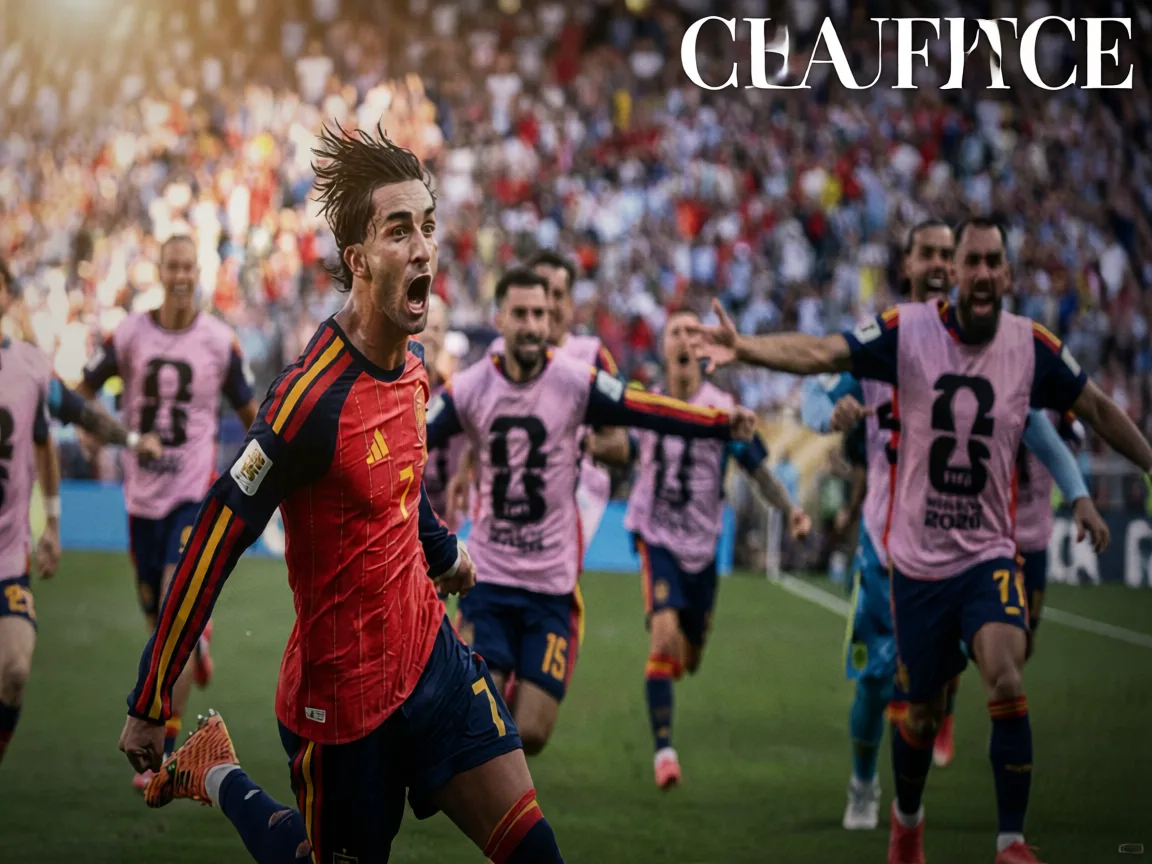
Ferran Torres Breaks the Deadlock in World Cup Final Extra Time
Ferran Torres struck in extra time to give Spain a hard-fought lead over Argentina in a World Cup final defined by tactical attrition.