Four England Stars One Card From World Cup Semi-Final Heartbreak
England's World Cup dream could unravel through suspension, with four key players walking a disciplinary tightrope into the knockout crunch.
The Suspensions Looming Over England's Campaign
England's World Cup dream could collide with a bureaucratic brick wall before it even reaches its climax. Four players in Gareth Southgate's squad are currently walking a disciplinary tightrope that could rule them out of a potential semi-final. The tournament's yellow-card accumulation rules mean a single caution in a quarter-final would trigger an automatic one-match ban.
The stakes are extraordinary. A team can navigate tactical shortcomings, absorb injuries, and ride its luck across 120 minutes of knockout football. But it cannot legislate for a referee's hand reaching for his pocket at a critical moment.
For Southgate, this is a selection and man-management crisis hiding in plain sight. Every tactical instruction he delivers between now and the quarter-final must account for the risk of losing a key figure at the worst possible time. The discipline that carried England through the group stage now threatens to derail the entire operation.
How the Yellow-Card Rules Work
FIFA's disciplinary regulations for the World Cup are unforgiving and brutally simple. Yellow cards accumulate from the group stage through to the quarter-finals, with any player reaching two cautions serving an automatic one-match suspension.
The reset comes only after the quarter-final stage. That means any player carrying a yellow into the last-eight tie who then receives another is forced to sit out the semi-final. It is a rule designed to encourage discipline but one that frequently punishes commitment, aggression, and the very physical intensity required to win knockout tournament football.
Crucially, a suspension cannot be served in a group-stage dead rubber. A player who picks up his second yellow in the final group match sits out the round of 16, not a fixture where rotation might have buried him anyway. This strips managers of the flexibility to manage suspensions tactically, leaving them at the mercy of in-game moments and split-second refereeing decisions.
The Tactical Dilemma
The identity of the four players at risk remains the central tactical question Southgate must resolve. Each carries a different profile of threat to England's system, and each would leave an irreplaceable void if suspended.
If the at-risk quartet includes defensive midfielders, the problem compounds rapidly. That position is the structural anchor of everything England does in possession and transition. Losing that figure against elite semi-final opposition would force Southgate into a full tactical reshuffle or the deployment of an underprepared deputy on the biggest stage in world football.
Centre-backs present a different but equally devastating scenario. A suspension at the heart of the backline disrupts the entire defensive architecture, forcing partnership changes that have been built across weeks of tournament preparation. The rhythm and understanding developed over those sessions evaporate overnight.
Forwards on a yellow are arguably the most dangerous variable of all. Attacking players commit fouls less frequently, but they operate in the half-spaces where tactical fouls are sometimes unavoidable. A single mistimed press or a frustrated tug after losing the ball can be catastrophic.
Southgate must now weigh risking his best XI against protecting them. Drop a yellow-card candidate and you compromise your strongest lineup to preserve a player for a semi-final that may never arrive. Play them and you gamble everything on ninety minutes of clean discipline under immense pressure.
The opponents complicate everything
The quarter-final opponent matters enormously. A side that draws fouls, slows the game, and provokes reactions is a nightmare scenario for a team managing accumulated cautions. Referees at this stage of tournaments are also under pressure to maintain control, which often translates to a heavier hand with the cards.
Diving becomes a tactical weapon. Opponents who sense England's fragility will engineer contact around at-risk players, trying to bait them into challenges. The gamesmanship at this level is sophisticated and ruthless, and officials must distinguish between genuine fouls and manufactured theatre in real-time.
Behind Closed Doors
Inside the England camp at their tournament base, the atmosphere is a study in controlled tension. Coaches poring over opposition footage are simultaneously running disciplinary projections, identifying which positions can absorb a suspension and which would be left threadbare.
Players sit in the treatment room receiving physiotherapy while debating whether to adjust their natural tackling style. The games room that provided light relief during the group stage now hosts tense conversations about navigating individual battles without triggering the accumulation trap.
Southgate and his staff face the kind of psychological wrangling that never appears in tactical briefings. They must remind at-risk players to be disciplined without making them so cautious that they lose the very aggression that got them here.
"You cannot send players out afraid to compete. But you cannot pretend the rules do not exist either. It is the tightest rope you walk in tournament football."
The conversation between a manager and a player walking that tightrope is delicate and deeply personal. Tell a midfielder to hold back and you neuter the engine room. Say nothing and you risk the moment of indiscipline that costs a nation its dream.
What History Teaches Us
World Cup history is littered with campaigns derailed by suspension. Players who missed semi-finals and finals because of yellow-card accumulation include some of the most influential figures their countries ever produced. The 2002 tournament saw multiple high-profileabsentees in the final stages, and the pattern has repeated across virtually every World Cup since the rule was introduced.
Michael Ballack's absence from the 2002 World Cup final remains the most famous example. The German captain picked up a yellow in the semi-final against South Korea and was forced to watch from the stands as Brazil dismantled his side. His absence was not just tactical but emotional, removing the leader who had carried Germany to the brink of glory.
England themselves have bitter experience here. Key players have sat out critical tournament matches across previous campaigns, with coaching staff left explaining how a moment of lost composure cost a squad its balance. The scars of those absences linger in the institutional memory of the Football Association and inform every conversation Southgate has about discipline this time around.
The Collective Framing
Southgate's man-management will be tested to its absolute limit in the coming days. He cannot coach fear into his players, but he cannot afford blind aggression either. The message must convey the risk while preserving the competitive spirit that has defined England's tournament.
The four players at risk must be spoken to individually. Each requires a tailored conversation about match situations, likely flashpoints, and the specific dangers their position invites. A full-back facing a pacey winger needs different guidance than a midfielder screening the defence.
Team meetings will address the collective responsibility. If one player is at risk, the structure should compensate by offering protection through positioning and covering. Shared discipline reduces the burden on any single individual to navigate the tightrope alone.
What It Means
England's World Cup ambitions may well be decided not by a moment of brilliance but by a moment of indiscipline. The four players on yellow cards carry the weight of a nation's expectations and the fragility of a rulebook that punishes with chilling indifference.
Southgate must find the balance between caution and courage in a fixture where every tackle carries consequences far beyond the immediate phase of play. The quarter-final becomes not just a test of England's footballing ability but of their composure, intelligence, and collective restraint under pressure.
If England progress, they will do so knowing the semi-final could be contested without a quarter of their spine. The margin for error is zero. The tightrope is strung tight. And the fall is vertiginous.
The irony is bitter. Players who earned theiryellow cards through commitment and competitive fire now face the possibility of being denied the platform to show those very qualities in the biggest match of their careers. Southgate's economic genius will be tested as much as his tactical one in the days ahead.
England's World Cup dream could survive the opposition. It could survive fatigue and pressure. The question is whether it can survive the referee's pocket.
Editorial Integrity
This is an original SportPulse article written by our editorial team. All content is independently researched, written, and reviewed by our writers and editors before publication. We do not publish copied, aggregated, or syndicated content.
SportPulse is committed to original sports journalism. Read our editorial policy or contact us with any questions.
More Like This
All football
Blackburn Sued for £500k as Kit Deal Collapses
A £500k lawsuit from a failed kit renewal exposes deeper commercial instability at Blackburn Rovers amid Championship survival pressure.
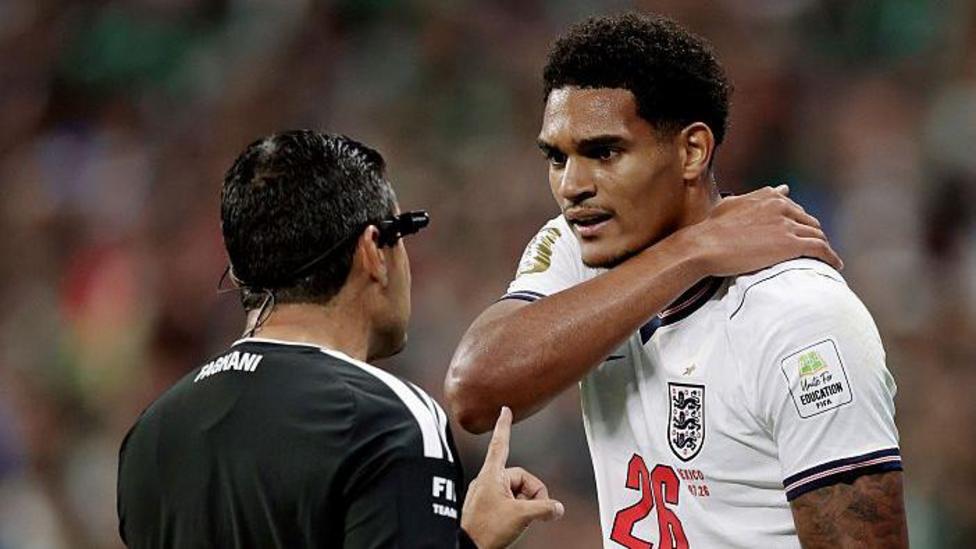
Quansah Red Card Sparks FA Appeal Debate Amid Tactical Fallout
England's defensive structure unravels after Quansah's dismissal, forcing Southgate into emergency tactical recalibration against Mexico.

Yellow Fever Hits Canada: Colombia's Extraordinary Fan Army Descends on Vancouver
Colombia's stunning fan migration through North America has become the World Cup's most powerful subplot as they chase history.