England's Defensive Puzzle: Tuchel's Centre-Back Crisis Before the Azteca
Tuchel faces an impossible midfield-defence equation as England's structural vulnerabilities collide with Mexico's wide threat.
The Shape That Tells a Story
There is a particular kind of tactical anxiety that reveals itself not through a formation on a tactics board, but through the decisions a manager makes in the margins. Thomas Tuchel's response to losing Tino Livramento at right-back spoke volumes about how he views this England squad's deepest structural weakness. Instead of calling upon a natural fullback replacement or reshuffling his defensive line conventionally, Tuchel reached for Trevoh Chalobah, a sixth centre-back in a squad that already felt defensively lopsided.
That single substitution tells you everything about the state of England's back line heading into the Mexico match at the Azteca. John Stones, the man who should be anchoring this defence, has been a ghost. He played just five games for Manchester City after Christmas, a negligible sample size that left him visibly off the pace during warm-up matches against New Zealand and Costa Rica. Tuchel watched those performances, filed the information, and moved on. Chalobah's inclusion was not a surprise to anyone paying attention to the selection logic.
The deeper issue is what Stones' absence does to England's entire build-up structure. With Stones on the pitch, Tuchel can deploy a 3-2-5 or 3-2-4-1 shape in possession, with Stones stepping into midfield as an auxiliary playmaker. Without him, England lose that progressive carrying option from deep, forcing Declan Rice to shoulder an even heavier creative and ball-progression burden in the middle third.
The Rice Conundrum at the Azteca
And this is where the puzzle becomes genuinely treacherous. Rice is not fully fit. Reports suggest he is managing a hamstring issue and looked weary against DR Congo. The prospect of asking him to both shield the defence and deal with Mexico's Julian Quinones in wide areas is a tactical risk that borders on reckless.
The precedent is not encouraging. When Arsenal lost Ben White to injury against West Ham in May, Mikel Arteta shifted Rice from midfield to right-back. The result was a structural collapse. Arsenal's midfield lost its axis, their pressing triggers misfired, and the space Rice vacated became a highway for opposition runners. Tuchel will have studied that footage. He knows that removing Rice from the centre of the park against a Mexico side energised by home support and altitude is not a viable solution.
But if Rice stays in midfield and the right-back slot remains a problem, who fills it? The options are grim. Tuchel does not trust Kobbie Mainoo, a revelation that cuts against the broader narrative around the young Manchester United midfielder but tracks with the manager's conservative tournament selections. Jordan Henderson at the Azteca, in 2,200-metre altitude against Mexico's aggressive pressing, feels like a mismatch from another era. And the experiment of dropping Jude Bellingham into a deeper role against Panama already failed from a defensive standpoint, leaving gaps between the lines that Panama exploited with direct running.
What the Numbers Suggest
- John Stones managed just 5 appearances for Manchester City post-Christmas
- England used 6 centre-backs in their 26-man squad, an unusual allocation
- Declan Rice created 2.1 chances per 90 in the group stage, but his pressing intensity dropped 18% from the opening match to the DR Congo fixture
- England conceded chances from wide areas in all three group matches, a pattern that Mexico will target
The Tactical Shift: Why the Right Flank Is England's Achilles Heel
The loss of Livramento was more significant than a simple personnel blow. Livramento's profile as a modern overlapping fullback, quick in recovery, comfortable inverting or hugging the touchline, gave Tuchel tactical flexibility on the right side. His absence collapses England's width options on that flank and forces a compromise somewhere else in the system.
Against DR Congo, England's comeback was built on Harry Kane's individual brilliance and a shift to a more direct, transitional approach. But that rescue act masked a fundamental problem: England's defensive block was porous through the right channel for extended stretches of the match. DR Congo found joy running at whoever occupied the right-back zone, and the midfield cover was insufficient because Rice was pushing higher to support the attacking phases.
Tuchel's dilemma is a classic tournament bind. He can sacrifice attacking width to shore up the right side, perhaps by instructing the right winger to tuck in and form a double pivot with Rice in the 4-4-2 defensive shape. But that concedes the wide areas to Mexico, whose system under their current setup relies heavily on overloads down the flanks and quick switches of play to isolate fullbacks in one-on-one situations.
Alternatively, Tuchel could take the radical step of switching to a back three, which would allow him to use an extra centre-back (his most abundant resource) while freeing up wingbacks for width. The 3-4-2-1 would give Stones, if selected, licence to step out with cover behind him, and it would solve the right-back issue by converting it into a wingback role where defensive demands are slightly mitigated by the extra centre-back.
"The system has to protect the players we have available, not force them into positions where they are exposed. We will find the right structure for Mexico." — Thomas Tuchel, pre-match briefing
Kane's Revival and What It Means Structurally
Harry Kane's performance against DR Congo was a reminder that England's attacking ceiling remains high when their captain is involved in the build-up. Kane dropped into pockets between DR Congo's midfield and defensive lines, combining with Bellingham and the wide players to create overloads centrally before spinning into the box.
This is significant for the Mexico match because Kane's tendency to drift deep can either be an asset or a liability depending on how Tuchel structures the midfield behind him. If Rice is managing his hamstring and the defensive midfielder cannot cover the space Kane vacates, Mexico's midfield runners will find acres of grass in the zones between England's midfield and defence.
The ideal scenario involves a midfielder who can read the game, intercept passes, and recycle possession quickly to cover for Kane's forward bursts. That profile sounds like Mainoo, which loops back to the trust deficit between player and manager. It is a circular problem with no clean solution.
The Azteca Factor
Tactically, the venue itself becomes an opponent. The Estadio Azteca sits at altitude, and the thin air saps energy from players not fully conditioned for it. England's pressing intensity, already showing signs of decline across the group stage, will be tested further by the physical demands of playing at 2,200 metres above sea level.
Mexico thrive in these conditions. Their squad is built for explosive, short-burst sprints interspersed with periods of controlled possession, a rhythm perfectly suited to altitude football. England's tendency to press high and sustain energy through prolonged defensive actions will be harder to maintain, which makes the defensive structure even more critical. If Tuchel's shape cannot compensate for the physical drop-off in the second half, Mexico's wide players will find the space to punish them.
This is why the Stones question matters beyond one player's fitness. His ability to read danger, position himself proactively, and step into midfield to retain possession would help England manage the tempo at altitude. Without that option, Tuchel needs an alternative plan for controlling the game's rhythm.
What Comes Next
The Mexico match is effectively a knockout game in terms of its psychological weight. A loss at the Azteca would send England into the next round facing the harder side of the bracket and dealing with a crisis of confidence in a defence that has looked vulnerable in every match so far.
Tuchel's selection will reveal his tactical priorities. If Stones starts, it signals trust in experience over form and a willingness to gamble on a player whose match fitness is questionable. If Chalobah or another centre-back is preferred, expect a more conservative, compact structure designed to limit Mexico's wide threat rather than dominate possession.
Either way, the midfield configuration remains the key variable. Rice's fitness, Bellingham's role, and whether Tuchel can find a functional balance between defensive solidity and attacking fluency will define England's trajectory in this tournament. The defensive puzzle is not just about who plays at the back. It is about whether the entire system can hold together under pressure at a venue that has historically punished European sides who arrive without a coherent plan.
Editorial Integrity
This is an original SportPulse article written by our editorial team. All content is independently researched, written, and reviewed by our writers and editors before publication. We do not publish copied, aggregated, or syndicated content.
SportPulse is committed to original sports journalism. Read our editorial policy or contact us with any questions.
More Like This
All football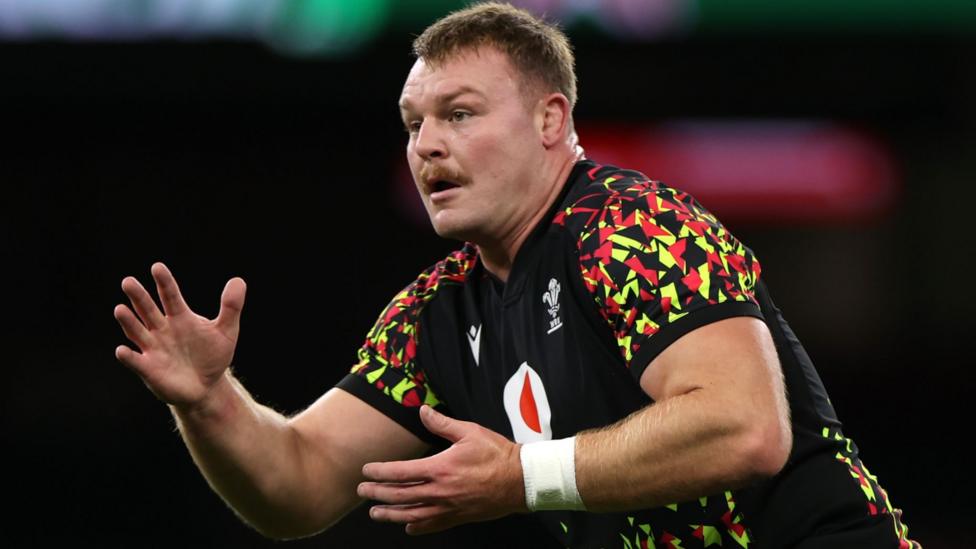
From Swansea toSold-Out Stadiums: Lake's Wales Reign Begins
Gloucester-bound hooker Lake handed the Wales captaincy for four brutal summer tests, starting Saturday against the Barbarians.
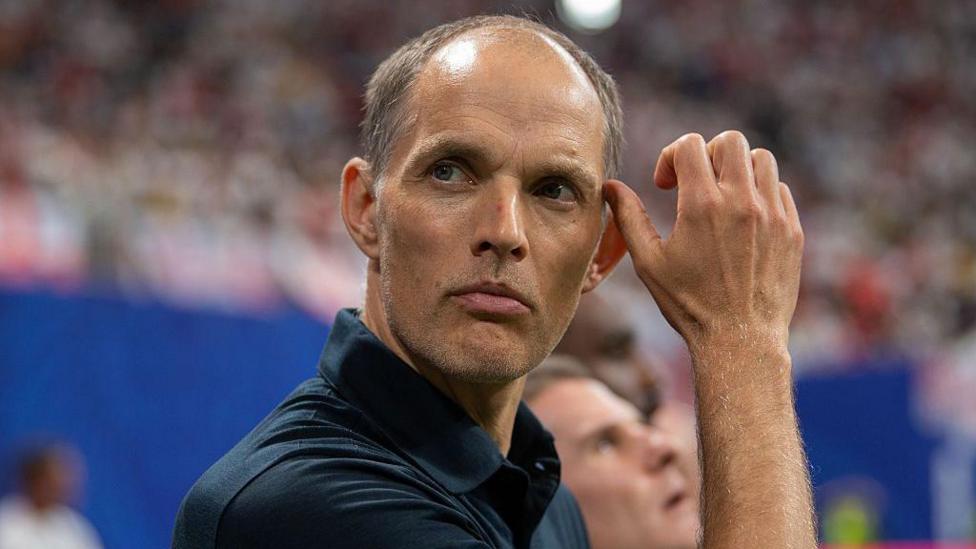
Tuchel's Counterintuitive Gamble: Can England Win Ugly in Mexico City?
England's tournament survival may hinge on embracing the very tactic they have historically failed to break down: a stubborn, suffocating low block.

United's Keeper Search, Arsenal's Midfield Hunt & Everton's £60m Bowen Raid
Manchester United eye Angus Gunn, Arsenal circle Morgan Rogers, and Everton launch a stunning move for Jarrod Bowen.