Rashford, O'Reilly and Tuchel's Selection Puzzle Against Panama
Thomas Tuchel faces defining lineup decisions as England close their World Cup group campaign against Panama.
The Managerial Calculus Behind England's Final Group Test
Thomas Tuchel has never been a coach who leaves selection to sentiment. At Chelsea, he rotated ruthlessly in pursuit of structural balance. At Bayern Munich, he reshuffled lineups mid-match with a surgeon's detachment. Now, standing on the touchline for England at a World Cup, he confronts a question that is equal parts tactical and political: who starts against Panama in the final group fixture, and what does that choice signal about his tournament blueprint?
The debate has crystallized around two names in particular. Marcus Rashford has been knocking on the door, his pace and directness a tempting weapon against a Panama side likely to sit deep and defend in numbers. Meanwhile, the clamour to restore O'Reilly to the starting XI has grown louder after his omission from the previous matchday squad raised eyebrows among supporters and pundits alike.
Neither decision exists in a vacuum. Tuchel is managing minutes, managing egos, and managing the macro-tactical picture of a knockout phase that looms immediately after the group stage concludes. This is not a dead rubber. It is a calibration exercise.
Reading Tuchel's Tactical DNA
To understand the Rashford question, you first need to understand what Tuchel values in wide attackers. His system at Chelsea thrived on wing-backs providing width while the inside forwards tucked into half-spaces. At Bayern, he demanded wingers who could press from the front and transition quickly into defensive shape.
Rashford offers the vertical threat. His ability to attack the space behind a high defensive line is among the most devastating in English football. Against Panama, who will almost certainly deploy a low block with limited pressing ambition, that raw pace becomes less relevant than his capacity to combine in tight areas. The question for Tuchel is whether Rashford's close-quarters interplay has matured enough to justify a starting role in a match that demands patience rather than explosion.
The alternative profiles in Tuchel's attacking pool offer different qualities. A more technically secure option in the half-spaces could unlock Panama's compact defensive shape through intricate combination play rather than trying to run in behind a team with no intention of pushing its line up. Tuchel's history suggests he will favour the player who best serves the collective structure, regardless of individual star power.
The O'Reilly Factor
The conversation around O'Reilly's potential return carries a different weight entirely. His absence from the previous matchday squad was tactical rather than fitness-related, a decision that Tuchel appeared to frame post-match as a matter of game-state management rather than any indictment of the player's form.
Bringing O'Reilly back against Panama would serve multiple purposes. It reintegrates a player who could be vital in the knockout rounds. It offers Tuchel a chance to evaluate the midfield balance in a competitive but lower-stakes environment. And it sends a message to the squad that rotation is meritocratic, not punitive.
From a structural standpoint, O'Reilly's inclusion would allow Tuchel to experiment with the midfield pivoting patterns he has hinted at in press conferences. England's build-up play has been functional but occasionally sterile in the group phase, lacking the progressive ball-carrying through central areas that O'Reilly provides at his best. If Tuchel wants to add that dimension for the rounds that matter most, this is the match to test it.
Tactical Shift: The Shape Question
Panama's likely approach forces a genuine tactical decision on Tuchel. Against sides that compress the space between their defensive and midfield lines, the conventional 4-2-3-1 that England have used for much of the tournament can become congested in the central corridor. The number 10 gets squeezed, the double pivot has limited room to progress the ball, and the full-backs become the primary creative outlets.
A shift to a 3-2-4-1 or even a 3-4-2-1 could be the answer. Three centre-backs would provide security against Panama's sporadic counter-attacks while liberating an extra body in the attacking phase. Wing-backs pushed high, two number 10s operating between the lines, and a lone striker occupying the centre-backs. It is a shape Tuchel has used before, most memorably during his early months at Chelsea when the back three became the foundation of a defensive record that was the best in the Premier League.
The risk is obvious: asking players to execute a shape they have not drilled extensively in a World Cup match carries inherent danger. But Tuchel has never been risk-averse. He is a coach who trusts his preparation and his players' intelligence.
Managing the Bigger Picture
Beyond the tactical specifics, Tuchel is managing a squad ecosystem. World Cup squads are political environments as much as sporting ones. The players who start against Panama will feel valued. Those left out will need careful communication. Tuchel's track record in this regard is mixed. At Bayern, his relationships with certain senior players deteriorated noticeably. At Chelsea, he maintained squad harmony remarkably well through heavy rotation until the final months of his tenure.
The England camp, by all accounts, has been cohesive. The so-called factional tensions that plagued previous tournament squads have not materialized. Tuchel deserves credit for establishing a culture of collective purpose early in his tenure. But the knockout rounds will test that unity if fringe players feel marginalized.
Starting Rashford would reward a player whose attitude in training has been described as exemplary. Restoring O'Reilly would demonstrate that omission is temporary, not terminal. Both decisions carry positive ripple effects through the squad.
The Opposition Context
Panama, to their credit, will not simply roll over. Their defensive organization under their current coaching setup has been disciplined, and they have shown a capacity to frustrate technically superior opponents by denying space in dangerous areas. England will need to move the ball quickly, shift the point of attack, and be patient in their build-up.
Set pieces could prove decisive. England have historically been dangerous from dead-ball situations at tournaments, and Panama's aerial vulnerability has been documented. Whichever XI Tuchel selects, ensuring the right profiles are on the pitch for corners and free kicks will be part of his thinking.
The temptation to overcommit players forward and chase an emphatic scoreline must be resisted. England need a professional performance, not a spectacle. Goal difference may matter, but not at the expense of exposing the defensive structure that Tuchel has worked meticulously to install.
What Comes Next
The line Tuchel draws against Panama will tell us more about his knockout-round intentions than any press conference quote. If Rashford starts, expect England to transition to a more direct attacking model in the knockouts, using his pace as a release valve against high-pressing opponents. If O'Reilly returns, the signal is that Tuchel wants to add creative depth through central channels, a necessary evolution if England face sides capable of controlling possession.
Either way, the final group match is a tactical laboratory. Tuchel will use it to answer questions that only competitive football can answer: How does this combination function under tournament pressure? Can this shape sustain itself for ninety minutes against a side fighting for survival?
The knockout phase starts almost immediately. Every decision now is a decision about then.
Editorial Integrity
This is an original SportPulse article written by our editorial team. All content is independently researched, written, and reviewed by our writers and editors before publication. We do not publish copied, aggregated, or syndicated content.
SportPulse is committed to original sports journalism. Read our editorial policy or contact us with any questions.
More Like This
All football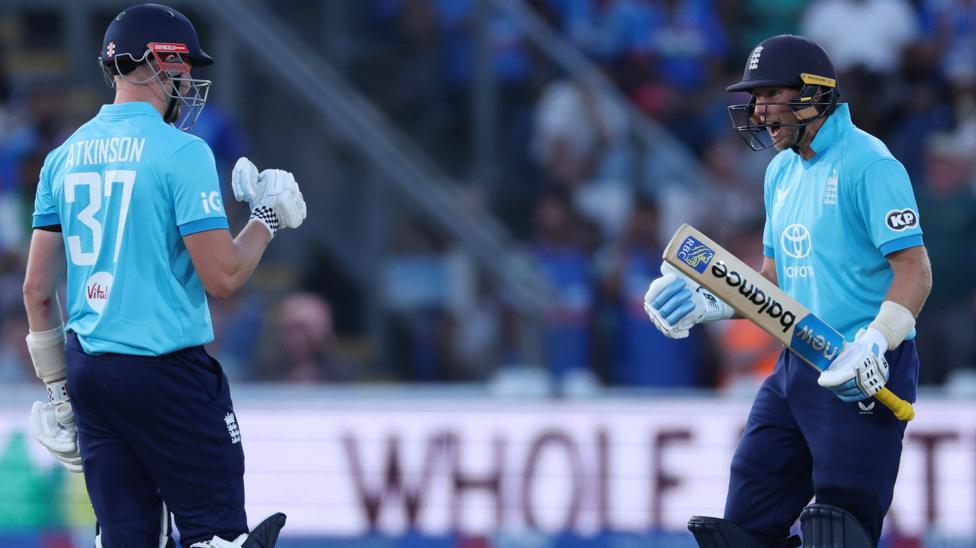
Root's 99 Not Out: England Level ODI Series to Set Up Lord's Decider
Joe Root's masterclass in chase architecture pulls England level with India, setting up a Lord's decider that pivots on tempo control.
Edwards Exits Wolves: The Fresh Start That Wasn't His to Take
Rob Edwards spoke of excitement and renewal in his final Wolves interview, but the Championship reality dictates a far messier rebuild.

The Art of the World Cup Guessing Game: Why Football Memory Matters
Daily World Cup puzzles test your football knowledge — and reveal how deeply the beautiful game lives in our memory.