The Enhanced Games Arrive, and Sport Can No Longer Look Away
The 'Steroid Olympics' debut this weekend, forcing a reckoning with doping's grey areas sport has long avoided.
A Line in the Sand — Then a Step Across It
This weekend, a competition that many in the sporting establishment hoped would never materialize officially begins. The Enhanced Games — colloquially branded as the "Steroid Olympics" — launch their inaugural edition, and the ripple effects extend far beyond the track, the pool, or whichever venue hosts the opening events. For the first time in modern sporting history, a high-profile, multi-sport competition explicitly permits and encourages the use of performance-enhancing substances. The question is no longer theoretical. It is here, on camera, with sponsors attached and athletes ready to compete under conditions that every governing body in global sport has spent decades legislating against.
The premise is as simple as it is explosive: remove the prohibition on PEDs, allow athletes to train and compete with pharmaceutical support, and watch human performance reach levels that "clean" sport cannot match. Proponents frame this as liberation — an end to what they call the hypocrisy of a doping system they argue is riddled with uneven enforcement, geopolitical favoritism, and athletes who simply haven't been caught yet. Critics see it as reckless endangerment dressed up in libertarian rhetoric.
Neither side is entirely wrong, and that is precisely what makes the Enhanced Games so disruptive.
The Architecture of a Controversy
To understand why this event carries such weight, it helps to recall the landscape it emerged from. The World Anti-Doping Agency (WADA) has governed global anti-doping policy since 1999, building an ever-expanding prohibited list and a testing apparatus that most experts privately acknowledge catches only a fraction of violators. State-sponsored doping programs, most infamously Russia's systematic scheme revealed ahead of the 2016 Rio Olympics, shattered any remaining illusion that anti-doping enforcement was a level playing field. The Athletics Integrity Unit, the Court of Arbitration for Sport, and a constellation of national anti-doping agencies operate with varying degrees of effectiveness, funding, and political independence.
Into that fractured credibility steps the Enhanced Games, founded by Aron D'Souza, an Australian entrepreneur and legal scholar who has been vocal about what he sees as anti-doping's fundamental contradiction: a system that claims to protect athlete health while forcing those same athletes to dope in secret, without medical supervision, in a shadow economy of black-market substances and unvetted practitioners.
"The current system doesn't stop doping. It just makes it dangerous. We are offering a third path: transparency." — Aron D'Souza, Enhanced Games founder
That framing is seductive. It is also incomplete. The idea that sanctioned doping equals safe doping requires ignoring decades of endocrinological research on the long-term consequences of sustained PED use, even under clinical supervision. Anabolic steroids, EPO, human growth hormone, and the pharmacological toolkit that elite doping programs have historically employed carry cardiovascular, hepatic, and psychological risks that do not disappear because a doctor is present. The Enhanced Games must contend with the possibility that its most visible legacy could be a generation of athletes dealing with health consequences years after the competition ends.
Who Is Actually Competing?
The roster of confirmed and rumored participants tells its own story. The Enhanced Games has not attracted reigning Olympic champions or world-record holders. Instead, the field consists largely of athletes at the margins of elite competition — those who plateaued under clean conditions, who retired disillusioned with anti-doping bureaucracy, or who see the event as a financial opportunity that mainstream sport did not provide. Some are genuine talents whose careers were curtailed by injury or funding gaps. Others are figures more notable for their social media followings than their athletic resumes.
This is not a trivial observation. The Enhanced Games' credibility rests on whether it can produce performances that genuinely surpass what clean sport achieves. If the winning times and distances are unremarkable, the event becomes a curiosity rather than a provocation. If records shatter, the conversation changes entirely.
The organizers have seeded the competition with enough recognizable names to generate coverage while keeping expectations calibrated. Prize money structures are reportedly competitive with mid-tier professional athletics circuits, and the absence of a prohibited list means athletes can pursue performance gains through methods that would earn multi-year bans in any WADA-compliant sport.
The Tactical Framework: Why Sport's Establishment Is Watching Closely
Beneath the surface-level controversy lies a strategic chess match. The International Olympic Committee (IOC), World Athletics, FINA, and other major federations are watching the Enhanced Games not because they fear direct competition for talent or viewership, but because the event threatens to normalize a conversation that governing bodies have spent decades framing as settled.
The anti-doping consensus is, in institutional terms, a treaty. It requires all signatories — national federations, event organizers, athlete commissions — to enforce the same rules and accept the same moral framework. The Enhanced Games is not bound by that treaty. It operates outside WADA's jurisdiction, outside the Olympic Charter, and outside the legal infrastructure that gives anti-doping rules their enforcement mechanism.
If the Enhanced Games succeeds commercially, it creates a precedent. Not for widespread PED acceptance, but for the existence of a parallel sporting ecosystem with different rules. Athletes who fall foul of WADA sanctions could, in theory, migrate to Enhanced Games events rather than serving bans. Sponsors who want edgier associations could fund teams outside the Olympic structure. Broadcasters looking for novelty content could platform a competition that promises superhuman performances.
None of this may happen at scale. But the mere possibility forces sport's governing bodies to articulate why the current system exists beyond platitudes about fair play and level playing fields. If the Enhanced Games exposes that those platitudes are, in practice, poorly enforced, the reputational damage lands on WADA and the IOC, not on D'Souza.
The Health Question Cannot Be Sidestepped
The most serious objection to the Enhanced Games is not philosophical but medical. Dr. Pieter Cohen, an associate professor at Harvard Medical School who has studied dietary supplements and PEDs extensively, has argued that the long-term health data on performance-enhancing drug use in athletic populations is insufficient to support the claim that supervised doping is safe. Anabolic androgenic steroids, even in controlled doses, are associated with increased risk of cardiomyopathy, left ventricular hypertrophy, and sudden cardiac death. EPO use thickens the blood, raising the risk of stroke and pulmonary embolism.
The Enhanced Games has announced medical screening protocols and on-site physician oversight. But the event is days old. Long-term health monitoring for participants would need to span decades, and no independent medical institution has yet agreed to serve as that monitoring body. The athletes, many of whom are young and healthy today, may not fully grasp the bargain they are making.
This is the gap where the Enhanced Games' libertarian rhetoric meets the reality of human biology. Freedom to choose does not eliminate the consequences of that choice, and the power dynamics at play — young athletes offered money and exposure in exchange for pharmaceutical risk — deserve scrutiny that a slick marketing campaign cannot provide.
What This Means for the Broader Sporting Conversation
The Enhanced Games will not replace the Olympics. It will not drain talent from the Diamond League or the World Championships. But it has already succeeded in one critical respect: it has forced a conversation that sport's establishment preferred to avoid.
For years, anti-doping advocates have argued that PEDs compromise athlete safety and competitive integrity. For years, critics have countered that the system is selectively enforced, geopolitically compromised, and fundamentally dishonest about the prevalence of doping in elite sport. Both positions contain truth. The Enhanced Games does not resolve that tension. It sharpens it.
The sporting world will watch this weekend's events with a mixture of fascination and unease. Some will see liberation. Others will see exploitation. Most will see a mirror held up to an industry that has never been as clean as it claims.
Looking Ahead: The Reckoning After the Debut
The immediate aftermath of the Enhanced Games' opening weekend will be shaped by performance data. If athletes produce genuinely extraordinary results — times, distances, and power outputs that dwarf anything in WADA-compliant competition — the event's organizers will claim vindication. If results are mediocre, the narrative shifts toward sideshow.
But the deeper question persists regardless of outcomes. The Enhanced Games has exposed a fault line in global sport's moral architecture. WADA and the IOC must now decide whether to engage with the substance of the criticism or simply dismiss the event as dangerous spectacle. Dismissal is the easier path. It is also the one most likely to leave the underlying questions unanswered.
Sport has spent a century building an edifice of rules around fairness and health. The Enhanced Games asks a question that edifice was never designed to answer: what if the athletes themselves want a different set of rules?
The answer, whatever it turns out to be, will shape the next decade of sporting governance.
Editorial Integrity
This is an original SportPulse article written by our editorial team. All content is independently researched, written, and reviewed by our writers and editors before publication. We do not publish copied, aggregated, or syndicated content.
SportPulse is committed to original sports journalism. Read our editorial policy or contact us with any questions.
More Like This
All long-reads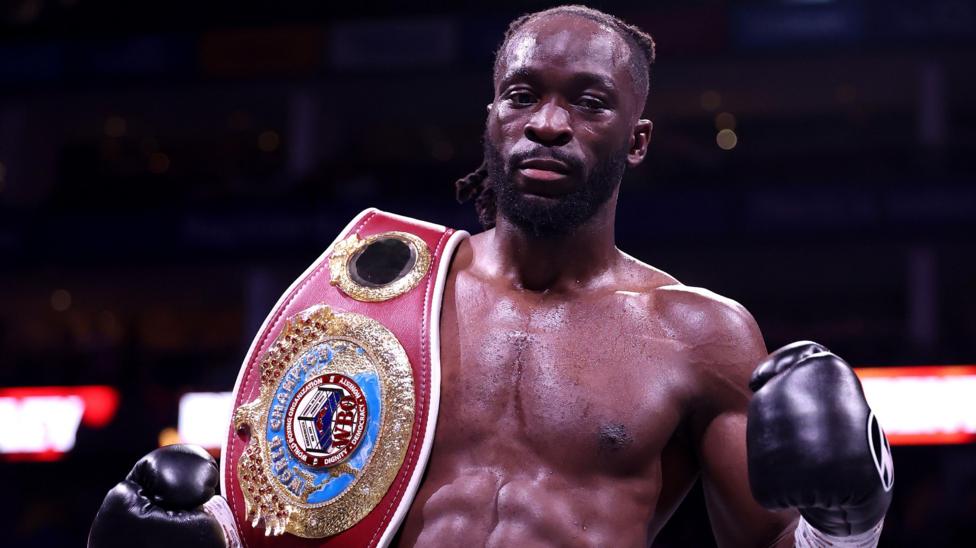
Bentley inherits WBO belt after Alimkhanuly relinquishes title
Denzel Bentley becomes WBO middleweight champion without throwing a punch after Janibek Alimkhanuly vacates the belt.
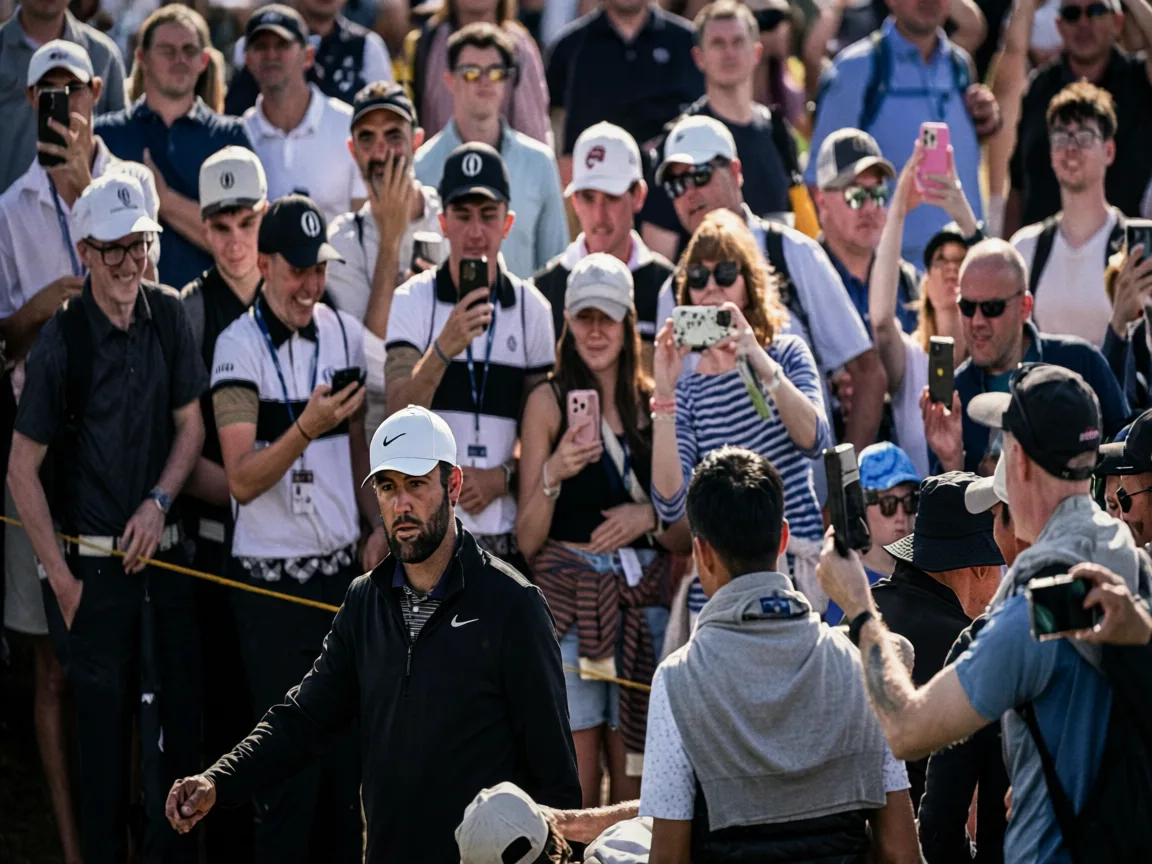
The Open's New Fan Code: Polite Request or линия in the Sand?
The R&A quietly rolled out a behavioral code for spectators at Royal Troon. Behind the corporate language lies a stark warning.
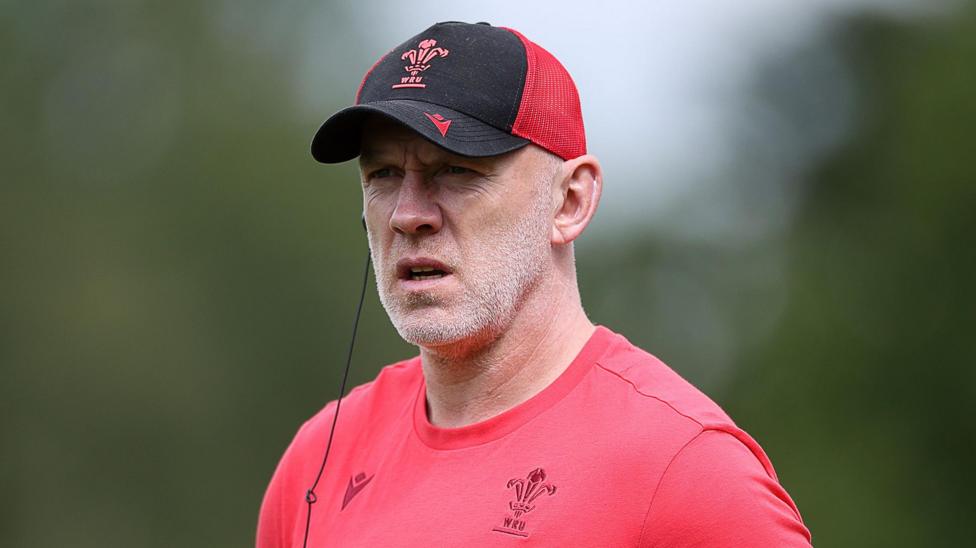
Tandy Relieved as Wales Pay Dispute Resolved Ahead of Fiji Test Opener
A fragile truce between Wales players and the WRU clears the path for Steve Tandy's squad to focus on Fiji.