FAI Greenlights Israel Fixtures: Pragmatism Over Politics
Ireland's General Assembly endorses Nations League matches against Israel, prioritizing sporting integrity and competitive positioning over political pressure.
FAI Greenlights Israel Fixtures: Pragmatism Over Politics
In a decision that cuts to the heart of football's eternal struggle between sporting pragmatism and political pressure, the Football Association of Ireland's General Assembly has endorsed a motion allowing the Republic of Ireland to proceed with their upcoming Nations League fixtures against Israel. The resolution, passed at the FAI's Extraordinary General Meeting, settles what had become an increasingly fraught internal debate about the intersection of international sport and geopolitical conflict.
The endorsement removes a layer of uncertainty that had threatened to complicate Ireland's competitive calendar, but it does little to extinguish the broader questions about how football governing bodies navigate fixture obligations involving nations at the center of global controversy. What the motion represents, above all, is a reaffirmation of UEFA's jurisdictional framework and a recognition that selective fixture avoidance sets a precedent few federations are prepared to embrace.
The Motion and Its Implications
The EGM proceedings centered on whether the FAI should fulfill its obligations within the UEFA Nations League structure, specifically regarding scheduled or potential matchups against Israel. The General Assembly's endorsement signals that the association will not unilaterally withdraw from fixtures or seek postponements based on political considerations, a stance that aligns with UEFA's long-standing position that sporting competitions operate independently of bilateral diplomatic disputes.
For the Republic of Ireland, the decision carries both competitive and reputational weight. On the pitch, Nations League fixtures represent a critical pathway for nations seeking to improve their seeding in future European Championship and World Cup draws. Each match carries coefficient points that cascade into pot placements, qualification paths, and ultimately the architecture of a nation's international ambitions for years to come. A refusal to participate, or a forced forfeiture, would not merely sacrifice points; it would risk sanction from UEFA's disciplinary apparatus, potentially including fines, point deductions, or even suspension from subsequent competitions.
The calculation is brutal in its simplicity: withdraw and face institutional punishment that harms the national team's long-term prospects, or participate and absorb the political criticism that inevitably accompanies any sporting engagement with Israel in the current climate.
Managerial and Tactical Considerations
From a tactical standpoint, the FAI's decision provides clarity for the Republic of Ireland's coaching staff and allows preparation to proceed without the specter of last-minute fixture disruption. Heimir Hallgrímsson, who took the helm with a mandate to restructure Ireland's international identity, requires certainty in his scheduling to implement the 4-3-3 structure he has favored since arriving.
Hallgrímsson's tactical philosophy has emphasized a mid-block pressing scheme that transitions into a compact 4-5-1 out of possession, with the intention of denying central progression and forcing opponents wide before triggering aggressive doubled pressure on the ball-carrier. The Icelandic coach inherited a squad that had drifted into tactical incoherence under previous regimes, oscillating between a possession-oriented 4-2-3-1 and a more direct 3-4-3 that left the midfield base exposed. Establishing consistency in formation and pressing triggers depends on consistent competitive minutes against varied opposition profiles.
Israel, regardless of political context, presents a distinct tactical challenge. The Israeli national team has historically operated with a flexible 4-2-3-1 that morphs into a 3-4-2-1 in possession, with fullbacks advancing into midfield corridors and a double pivot controlling tempo. Their technical midfielders excel at finding pockets between the lines, which would directly test Hallgrímsson's mid-block rigidity and the positioning of Ireland's double pivot. Preparing for this specific tactical profile requires clinical attention to ball-side overloads and the timing of pressing triggers in the central zones.
The Weight of Coefficient Points
The Republic of Ireland currently sits in Nations League League B, a tier that offers meaningful competitive fixtures but demands results to avoid relegation to League C. The coefficient mathematics that underpin UEFA's seeding system mean that every result carries compounding value across multiple cycles.
- A nation's UEFA coefficient determines pot placement for European Championship and World Cup qualifying draws
- Each Nations League match contributes to a rolling coefficient calculation that spans multiple seasons
- Missing fixtures through withdrawal counts as a defeat in coefficient terms, compounding the sporting damage
- Relegation between Nations League tiers alters the quality of opposition in subsequent cycles, affecting a team's developmental trajectory
The FAI's leadership understands these mechanics with institutional clarity. A decision to withdraw from Israel fixtures would not merely affect a single matchday; it would reverberate through coefficient calculations for three to five years, potentially condemning Ireland to more difficult qualifying groups in future tournaments. For a nation that has not qualified for a major tournament since the 2012 European Championship, the margin for error is vanishingly thin.
The Political Context and Football's Jurisdictional Framework
The EGM vote did not occur in a vacuum. Advocates for boycotting or postponing fixtures against Israel argued that the FAI should use its sporting platform to signal disapproval of Israeli government actions, particularly in the context of the ongoing conflict in Gaza. The moral and political weight of that argument is considerable, and it was reflected in the fact that the motion required a formal EGM rather than a routine administrative decision.
However, the FAI's General Assembly ultimately sided with the position that football federations operate within a framework established by UEFA and FIFA, and that selective enforcement of political criteria for fixture fulfillment undermines the structural integrity of international competition. The concern, expressed by several delegates, was that if federations began unilaterally refusing fixtures based on political positions, the entire international calendar would collapse into a patchwork of bilateral disputes and diplomatic retaliations.
The integrity of the competition framework depends on all participating federations honoring their fixture obligations regardless of diplomatic circumstances.
This sentiment, echoed in various forms throughout the EGM, reflects a governing philosophy that treats sporting obligations as institutionally distinct from political endorsements. It is a position that UEFA has consistently maintained, even as individual federations face mounting internal pressure to take political stances through their sporting commitments.
Tactical Shift: The Coaching Certainty Factor
The most immediate tactical consequence of the EGM decision is the removal of preparational ambiguity. Hallgrímsson and his staff can now build their training cycles around specific opponents without the contingency planning that fixture uncertainty demands. The coaching staff will be able to calibrate their pressing intensity and defensive shape against different tactical profiles without worrying that the matches might be cancelled on short notice.
This factor cannot be overstated. When a fixture's status is uncertain, coaching staffs must divide their preparation bandwidth between tactical work for the match itself and contingency planning for its potential cancellation, team bonding, and adjusted scheduling. Players absorb this uncertainty, and it manifests in reduced intensity during training sessions and diminished focus during video analysis. By resolving the question through formal institutional process, the FAI has given Hallgrímsson the single most valuable resource available to any international coach: certainty.
What Comes Next
The Republic of Ireland will now proceed with their Nations League obligations as scheduled, with Hallgrímsson's squad preparation able to continue unimpeded. The decision does not eliminate the political discourse surrounding Ireland's participation, but it channels that discourse through institutional processes rather than forcing the national team to absorb the consequences of unilateral action.
For Hallgrímsson, the path ahead is now clear to focus on the tactical reconstruction that was the entire point of his appointment. Ireland's Nations League campaign will reveal whether his 4-3-3 system can provide the defensive solidity and transition quality needed to compete in League B, and whether the emerging generation of Irish internationals can execute a pressing scheme that demands far more tactical discipline than the reactive football of recent years.
The next fixture window will offer the first true test of Hallgrímsson's tactical vision in competitive conditions. The EGM decision ensures that test will come against the opponents UEFA has scheduled, not against the backdrop of a federation at war with its own sporting obligations.
Editorial Integrity
This is an original SportPulse article written by our editorial team. All content is independently researched, written, and reviewed by our writers and editors before publication. We do not publish copied, aggregated, or syndicated content.
SportPulse is committed to original sports journalism. Read our editorial policy or contact us with any questions.
More Like This
All football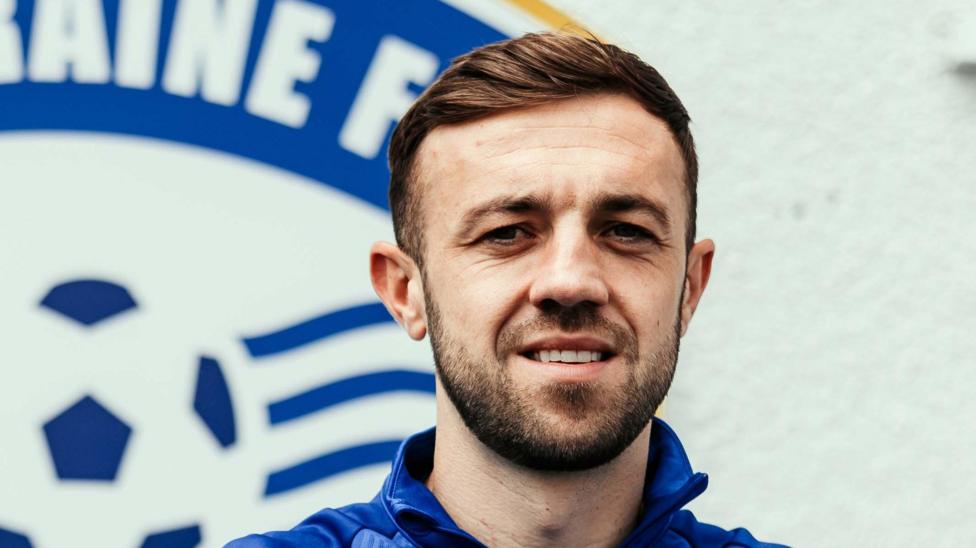
McMenamin Dumps St Mirren for Coleraine Homecoming
Northern Ireland international Conor McMenamin exits St Mirren to seal a long-term return to the Irish Premiership with Coleraine.
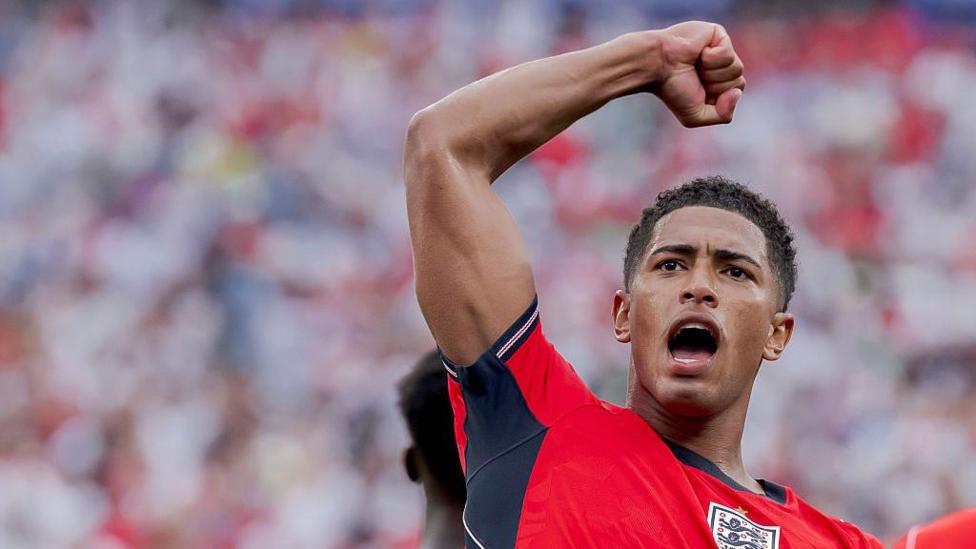
Bellingham Silences Doubts to Become Tuchel's Engine
Jude Bellingham has transformed from a selection debate into Thomas Tuchel's indispensable tactical cornerstone for England.
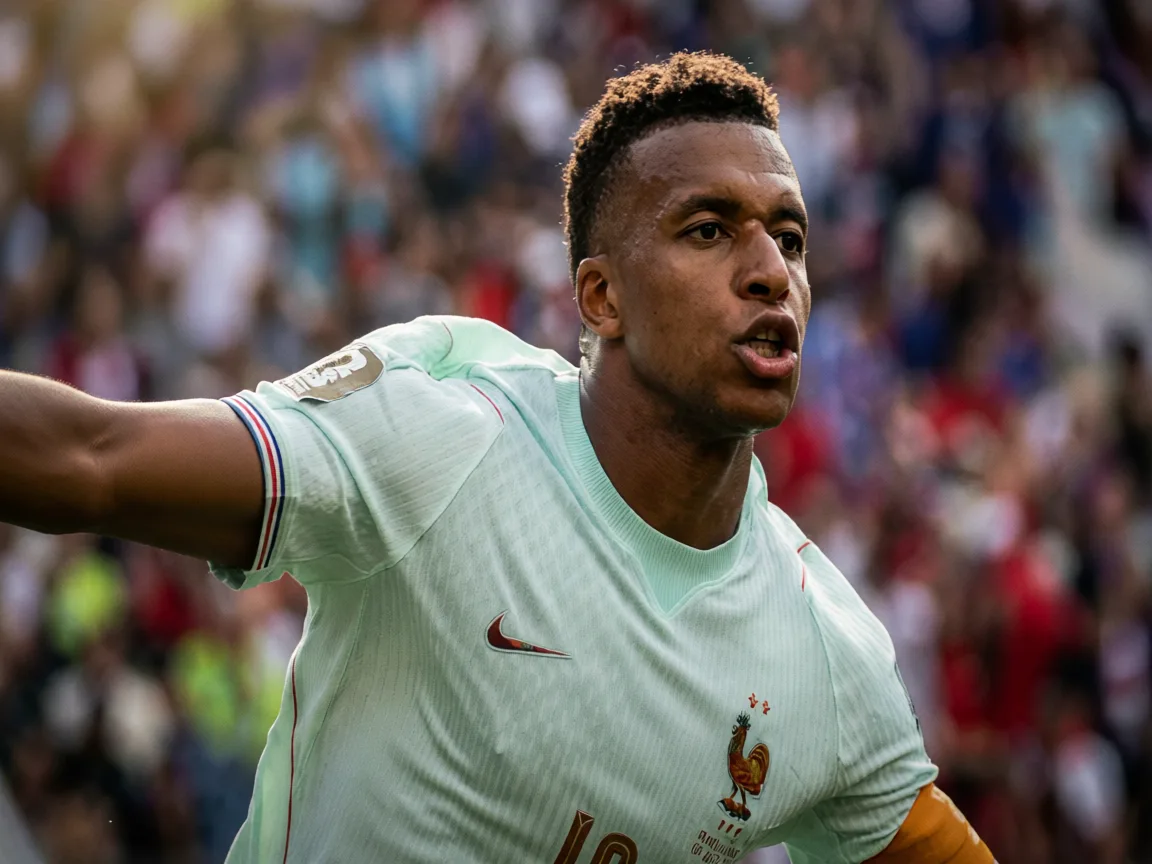
Mbappe's Masterclass: How France Tore Morocco Apart
Kylian Mbappe's opener against Morocco was a product of France's tactical geometry exploiting defensive gaps.