Farrell's Calculated Gamble: Lowe's Japan Move and the Ireland Road to 2027
Ireland's head coach signals Japan-based wingers face an uphill battle for 2027 World Cup selection, but refuses to slam the door entirely on the James Lowe question.
The modern international game is increasingly defined by geographical pragmatism, and Andy Farrell's latest remarks on James Lowe's future reflect this tension between talent cultivation and tactical cohesion. The Ireland head coach confirmed that the former Leinster wing is unlikely to feature for the national team while he is playing his club rugby in Japan, though he notably refrained from completely closing the door on a potential 2027 World Cup call-up. This is not a door being shut; it is a door being left on a very specific, conditional latch.
The Tactical Implications of Geographic Apron Strings
In the contemporary Rugby ecosystem, the symbiotic relationship between domestic franchise systems and national teams has never been more intellectually fascinating. National coaches do not merely select their best fifteen players; they curate environments built on shared tactical literacy, cohesive positional play, and relentless physical conditioning. Ireland's sustained success under Farrell has been constructed on the foundations of the Leinster's 1-3-3-1 shape in attack and highly synchronized, connection-based defensive systems.
When a player moves away from that daily environment, the coach loses a degree of control over what might be termed 'tactical calibration.' Playing in Japan's League One presents a dramatically different structural rhythm and a lower-intensity collision profile compared to the United Rugby Championship and the Investec Champions Cup. A coach grounded in European continental philosophy, heavily focused on system integrity and synchronized movements, naturally hesitates to integrate a player who must constantly recalibrate their decision-making matrix between two entirely different rugby cultures.
The Problem of Divergent Game Models
Japan's domestic competition should not be dismissed as a retirement home; the top tier is fiercely competitive and increasingly well-funded. However, the phase-play architecture in League One often defers to individual brilliance over the sterile, automated phase sequences favored by northern hemisphere powerhouses.
- Collision dominance: The weekly physical toll in Japan's top flight does not replicate the attrition rate of European domestic finals.
- Defensive spacing: League One places a greater emphasis on backfield coverage and less on the executed, line-speed-based, blitz-defense frameworks favored by Ireland.
- Tactical categorization: The spatial permutations a winger faces in the southern-hemisphere influenced structures of Japan require a recalibrated sense of when to enter the backfield and when to hold the defensive line.
Lowe, a player whose game has always been defined by his aggressive positioning in the 15-meter zone and an unerring ability to time his entry into the wider channels, would inevitably face a period of systemic readjustment. Farrell's reluctance is not a judgment on the player's diminishing physical capabilities, but rather a cold, calculated assessment of a divergent developmental pathway.
Sustaining Competition at the Edge
The broader context here is the deep pool of back-three talent currently circulating through the Irish provincial system. Players like Mack Hansen and James Lowe have redefined the archetype of the modern Irish winger: robust, creative, and deracinated from the traditional touchline-hugging role. They operate as auxiliary playmakers in the 13-meter channel.
For Farrell, handing a jersey to a player operating outside the domestic system creates a bottleneck for emerging domestic talent. Continuity is paramount, and if a Japan-based veteran is selected, they are consuming valuable international game minutes that could be invested in cultivating a player operating within the same daily 44-court press structures at provincial level.
Farrell is managing a delicate ecosystem. The cultivation of a domestic ethos relies on the visible reward of international selection. If the entire attacking backline operates off the same automated wide-channel movements, any individual plucked from a divergent system threatens the fundamental execution of the Tactical Shift.
Tactical Shift: Reconfiguring the Edge Post-Lowe
The framework of Ireland's tactical structure has not shifted because of Lowe's departure, but the tactical impetus has evolved to compensate for his absence. Early in the Farrell era, the backfield was often configured in a back-three 4-4-2, with Lowe acting as a primary kick-receipt weapon.
Lowe's skill set allowed Ireland to operate a highly aggressive, coordinated phase play where the open-side winger positioned himself exceptionally narrow, operating almost as a second fullback in the attacking shape. This created an inherent structural asymmetry: Ireland could attack down the blindside with rapid numerical advantages while trusting Lowe's left boot and spatial awareness to cover aerial threats on the openside.
In his absence, Farrell has been forced into a structural evolution. The Irish attacking shape now frequently reverts to a traditional 1-3-2-2 formation when exiting their own third. The wingers hold their width on the touchline longer, demanding a different profile of player: less of an auxiliary playmaker and more of a classical finisher with explosive line-breaking capability.
"When you're building a system, you need the players to exist within it daily. The structural rhythm of our game is a constant conversation that doesn't stop when you leave the camp."
This quote, echoing the sentiments of various international coaches operating at the apex of the modern game, captures the essence of the structural divergence problem. A player operating in Japan can maintain physical conditioning, but the navigational intelligence required to execute Farrell's automated phase transitions inevitably degrades without daily repetition.
The Economic Reality of Global Rugby
From a structural standpoint, players departing for Japan are making a calculated decision regarding career longevity. The financial temptation of League One is a crucial factor; the sheer physical toll of European domestic rugby necessitates shorter careers unless players seek to elongate their earning potential in the East.
The economics of the sport dictate that European clubs cannot compete with the lucrative short-term green/envy contracts offered by Japanese clubs. This creates a natural system of personnel rotation that favors the East, where players can earn a substantial premium for a reduced physical output.
Yet, the intellectual fascination of rugby's current era lies precisely in these competing interests. The player must weigh financial security against international ambition; the coach must weigh individual quality against systemic cohesion.
For Lowe, the calculation was clear. His legacy with Leinster is cemented; he elevated the team's attacking potential by providing an extra structural layer. His left-footed kicking game provided a relief valve that allowed Ireland to exit their own 22 with a degree of confidence previously unseen in the post-Rob Kearney era.
The 2027 World Cup Calculus
Farrell's refusal to completely close the door on the 2027 World Cup reveals a nuanced understanding of rugby's cyclical nature. The World Cup itself is a different format from the annual Six Nations grind. It requires squad depth, versatile players, and specific tactical matchups designed for single-game eliminations rather than the sustainability of a league format.
If a player like Lowe, who will be in his mid-30s by 2027, can still perform at the peak of his athletic capabilities, Farrell retains the option of recalling him as a specialist tournament selection. In a World Cup scenario, the traditional 44-court press and 44-court defensive instructions can be adjusted for a specific opponent.
The door remains open for tactical reasons. If Ireland require a specific educated kicking game to counter a southern hemisphere giant, or if injuries decimate the European-based back-three options, Farrell knows that a player of Lowe's class can be parachuted into a tournament environment. It is a safety net disguised as a selection policy.
What's Next: Execution Against Spain and Beyond
The immediate future for Ireland, and for the Farrell cultivation project, does not include Lowe. The focus shifts to the next generation of wingers who must internalize the daily 1-3-3-1 shape and executing the automated wide-channel movements that define this era.
Ireland's upcoming fixtures against tier-two opposition in the summer will serve as a laboratory for Farrell to experiment with the structural reconfiguration of his backfield. The tactical impetus on the coaching staff is to discover whether the current generation of domestic wingers can adequately fill the precise 15-meter zone responsibilities that Lowe previously owned.
The Lowe question is a perfect encapsulation of modern rugby's central tension: the demands of a globally integrated player market against the needs of a domestically integrated national philosophy. For now, Farrell's system has moved on, but the ghost of James Lowe's left boot lingers over the 2027 horizon.
Editorial Integrity
This is an original SportPulse article written by our editorial team. All content is independently researched, written, and reviewed by our writers and editors before publication. We do not publish copied, aggregated, or syndicated content.
SportPulse is committed to original sports journalism. Read our editorial policy or contact us with any questions.
More Like This
All football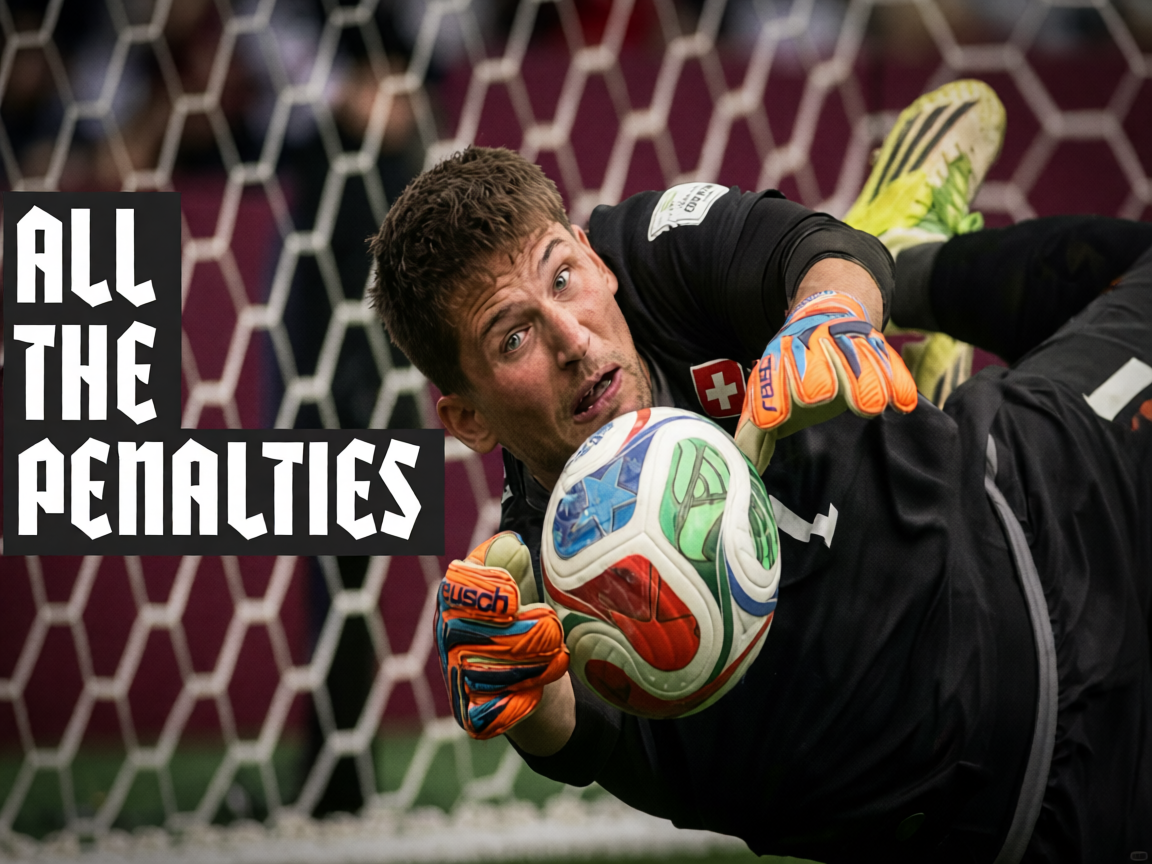
Switzerland's Shootout Composure Exposes Colombia's Mental Frailty
Switzerland advanced past Colombia 4-3 on penalties, exposing a brittle psychological edge in a tournament-defining shootout.
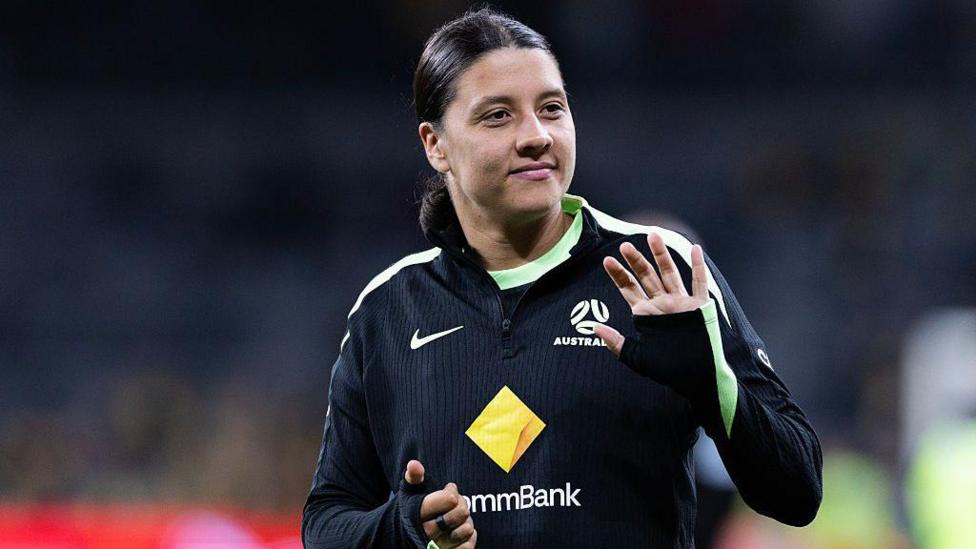
Sam Kerr Returns to the NWSL as Gotham FC Land a Generational Striker
Australia's all-time leading scorer reunites with Gotham FC on a four-year deal after five trophy-laden years at Chelsea.
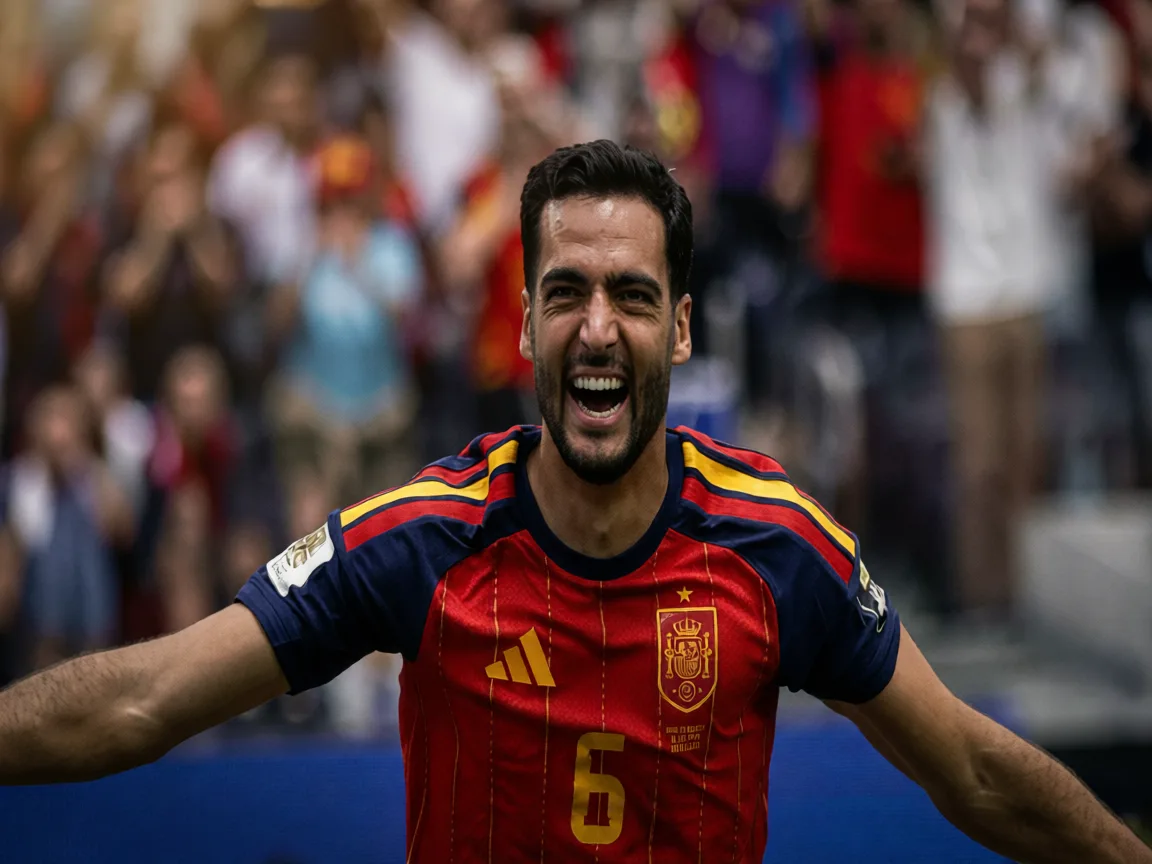
Spain's Goal-by-Goal Roar to the World Cup Semi-Finals
Spain have fired their way to a Dallas semi-final clash with France. Here is every goal that defined their 2026 World Cup march.