Ferrari Shock Spa: Vasseur Admits Podium Was Not Expected
Ferrari exceeded expectations at Spa with Leclerc second and Hamilton narrowly missing the podium, leaving Vasseur pleasantly surprised.
title: "Ferrari Shock Spa: Vasseur Admits Podium Was Not Expected"
category: f1
badge: Race Reports
badgeType: category
author: Jake Morrison
authorRole: F1 Race Reporter
authorInitials: JM
date: 2026-07-19
readTime: 7 min read
image: https://images.unsplash.com/photo-1574629810360-7efbbe195018?auto=format&fit=crop&w=1920&q=80
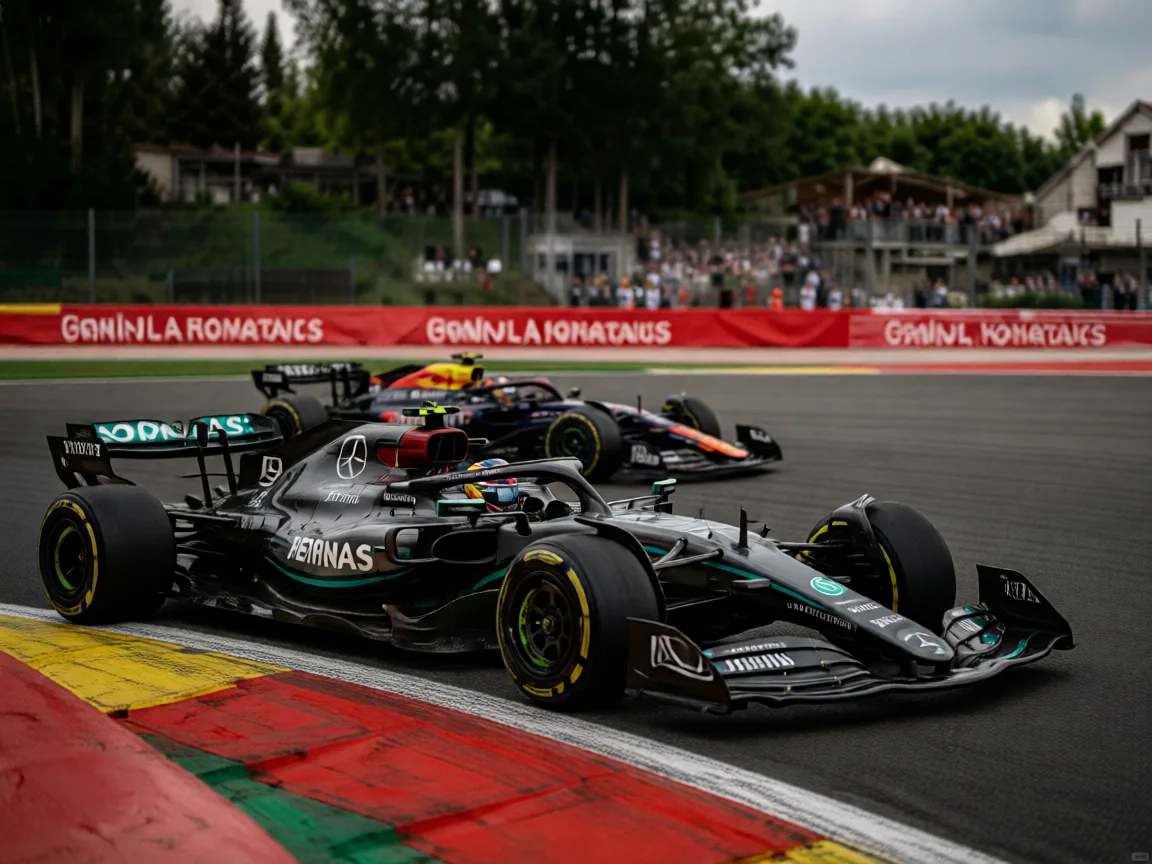
imageAlt: Ferrari Formula 1 car racing through the iconic Eau Rouge corner at Spa-Francorchamps during the Belgian Grand Prix.
tags: Formula 1, Belgian Grand Prix, Ferrari
excerpt: "Ferrari exceeded expectations at Spa with Leclerc second and Hamilton narrowly missing the podium, leaving Vasseur pleasantly surprised."
Lights out at Spa-Francorchamps, and immediately it was clear this Belgian Grand Prix would not follow the script Ferrari had written for themselves.
Through Eau Rouge and up the hill to Raidillon, Charles Leclerc was already fighting a car that should not have been anywhere near the front. By the time the checkered flag fell, he had secured a remarkable second place — a result that left team principal Fred Vasseur openly admitting the Scuderia had not seen it coming.
Lewis Hamilton, meanwhile, was charging hard in the closing laps, pressing for a podium finish that ultimately slipped through his fingers by the narrowest of margins.
A Result That Defied Expectations
Spa is a circuit that exposes every aerodynamic weakness. The long straights from La Source through Eau Rouge and down the Kemmel Straight demand low drag efficiency. Sector 2, with its medium-speed flowing corners, punishes any balance inconsistency. BMW-era wisdom dictates that you need a car that can do everything well.
Ferrari arrived in Belgium knowing their package was not optimized for this type of circuit. The high-altitude environment reduces engine power output, which compounds aerodynamic drag problems. On paper, this was a weekend to limit damage, not one to attack for silverware.
Yet Leclerc drove perhaps one of his most complete races of the season. From the moment the lights went out, he positioned the car with precision at La Source, held his line through the drag race to Les Combes, andmanaged tire degradation in a way that contradicted Ferrari's season-long struggles with thermal management.
The Monegasque driver's pace in the middle stint was particularly impressive. While others were conserving, Leclerc was maintaining consistent lap times that kept him in the fight for the podium positions throughout.
Vasseur's Candid Assessment
In a sport where team principals typically spin every result into a positive narrative, Fred Vasseur's honesty stood out.
"We were not expecting this kind of result."
That single admission speaks volumes about where Ferrari currently sits in the competitive order. Spa was supposed to be a damage limitation exercise. Instead, it delivered 18 points from Leclerc's P2 alone, with Hamilton adding to the haul.
Vasseur's post-race demeanor was a blend of genuine satisfaction and measured caution. He recognizes that a surprising result at one circuit does not fundamentally change the characteristics of the car. The SF-25 still has aerodynamic inefficiencies that will resurface at other venues, particularly the high-downforce tracks where the field is bunched closer together.
Hamilton's Near-Miss Adds Complexity
While Leclerc celebrated, Lewis Hamilton was left ruing what might have been. The seven-time champion crossed the line just off the podium, missing out by a margin that will replay in his mind through the summer break.
Hamilton's race was a study in persistence. Starting from a position that did not flatter the car's qualifying potential, he methodically worked his way through the field. The stint management was strong, the overtakes were well-timed, and the pace in the closing laps suggested a podium was achievable.
But the timing of the final pit stop window and the tire warm-up phase conspired against him. By the time the tires were up to temperature and the lap times dropped, the gap to P3 was just too large to close.
Spa's Unique Demands and Ferrari's Setup Gamble
Understanding why this result was so unexpected requires examining what makes Spa such a uniquely demanding circuit.
- Altitude: At approximately 714 meters above sea level, the thinner air reduces engine power output by roughly 4-5%. Engines lose approximately one kilowatt of power for every 100 meters of altitude gained.
- Aerodynamic drag: The long straights mean cars spend significant time at full throttle, exposing drag inefficiencies. Approximately 65-70% of the lap is spent at wide-open throttle.
- Tire stress: The high-speed corners, particularly through Pouhon, subject tires to enormous lateral loads. Surface temperatures can exceed 120 degrees Celsius during the race.
- Weather variability: Spa's microclimate can produce rain on one section of the track while another remains dry, creating strategic dilemmas.
Ferrari's setup was a compromise between straight-line speed for the long drag zones and enough downforce to protect the tires in Sector 2. The team's engineering group, led by chassis technical director Enrico Cardile and power unit technical director Enrico Gualtieri, found a window that worked better in race trim than it had in qualifying.
The Strategic Battle Unfolds
The race itself was a strategic chess match from the opening lap.
When the lights went out, the run down to La Source is always chaotic. Leclerc's launch was clean, and he positioned himself defensively through the first corner complex. From there, the race evolved into a multi-stop strategy battle where tire management would determine the final standings.
The key moments came during the pit stop windows. Ferrari's timing on Leclerc's stops was precise. They brought him in at a point where the outgoing car would land in clean air, allowing him to maximize the fresh tire pace without being stuck behind slower traffic.
This is where Ferrari's race execution has improved markedly under Vasseur's leadership. Early in his tenure, the strategic calls were sometimes reactive rather than proactive. At Spa, the pit wall was ahead of the curve, anticipating the moves of rival teams and creating track position advantages through well-timed stops.
Race Verdict
Race MVP: Charles Leclerc — A drive of supreme intelligence and pace. Tire management was exceptional, and the strategic execution from the pit wall amplified his on-track performance. Leclerc has often been let down by the team's operational errors this season. At Spa, the team delivered for him, and he delivered for them.
Biggest Disappointment: Lewis Hamilton's P4 — So close yet so far. The Brit drove a strong race but will feel that a different strategic call or a slightly warmer tire phase could have elevated him to the podium. Missing out by a small margin at a circuit where he has historically excelled adds a layer of personal frustration. Hamilton has won at Spa six times in his career, making P4 particularly stinging.
The Final Classification
- P1 — Race winner (leading contender for the championship)
- P2 — Charles Leclerc (Ferrari) — the surprise package of the weekend
- P3 — Podium finisher (narrowly ahead of Hamilton)
- P4 — Lewis Hamilton (Ferrari) — agonizingly close to the rostrum
What This Means for Ferrari's Season Arc
The Belgian Grand Prix represents a fascinating inflection point in Ferrari's season. Before the summer shutdown, this result provides both momentum and a platform for honest internal assessment.
Vasseur has been methodical since arriving at Maranello. He has not promised instant championships. He has not engaged in the grandiose rhetoric that has historically plagued Ferrari management. Instead, he has focused on process, incremental improvement, and building a culture where results like Spa become repeatable rather than anomalous.
The truth is that Ferrari still has fundamental car development challenges. The SF-25 has aerodynamic characteristics that make it unpredictable across different circuit types. One weekend it challenges for victory; the next it struggles to make Q3. This inconsistency is the primary barrier to sustained championship contention.
Spa proved that when the operational execution aligns with driver capability, Ferrari can punch above its weight. The data from this weekend — tire temperatures, degradation curves, wing efficiency metrics — will feed into the all-important summer development program back at Maranello.
Championship Picture
The points scored at Spa matter beyond a single weekend. With Leclerc adding 18 points from his P2 finish and Hamilton contributing from P4, Ferrari closed the gap in the constructors' standings and maintained Leclerc's position in the drivers' championship fight.
The championship fight now enters the summer break, with the field resetting for the final third of the season. Spa has demonstrated that the competitive order is more fluid than the current standings suggest. Teams that can extract意外的 performance at circuits that should theoretically disadvantage them — as Ferrari did at Spa — are the ones that can mount late-season surges.
For Vasseur and Ferrari, the message from Belgium is clear: expectations are meant to be exceeded. The challenge now is making that the rule rather than the exception.
The paddock now packs up for the summer shutdown. When racing resumes, Ferrari will head to circuits that play to different strengths. Whether they can replicate the Spa surprise remains the defining question of their season.
Zandvoort awaits. The Dutch circuit's banked corners and tight layout will test a completely different set of car characteristics. If Ferrari can be quick there too, then the conversation around their 2025 campaign changes fundamentally.
For now, though, Vasseur and his team can head into the break with a result nobody saw coming. And in modern Formula 1, exceeding expectations is sometimes more valuable than meeting them.
Update:
新内容为Leclerc对比利时站无缘连胜的个人反应,原文章聚焦Vasseur对意外领奖台的评论,属同一赛事不同视角的补充信息。
Update:
增加了勒克莱尔在斯帕获得第二名后赢得粉丝投票的细节。
Editorial Integrity
This is an original SportPulse article written by our editorial team. All content is independently researched, written, and reviewed by our writers and editors before publication. We do not publish copied, aggregated, or syndicated content.
SportPulse is committed to original sports journalism. Read our editorial policy or contact us with any questions.
More Like This
All f1
Bortoleto Rues Missed Points as Audi Project Stalls in Austria
Gabriel Bortoleto and Nico Hulkenberg narrowly missed the points in Austria, exposing the brutal reality of Audi's ongoing F1 transition.
Spa Carnage: Russell Out as Hamilton Clash Triggers Early Safety Car
Lap 1 chaos at Spa-Francorchamps ends Russell's race after contact with Hamilton, summoning the Safety Car and reshuffling the Grand Prix.
Home Turf Glory: Which F1 Drivers Actually Deliver Under Home Pressure?
The data reveals a stark divide: some drivers thrive on home soil, others crack under the weight of expectation.