Ferrari's Hungary Meltdown Exposes SF-24 Weaknesses Vasseur Can No Longer Hide
Fred Vasseur admits everything went wrong as both Ferrari drivers missed the podium at the Hungaroring.
Vasseur's Blunt Admission After a Weekend to Forget
Fred Vasseur doesn't usually resort to blanket condemnations. The Ferrari team principal tends to pick his words carefully, offering measured assessments even after difficult weekends. So when he declared that "everything went wrong" at the Hungarian Grand Prix, the phrasing carried real weight. Both Charles Leclerc and Lewis Hamilton failed to reach the podium, a result that exposed the SF-24's limitations at a circuit that rewards aerodynamic efficiency and mechanical grip.
The Hungaroring is an outlier on the calendar. Its tight, twisting layout leaves almost no room for overtaking, which means qualifying position and race pace are everything. There's no long straight to mask a poor setup, no DRS zone to compensate for a mediocre car. Ferrari arrived expecting to fight for the podium and left empty-handed, a result Vasseur did not attempt to sugarcoat.
How the SF-24 Broke Down Across Budapest
The problems were not confined to a single subsystem. Ferrari's weekend unraveled across multiple domains: aerodynamic balance, tire degradation, and power unit driveability all contributed. The Hungaroring's sequence of medium-speed corners demands a car that rotates cleanly on turn-in without destroying its rear tires through sustained lateral loads. The SF-24, at this circuit, appeared to struggle with exactly that balance.
Leclerc has spoken throughout the season about the car's inconsistency in generating front-end grip through slow-to-medium transitions. At Budapest, the problem was amplified. The floor and diffuser package, which Ferrari had brought as an incremental update, appeared to lose effectiveness in the high-temperature conditions. Track temperatures exceeding 50 degrees Celsius pushed the Pirelli rubber beyond its optimal operating window, and Ferrari's setup could not compensate.
Hamilton's weekend was equally compromised. Adjusting to the SF-24's driving characteristics has been an ongoing project, and the Hungaroring's demands exposed the gap between what the car wants and what Hamilton delivers instinctively. His feedback sessions reportedly highlighted a disconnect between the steering input and the car's response through the esses at Turns 4 and 5, a section where confidence under braking is paramount.
The Setup Gamble That Cost Ferrari Every Stint
The Hungaroring is what engineers call a rear-limited circuit. The surface is abrasive, the corners are long, and the rear tires bear the brunt of sustained acceleration loads. A car that cannot manage its rear tire temperatures through the opening stint will fall off a cliff in the second half of the race.
Ferrari's approach to this problem centered on the rear suspension geometry and the beam wing configuration. In theory, a softer rear setup would allow the tires to absorb more energy gradually, keeping them in their thermal window. But the SF-24's porpoising characteristics at low ride heights made this approach risky. Run the car too soft at the rear and the floor stalls through compression, killing downforce precisely when you need it most.
The alternative, a stiffer setup with more aggressive camber settings, generates peak grip but punishes the tires over a stint. Ferrari appeared to fall between these two approaches, neither maximizing single-lap pace nor preserving rubber for the race. It's the kind of setup compromise that costs you tenths every lap without ever being dramatic enough to identify in isolation.
Budapest Widened the Gap Ferrari Could Not Afford
This result arrives at a critical juncture. Ferrari entered the weekend hoping to consolidate its position in the constructors' standings and apply pressure to McLaren and Red Bull. Instead, the gap widened. Vasseur's frustration is not performative; it reflects a genuine concern that the SF-24's development trajectory has stalled.
The team's upgrade package, introduced over the preceding races, was supposed to address the car's weakness in high-downforce trim. Budapest should have been a validation of that work. Instead, it became an indictment. If the updates are not delivering the expected performance delta, the engineering team faces a choice: continue pushing in the current direction or redirect resources toward the 2025 project.
"Everything went wrong," Vasseur said, offering no excuses and no deflection.
Spa's 7 Kilometers Give the Engine Room to Breatthe
The next round at Spa-Francorchamps will test something different from Budapest. Where the Hungaroring rewards mechanical grip and slow-corner stability, Spa demands straight-line speed, high-speed balance through Eau Rouge and Pouhon, and a low-drag configuration that doesn't sacrifice rear stability through the longer corners of the Ardennes.
The SF-24 has generally performed better at circuits where the power unit can mask aerodynamic deficiencies. Spa's 7-kilometer layout gives the engine room to operate. But if the underlying balance issues persist, the sweeping corners through the forest will expose them just as Budapest's tight sequence did.
The technical staff at Maranello have two weeks to diagnose what went wrong. Vasseur's public candor suggests the internal debrief will be equally unsparing.
Editorial Integrity
This is an original SportPulse article written by our editorial team. All content is independently researched, written, and reviewed by our writers and editors before publication. We do not publish copied, aggregated, or syndicated content.
SportPulse is committed to original sports journalism. Read our editorial policy or contact us with any questions.
More Like This
All f1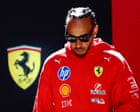
Hamilton's Silverstone Renaissance: Why Ferrari Finally Clicked
Hamilton returns to his nine-win fortress armed with a reborn Ferrari package that has technically finally clicked.
Spa's Weather War: A Four-Leg Bet Builder for the Belgian GP
Spa-Francorchamps is a roll of the dice. Here is a four-leg bet builder for the Belgian Grand Prix.
Piastri's Hungary charge ends in Sainz collision retirement
McLaren's Oscar Piastri retired from the Hungarian GP after a collision with Carlos Sainz's Williams while fighting for victory.