Ferrari and Leclerc Ignite Madring: First F1 Laps Make History
Charles Leclerc and Ferrari shatter the silence at Madring, laying down the first F1 rubber on an all-new circuit.
First Blood at Madring
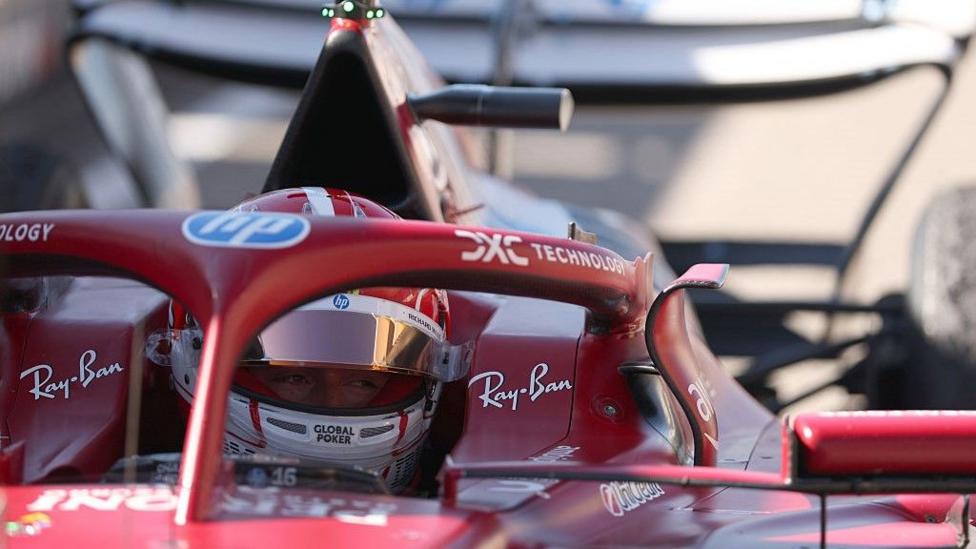
The engine echoes where none have echoed before. Charles Leclerc eases the Ferrari out of the pit lane, and the all-new Madring circuit roars to life for the very first time. No crowds. No grandstands packed with tifosi. Just the primal shriek of a Formula 1 power unit bouncing off fresh asphalt and empty catch fencing.
This is the moment a track stops being a construction project and starts becoming a racetrack. A filming day on paper. A historic milestone in practice. Leclerc and Ferrari are the first to thread a modern Grand Prix car through Madring's layout, laying down the initial rubber on a surface that has never known the heat of an F1 tire.
It sounds like a formality. It is anything but. A filming session is a team's first real chance to probe a venue's secrets before the world arrives and the pressure ramps up.
The Anatomy of a First Lap
A new circuit is a blank canvas. Simulators tell you one thing. Reality tells you another. When a driver turns the first lap at a venue no current car has ever touched, the gap between data and asphalt is laid bare.
Every kerb is a question. Every apex is an interrogation. The track surface, still free of the rubber build-up that accumulates over a Grand Prix weekend, is greener, dustier, and less forgiving than the simulations suggest. Braking zones that look generous on a screen suddenly arrive with brutal immediacy.
Ferrari's presence here is no accident. The Scuderia have a history of using their promotional pool days not just for marketing footage but as genuine reconnaissance missions. Every meter Leclerc completes is a meter of telemetry Maranello can mine.
More Than a Marketing Exercise
Filming days in Formula 1 are tightly restricted. Teams are permitted a limited number of 100-kilometer filming days per season, each governed by sporting regulations that prevent them from turning into de facto test sessions. The cars must run on prototype tires supplied specifically for this purpose, not the competitive compounds Pirelli brings to a race weekend. The fuel load is controlled. The tire allocation is limited.
None of that diminishes the value of what happened at Madring. Those first laps generate a cascade of information that no simulator can fully replicate.
What Ferrari Learned on Thursday
- Track surface characterization: How the asphalt grips, where it breaks up, and whether the surface is too smooth or appropriately abrasive for long-run performance.
- Kerb behavior: Whether the track's Kerbs can be ridden aggressively or whether they destabilize the car's floor under high compression.
- Braking stability: How the surface responds under heavy longitudinal load, especially into the heavier braking zones where lock-ups are most likely.
- Wind exposure: Open sections of new circuits often carry unpredictable crosswinds that simulator models cannot fully anticipate.
For a team fighting at the front of the grid, these details are gold dust. Arriving at a new venue on a Friday practice session with zero prior real-world data is a disadvantage. Ferrari have just erased that disadvantage before the weekend even begins.
Madring Joins the Calendar Conversation
A new circuit entering the Formula 1 conversation is a serious undertaking. The FIA's homologation process for a Grade 1 license, the category required to host a Grand Prix, is one of the most demanding in motorsport. It examines asphalt composition, run-off area dimensions, barrier technology, medical facilities, paddock infrastructure, and paddock-to-circuit logistics.
Madring's arrival signals the continued expansion of F1's geographic footprint. Under Liberty Media, the championship has aggressively pursued new markets, prioritizing destination races that blend on-track challenge with off-track spectacle.
"You feel the soul of a new track on the first lap. The simulator gives you the map. The car gives you the truth."
That truth is what Ferrari sought on Thursday. A new circuit is not just a layout. It is a character. The best tracks in Formula 1 history were not born great. They revealed their character over time, carved by the rhythm of cars pushing the limits of physics.
The Sim-to-Track Reality Check
Modern F1 drivers arrive at a new circuit having already completed hundreds of laps in the virtual world. Simulator programs are so advanced that drivers can memorize braking points, gear shifts, and visual references before they ever physically visit the location.
But the simulator is not the circuit. The force feedback through the steering wheel, the way the car pitches over a crest, the way the surface rubber sweeps as the weekend progresses, the way a gust of wind can turn a confident corner into a heart-stopping moment. All of that can only be discovered at speed, in the car, on the track.
Leclerc's run at Madring bridges that critical gap. Every lap turned on Thursday is a lap that reduces the unknown. When Ferrari's engineers sit down to correlate the track data against their pre-event simulations, they are building the foundation for a weekend's worth of strategy.
What This Means for the Season Ahead
Madring's presence on the agenda, whether as a prospective race host or a development venue, underscores a broader trend. Formula 1 teams are increasingly proactive in gathering data at new venues, refusing to wait for official sessions to begin their homework.
Ferrari's filming day at Madring is a statement of intent. It tells the paddock that the Scuderia are leaving nothing to chance. If this circuit joins the calendar, if it becomes a race weekend destination, Maranello wanted to be there first.
The competitive landscape in Formula 1 is decided by fractions. Tenth of a second. Hundredths of a meter of braking distance. A single degree of track temperature. The team that arrives at a new circuit with even a modest head start in understanding has a real, quantifiable advantage over the team relying purely on simulations and satellite imagery.
Race Verdict
Track MVP: The Madring circuit itself. A new venue taking its first breath of Formula 1 exhaust is a moment of genesis, no matter the context.
Biggest Disappointment: That filming day restrictions meant so few laps. A new track deserves more rubber, more data, and more voices dissecting its character. The limited running leaves more questions than answers.
Championship Picture
Ferrari's initiative at Madring does not shift the points table today, but it plants a flag for the battles to come. In a championship where margins are razor-thin, the pursuit of any unfair advantage starts long before the lights go out on Sunday.
The Scuderia's willingness to invest a precious filming day into understanding a brand-new circuit signals that Maranello is thinking beyond the current weekend. As the season progresses and Madring potentially moves closer to a full calendar slot, the data gathered on Thursday could become the invisible foundation of a result that redefine the narrative.
Editorial Integrity
This is an original SportPulse article written by our editorial team. All content is independently researched, written, and reviewed by our writers and editors before publication. We do not publish copied, aggregated, or syndicated content.
SportPulse is committed to original sports journalism. Read our editorial policy or contact us with any questions.
More Like This
All f1
Hungarian GP Bet Builder: Five Legs Built on Pace and Degradation
A five-leg Bet Builder for Budapest balances top-six finish logic with classified finisher and points-scoring picks.
The Titanium Shield: How F1's Halo Rewrote Survival
The F1 halo was dismissed as ugly, but its aerospace-grade titanium geometry has rewritten crash survival physics forever.

Russell Concedes Title Race as Antonelli's Five-Win Streak Reshapes Mercedes Hierarchy
With 68 points separating the Silver Arrows teammates, Russell admits championship thoughts are off the table heading into Barcelona.