Fifa's $15 Billion World Cup Jackack: Infantino's Ultimate Power Play
Fifa smashes its own revenue projections with a record $15bn World Cup haul, fueled by a secondary ticket market taking 30% cuts.
Gianni Infantino does not do subtle. On Saturday, the Fifa president informed member associations that this summer's World Cup generated a staggering $15 billion in revenue, demolishing the pre-tournament projection of $11 billion by a cool $4 billion. In the brutal bureaucracy of global football governance, that is not just a win. It is a bloodbath of competitors' expectations and a masterclass in monopoly capitalism, one that effectively buys Infantino another decade of unchallenged authority.
The Secondary Ticket Cash Machine
The headline number demands scrutiny. A 36% overshoot on original revenue projections does not happen by accident. It happens by building a toll booth on top of a toll booth. Hospitality and ticketing account for the lion's share of this unexpected windfall, with Fifa's secondary market mechanics doing the heaviest financial lifting.
Here is how the machine works: Fifa takes 15% from the buyer and another 15% from the seller on every secondary market transaction. That is a 30% total cut on the resale of a ticket it already sold once. Pure, unadulterated margin on what is essentially a digital clearinghouse operation.
- Original revenue projection: $11 billion
- Actual revenue generated: $15 billion (£11.2bn)
- Overshoot against target: $4 billion
- Fifa's secondary market cut: 30% (15% buyer + 15% seller)
The secondary market has long been the shadow economy of football. Scalpers, touts, black-market dealers: all have operated in the grey spaces of the beautiful game for decades. What Fifa has done is something genuinely audacious. They have institutionalized the secondary market, regulated it, branded it, and then taxed it at rates that would make a hedge fund manager blush.
The Hospitality Premium
Beyond the resale mechanics, the hospitality packages sold for this summer's tournament reached price points that redefined the market. Match tickets bundled with fine dining, premium seating, and exclusive access sold for multiples of their face value, with Fifa capturing margin at every layer of the stack.
The strategy was aggressive but executable. Fans priced out of standard tickets were pushed toward premium offerings or the secondary market, where Fifa's 30% transaction fee waited patiently. Every disappointed supporter who turned to resale became a revenue unit in a system designed to maximize yield at every node.
The genius of the Fifa model is that it captures value from desperation. scarcity creates demand, demand creates a secondary market, and the secondary market creates a toll road.
Why The Numbers Matter Beyond The Balance Sheet
Revenue projections of $11 billion do not materialize from nowhere. They are built on models, surveys, and boardroom consensus spread across years of strategic planning. Surpassing them by $4 billion signals a structural shift in how football's flagship asset is monetized, not merely a good summer for the sport.
Previous World Cup cycles followed a predictable curve. Broadcast rights plateaued, sponsorship deals grew incrementally, and matchday revenue chugged along within historical norms. This cycle broke the pattern. The $15 billion figure suggests that Fifa has tapped into a previously underexploited revenue stream that scales with the enthusiasm and desperation of its global audience.
The Strategic Breadcrumb Trail
Compare this trajectory to recent historical benchmarks:
- 2014 Brazil World Cup: Revenues hovered around $4.8 billion, establishing a modern baseline for the tournament.
- 2018 Russia World Cup: Growth pushed revenues toward $5.4 billion to $6 billion, reflecting gradual global expansion.
- 2022 Qatar World Cup: Despite winter scheduling controversies, revenues climbed past $7.5 billion.
- 2024 summer tournament: The $15 billion explosion, nearly doubling the previous benchmark.
The curve is accelerating. While broadcast and sponsorship grow steadily, the exponential leap comes from direct fan monetization. Hospitality and secondary ticketing are no longer ancillary revenue streams. They have become the primary engine of revenue growth, and Fifa controls both the supply and the taxation of the marketplace.
When you control the inventory, the platform, and the transaction fees, you are not hosting a tournament. You are operating a monopoly with a trophy at the end.
Infantino's Stranglehold
Gianni Infantino assumed the Fifa presidency in 2016 with the organization reeling from the corruption scandals that consumed Sepp Blatter's final years. His pitch was competence, transparency, and financial stewardship. The promise was that the stench of scandal would be replaced by the clean smell of solvent success.
Mission accomplished, at least on the balance sheet.
The $15 billion announcement shores up Infantino's position in ways that go far beyond mere optics. In the political ecosystem of Fifa, revenue is the dominant currency of power. Member associations receive development grants, operational funding, and infrastructure subsidies that flow directly from the surplus generated by World Cup revenue cycles.
A $4 billion surplus over projection means expanded grant programs, accelerated facility funding, and loyalty purchased at scale. It provides the financial war chest necessary to marginalize dissent and effectively buy the unanimity required to govern an organization of 211 member associations. Every project funded, every pitch renovated, every grassroots program bankrolled carries the implicit message that Infantino delivers the resources.
The Opposition Problem
Any potential challenger to Infantino's leadership now faces a near-insurmountable narrative problem. You cannot run against a regime presiding over record revenues while simultaneously promising that association funding will continue uninterrupted. The financial results weaponize the success into an argument for the status quo, framing continuity as a matter of economic necessity rather than mere preference.
The Verdict: The $15 billion windfall transforms Infantino from a competent administrator into a political institution, operating with the incumbent's advantage of having delivered the most lucrative tournament in football history.
The Long-Term Cost
Where there is unprecedented success, there is usually a hidden cost being paid by someone. In this case, that cost is being absorbed by the fan base that makes the World Cup the cultural phenomenon it is.
A 30% transaction tax on secondary market sales is a regressive mechanism that disproportionately impacts working-class supporters. When a family saves for years to attend a World Cup, only to find standard tickets sold out and the only available entry points through premium hospitality or taxed resale channels, the experience becomes a privilege reserved for those who can absorb the premium.
The democratization of football fandom, the very principle that makes the World Cup a genuinely global event, is being engineered toward exclusivity. Fifa's revenue model optimizes for yield, not access. Every dollar of that $4 billion surprise came from someone's wallet, often someone who stretched financially to be there.
The Bottom Line: Record revenues celebrate the commercial triumph of the World Cup but obscure a quieter truth about a tournament drifting further from the supporters who provide its meaning.
What Comes Next
The 2026 World Cup, co-hosted by the United States, Canada, and Mexico, expands to 48 teams and is positioned to run for over five weeks across massive geographic distances. More matches, more tickets, more hospitality packages, more secondary market transactions. The infrastructure for an even greater revenue explosion is already being laid.
If a single-nation summer tournament can generate $15 billion, the expanded North American edition could dwarf that figure. US sports hospitality culture, combined with stadium capacities that dwarf European norms and a corporate sponsorship ecosystem unmatched globally, creates the conditions for a potential financial paradigm shift.
Fifa's internal projections will already be running models on what a $20 billion or even $25 billion World Cup looks like. The secondary market machine that generated this summer's surprise will be scaled, refined, and deployed across a tournament with 104 matches instead of the traditional 64.
The Verdict: Having proven the model works at record scale, Fifa will now deploy it across the largest World Cup ever staged. The $15 billion of today is merely the proof of concept for the $20 billion+ of tomorrow.
The Beautiful Game is being repossessed by the business of the Beautiful Game, one taxed resale at a time.
Editorial Integrity
This is an original SportPulse article written by our editorial team. All content is independently researched, written, and reviewed by our writers and editors before publication. We do not publish copied, aggregated, or syndicated content.
SportPulse is committed to original sports journalism. Read our editorial policy or contact us with any questions.
More Like This
All football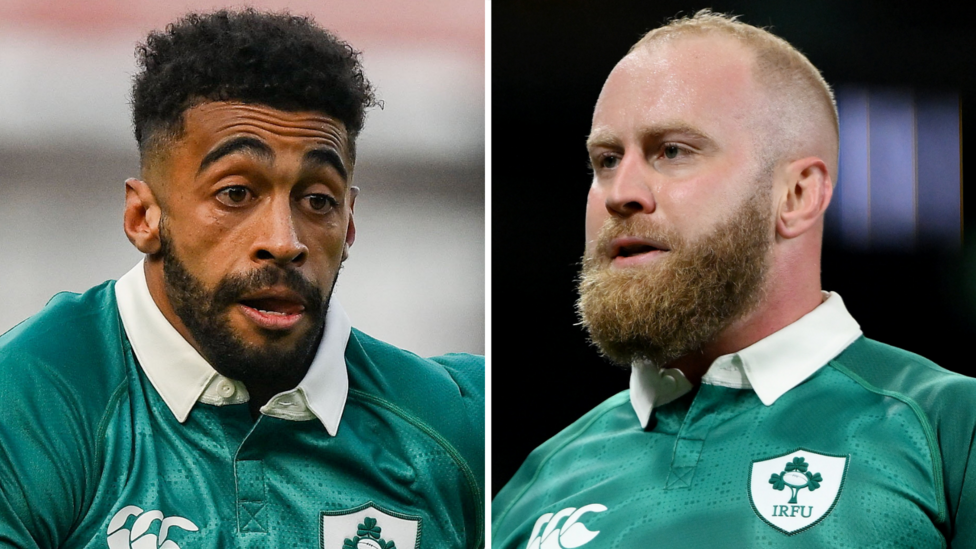
Baloucoune and Loughman Cleared for Ireland's Eden Park Crucible
Two returns bolster Ireland's bench options for a fixture that has historically been unwinnable and now feels non-negotiable.

Xhaka's Redemptive Arc: From Arsenal Pariah to Swiss Icon
Booed by his own fans in 2019, rebuilt under Arteta, Granit Xhaka now carries Switzerland's World Cup hopes with warrior-like authority.
Oyarzabal: Spain's Reluctant Assassin Forced Into the World Cup Spotlight
Four goals. Zero desire for fame. Mikel Oyarzabal's World Cup is turning含有 him into Spain's most reluctant hero.