FIFA's Refereeing Reshuffle Is Turning Football Into Calvinball
Hasty law tweaks and barely tested protocols are creating World Cup qualifying chaos, mistaken identities, and officiating anarchy.
The 30-Yard Base Wicket Is Now A Booking
Bill Watterson never set out to write a manual for international football governance. But two decades after Calvin and Hobbes ended its run, FIFA seems to have adopted Calvinball as its operational blueprint.
The rules are amorphous. At any given moment, something previously unknown to the sport may suddenly become part of the game. Determining a winner is increasingly less important than determining what the rules actually are at any given minute.
The fictional sport gave us scores like "Q to 12." The real sport is giving us something equally absurd: match officials enforcing tweaks to the laws of the game that have barely been tested in competitive environments.
The result is drama, "mistaken identities," and lots of confusion.
It entered public consciousness through a US Supreme Court dissent last year. Justice Ketanji Brown Jackson cited Calvinball in a blistering opinion about arbitrary rule changes. The parallel to football's current crisis was accidental. It is also painfully accurate.
When Codification Becomes Chaos
Football's beauty has always lived in its simplicity. Seventeen laws. One ball. Twenty-two players. A framework elegant enough to accommodate every style from total football to route one, yet rigid enough to ensure a foul in Manchester is a foul in Manila.
That simplicity is dissolving.
FIFA and the International Football Association Board have spent the last several years layering the sport with modifications, clarifications, and experimental protocols. VAR was the first domino. Then semi-automated offside. Then prolonged VAR checks. Then extended goal celebration windows. Each change arrived with promises of clarity.
Each delivered something closer to anarchy.
The latest wave of adjustments feels categorically different. Officials are now implementing law modifications that have not passed through meaningful testing cycles. Briefings are rushed. Training is compressed. Implementation is immediate.
The consequences match the preparation.
The Identity Crisis
Consider the "mistaken identity" phenomenon currently haunting matches. A system designed to eliminate errors is actively creating them. Referees, directed to consult monitors for marginal decisions, occasionally lose track of who actually committed the infraction in question.
The monitor shows a shirt number partially obscured. The assistant presents information rapidly. The fourth official relays a name. By the time the whistle blows and the card emerges, the wrong player is standing in the dock.
This is not a hypothetical. It is a recurring failure that would have been intellectually impossible in the pre-VAR era, when a referee's eyes and instincts were the entire system.
We engineered a solution more chaotic than the problem it was built to solve.
The Cascade Of Unintended Consequences
Every midseason protocol shift in football creates a cascade. Players and coaches spend months calibrating to a specific set of enforcement thresholds. Then the threshold moves.
A shoulder becomes offside. A millimeter becomes decisive. A celebration becomes time-wasting. A long-standing interpretation of handball flips on a Tuesday when IFAB releases a circular.
The cumulative effect on athletes is corrosive.
Players who interact with referees operate on instinct honed across thousands of hours of training and competition. They are trained to know precisely how physical they can be in the box at a corner. They understand where the line exists between a tactical foul and a bookable offense.
When that line shifts without adequate acclimation, the entire defensive structure collapses. Not because the players are reckless. Because the sport they trained for and the sport being refereed are now two different games.
Coaches face similar destabilization. A pressing system designed to operate within specific physical tolerance levels suddenly becomes illegal under updated guidance. A defensive line constructed around a clear offside interpretation absorbs goals it would have prevented a week earlier.
The tactical adjustments required demand time that the scheduling calendar does not permit.
The Cost Of Haste
Football is not basketball, where a rule change can be beta-tested across an 82-game season with minimal global consequence. It is not baseball, where stat-driven adjustments can be isolated to specific game states.
Football is a low-scoring sport where a single misapplied interpretation can determine a result. In World Cup qualifying, a single match swings a nation's future.
The stakes make hasty implementation indefensible.
A protocol tested in a handful of closed-door friendlies or brief regional trials cannot adequately prepare referees for the pressure of a continental qualifier in a hostile away stadium with fifty thousand screaming voices and a nation's hopes in the balance.
The laboratory does not resemble the battlefield.
The Accountability Vacuum
What makes Calvinball effective as satire is its lack of accountability. Nobody is in charge because nobody can be in charge of something that changes continuously. The rules exist to serve the moment, not the game.
Football's governance now mirrors this structure.
IFAB issues a clarification. FIFA amends a directive. Refereeing bodies brief their officials. The officials brief their assistants. By the time the instruction reaches the pitch, it has been filtered through enough layers of bureaucracy to lose clarity at each stop.
The official hears a compressed version of a modified interpretation of an updated protocol.
The player hears a whistle.
The instinct of the current protocols is to remove human error from judgment calls. The reality is the relocation of that error from the pitch to a screen in a van parked outside the stadium.
The error does not vanish. It migrates.
The Referee's Impossible Position
Critics reserve their sharpest commentary for the officials on the pitch. That energy requires redirecting.
Referees are not the authors of the chaos. They are its first victims. They arrive at stadiums tasked with enforcing modifications they were briefed on via videoconference weeks earlier. They are told to apply interpretations that contradict what they did last month.
They are expected to perform flawlessly in a system designed to make perfection impossible.
The technology layers add seconds that feel like minutes. The monitor consultations strip them of authority while simultaneously holding them responsible for outcomes. They are asked to be decisive while surrounded by ambiguity.
It is an unsustainable contradiction.
The best officials in the world are being made to look incompetent by a structure that overpromises precision and underdelivers clarity.
The Patience Threshold
Fans will tolerate officiating imperfection when the imperfection is honest. A missed foul in real time is part of the sport's humanity. A five-minute VAR review ending in a disputed conclusion is something else entirely.
It is the appearance of competence without the substance.
Football's leadership is currently spending down a reservoir of goodwill that took decades to build. Supporters are not abandoning the sport. They are losing faith in its integrity.
And integrity, once compromised, is the most expensive asset to rebuild.
The World Cup qualifying cycle is underway. The protocols in place were not ready. The officials implementing them were not prepared. The players adapting to them were not consulted.
Everyone involved deserves better. The sport requires it.
Calvinball was funny in comic form because the participants were six years old making up nonsense. FIFA's version features grown adults with billions of dollars and millions of emotional investments at stake.
The joke is no longer funny.
It was never meant to be.
Editorial Integrity
This is an original SportPulse article written by our editorial team. All content is independently researched, written, and reviewed by our writers and editors before publication. We do not publish copied, aggregated, or syndicated content.
SportPulse is committed to original sports journalism. Read our editorial policy or contact us with any questions.
More Like This
All football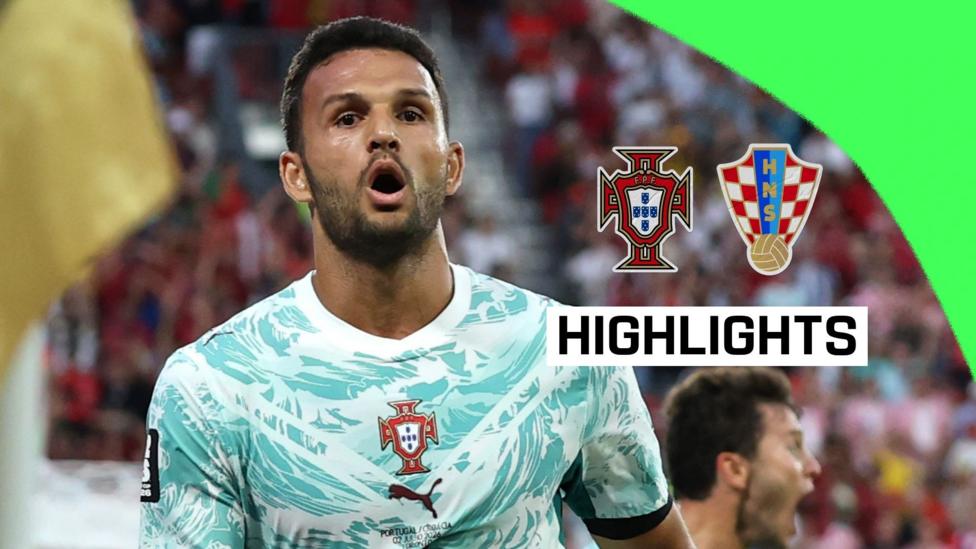
Ronaldo and Ramos Deliver Portugal Into Last 16, Setting Up Spain Blockbuster
Cristiano Ronaldo and Goncalo Ramos fired Portugal past Croatia 2-1 in a chaotic second-half collision to book an Iberian derby with Spain.

Rice's Bold Claim: England's Finest Group in Decades
Declan Rice calls England's 2026 squad the best in a generation after their World Cup third-place finish. Is he right?
Hrustic Shrugs Off Critics as Socceroos Embrace Pragmatism
Ajdin Hrustic dismisses criticism of Australia’s dire draw with Paraguay, insisting tournament football rewards results over aesthetics.