FIFA's Deafening Silence on Quansah Ban Exposes Disciplinary Black Box
FIFA's disciplinary chief refuses to explain England's Quansah ban, exposing a secretive process eroding trust in football's justice system.
The Silence That Speaks Volumes
Jarell Quansah sat in the dressing room, staring at his boots.
The England defender had just been told his World Cup was effectively over before it had truly begun. A two-match suspension at the tournament's group stage means you miss the lion's share of the action. For a young player breaking through at the highest level, it is a career-altering blow.
But when the BBC approached FIFA's disciplinary committee head to explain why the ban was handed down, the response was a wall of silence. No clarification. No transparency. No accountability.
Just a door closed in the face of legitimate inquiry.
For an organisation that governs the most popular sport on the planet, this is more than a PR misstep. It is a fundamental failure of governance. And it exposes a system that operates with all the openness of a sealed vault.
What Happened to Quansah
England went into the World Cup needing their defensive depth. Quansah emerged as a vital piece of the puzzle. A athletic, ball-playing centre-back. A player whose rise through Liverpool and the national setup had been rapid and well-earned.
Then came the ban.
Two World Cup games. No public detailed ruling. No substantive explanation of the precedent applied. No breakdown of what specific incident triggered the sanction or how the severity was calibrated.
The disciplinary committee acted as judge, jury, and executioner — and then refused to face the press.
The Black Box of Football Justice
FIFA's disciplinary process is, by any reasonable standard, opaque.
Decisions are made behind closed doors. The reasoning is rarely published in full. The criteria for suspensions — their length, their scope, their application across different tournaments — remain shrouded in internal guidelines that the public never sees.
This is not how modern institutions should function.
"When a player is banned from the biggest stage in his career, he deserves to know precisely why. The public deserves to know. The media has every right to ask."
This is not about one player or one federation. It is about the structural integrity of the game's governing body. When sanctions are handed down without explanation, the system is not delivering justice — it is issuing proclamations.
And proclamations are not the same as due process.
A Pattern of Opaque Governance
FIFA has a long, documented history of transparency failures.
- 2022 World Cup host selection: Questions about the process haunted the organisation for over a decade.
- Disciplinary rulings across multiple tournaments: Decisions often arrive with a one-line summary and no detailed reasoning.
- Appeals processes: Frequently criticized for being slow, inaccessible, and stacked against the appellant.
The Quansah affair is not an anomaly. It is a symptom.
FIFA's disciplinary committee operates with no requirement to explain itself publicly. It can hand down bans that derail tournaments and careers, and then simply decline to answer questions. The committee head refused to engage with the BBC's entirely reasonable inquiry. This reveals not just arrogance but a deep institutional contempt for public scrutiny.
When a player is banned from the biggest stage in world football, the minimum standard of governance requires that the reasoning be laid bare. The precedent must be visible. The logic must be testable. Otherwise, there is no way to determine whether similar incidents will be treated similarly.
That is the definition of arbitrary justice.
The Transfer Intel: What This Costs England
The practical impact of the ban cannot be overstated.
On the Pitch
- Removing a starting-calibre centre-back disrupts the entire defensive structure.
- Tactical flexibility is gone — Quansah's ability to step into midfield and play through the press is a key tool in South Korea-style transitional play.
- Squad morale takes a hit when a teammate is sidelined by an unexplained decision.
In the Boardroom
- Player market value is directly affected by World Cup exposure and performance. Missing two group-stage games is a significant hit to a player's global showcase.
- Contract negotiations for the coming window are now complicated by the uncertainty.
- Club-versus-country tensions resurface whenever a player returns from international duty with an unexplained suspension.
"The silence is the story. When FIFA won't answer, it tells you the answer isn't flattering."
The refusal to engage also sends a message to every other federation: Do not question our authority. Do not ask for explanations. Accept the ruling and move on.
That is not a governance model. That is a power play.
The Immediate Fallout for England
England's coaching staff now faces a selection headache that should not exist.
Without Quansah, the defensive rotation loses a key piece. The team must adjust its approach to the group stage — potentially sacrificing a high line, losing the security of Quansah's pace and recovery speed. Group stage games in a World Cup are notoriously unpredictable. Opponents who might have been managed through squad rotation now require full tactical commitment from a depleted backline.
The knock-on effect touches the entire squad. Midfielders must cover more ground. Fullbacks must be more cautious about pushing forward. The attacking shape that was built around a specific defensive foundation must now be recalibrated.
All because a disciplinary committee decided two matches was the appropriate sanction — and then refused to say why.
This is the real cost of institutional opacity. Not just a player sidelined, but an entire tactical plan dismantled and rebuilt under pressure.
The Bigger Picture: Trust Is Not Optional
Football is a global sport governed by social consent.
Players consent to play by the rules. Fans consent to watch under the assumption that the competition is fair. Media outlets consent to cover the game with the understanding that governing bodies will be accessible and accountable.
When FIFA's disciplinary committee refuses to answer basic questions about a ruling, it strains every strand of that consent.
The media's role is not to be a nuisance; it is to be the conduit between power and the public. When that conduit is blocked, the flow of information stops — and the void fills with speculation, resentment, and distrust.
England's World Cup hopes may depend on how they adapt without Quansah. But the broader issue extends far beyond one tournament. If FIFA can ban a player without explanation, if it can ignore legitimate media inquiries, if it can operate as a law unto itself, then the entire system of football governance is compromised.
The Quansah ban cost England a player for two crucial matches. FIFA's silence costs the game something far more valuable — the trust that the rules are applied fairly, transparently, and with reason.
And that is a loss football cannot afford.
The Precedent This Sets
Every unexplained disciplinary decision becomes a ghost.
It lingers over future cases. It creates a library of precedents that nobody can read or understand. When the next player faces a disciplinary hearing, neither they nor their federation will know how the Quansah case was reasoned through. They will not know what factors were weighed. They will not know what mitigation was considered or rejected.
This is the antithesis of common law. It is governance by surprise.
Football deserves better. Players deserve better. And the media, doing its job by asking the questions the public wants answered, deserves better than a slammed door.
Quansah will serve his two matches. England will reorganize and adapt as best they can. The World Cup will continue. The spotlight will shift to the next story, the next drama, the next goal.
But FIFA's silence will echo long after the final whistle.
It is the sound of an organisation that has forgotten it serves the game, not itself.
And until the disciplinary committee opens its books — or at least its mouth — that silence will be the loudest thing in football.
Editorial Integrity
This is an original SportPulse article written by our editorial team. All content is independently researched, written, and reviewed by our writers and editors before publication. We do not publish copied, aggregated, or syndicated content.
SportPulse is committed to original sports journalism. Read our editorial policy or contact us with any questions.
More Like This
All football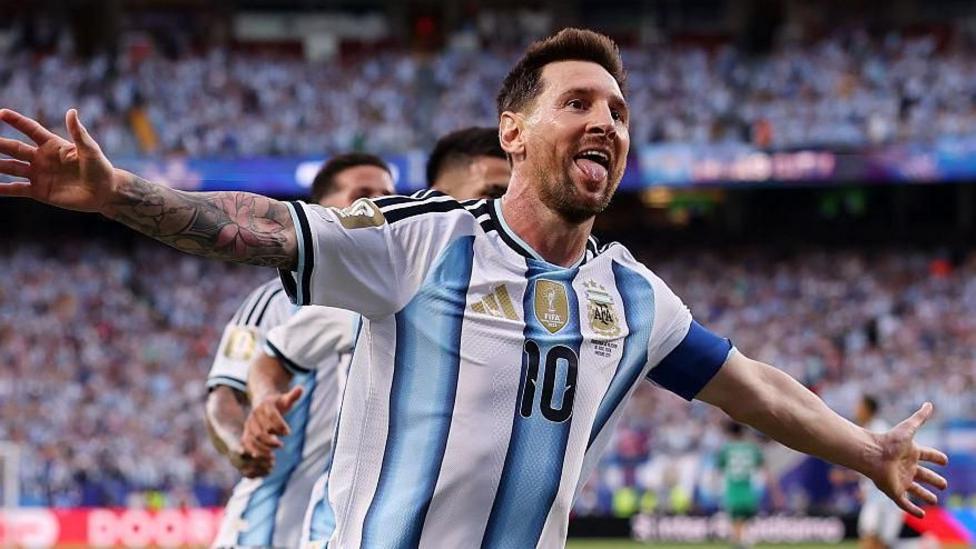
Messi's Masterclass Eclipses Mbappe and Haaland's World Cup Brilliance
On a day packed with modern superstars, Lionel Messi proved he remains the ultimate main event of world football.

Shearer: Why England Won't Fear The Azteca Under Tuchel
Alan Shearer insists altitude and history won't rattle Tuchel's England as a new era targets intimidation-free football in Mexico City.

Popovic's Tactical Crucible: Socceroos Face Egypt With History on the Line
Australia stand one tactical masterclass away from their first World Cup knockout win, but Egypt will demand perfection.