Frankfurt Court Injunction Exposes FIFA's Ticket Resale Monopoly
A German court has ordered FIFA to halt manipulative secondary ticketing practices, challenging its opaque World Cup resale framework.
The architecture of ticketing at major international tournaments often flies under the radar of tactical discourse, yet it shapes the very atmosphere of the modern game. A recent legal intervention in Germany has now dragged FIFA's commercial framework into the spotlight. The Frankfurt regional court has issued a preliminary injunction against football's global governing body, ordering an immediate cessation of what the court termed manipulative processes in the sale of World Cup tickets. This ruling strikes at the heart of FIFA's secondary market operations, exposing an opaque system that critics argue prioritize revenue over consumer protection.
The Frankfurt Ruling and the End of Anonymity
The catalyst for this legal challenge is Ticombo, a Germany-based online ticket resale platform that has long advocated for a transparent secondary market. Ticombo's legal action in Frankfurt has yielded a decisive preliminary injunction. The court's directive is unambiguous: FIFA must immediately cease facilitating ticket sales without disclosing the identity and address of commercial sellers to prospective buyers in a timely manner before the transaction's completion.
This ruling effectively dismantles the veil of anonymity that has shielded sellers operating on FIFA's official resale platform. The court specifically targeted sellers acting in a commercial capacity, recognizing that the lack of identification requirements facilitates scalping and anti-competitive behavior. By failing to appear before the Frankfurt court, FIFA tacitly allowed the legal process to unfold unchallenged in its initial stages, leading to a binding injunction that could reshape how tournament tickets are distributed worldwide.
The Economics of the Secondary Market
To understand the gravity of this injunction, one must examine the economic machinery driving FIFA's ticketing strategy. The governing body operates not merely as a facilitator but as an active participant in the secondary market, extracting a 15% commission from both the buyer and the seller on every transaction. This dual-sided commission structure ensures FIFA captures up to 30% of the total transaction value on every ticket resale.
- Seller commission: 15% of the resale price
- Buyer commission: 15% added to the purchase cost
- Total FIFA take: up to 30% per secondary transaction
This creates a perverse incentive structure. FIFA has little commercial motivation to restrict scalping or verify seller identities when each anonymous transaction, regardless of its nature, contributes directly to tournament revenues. The court's identification of such manipulative processes underscores a system where the governing body theoretically profits from the very lack of transparency it is legally obligated to prevent.
Tactical Shift: Regulatory Pressure Forces Systemic Adaptation
Much like a coach forced to abandon a rigid system under mounting opposition pressure, FIFA must now adapt its ticketing infrastructure to survive legal scrutiny. The Frankfurt injunction represents a significant structural shift in how football governance intersects with consumer law. The court's order compels FIFA to transition from a closed-loop system to one that accommodates third-party verification.
The ruling validates years of complaints from secondary platforms like Ticombo, who have argued that FIFA's monopoly over the resale market creates an uneven playing field. By controlling both the primary distribution and the only sanctioned secondary market, FIFA constructs a walled garden that squeezes out independent operators. The injunction forces a breach in those walls, demanding that the same transparency standards governing open markets apply to football's most prestigious event.
"The court has ordered FIFA to cease facilitating ticket sales without informing buyers of the seller's identity and address in a timely manner prior to the buyer completing their purchase."
This legal precedent shifts the paradigm. Secondary platforms, long marginalized by governing bodies, now possess a judicial framework to challenge anti-competitive practices. The battleground has moved from public relations statements to the courtroom, where entrenched commercial models can be dismantled through targeted litigation.
The Anatomy of a Monopoly
FIFA's approach to ticketing mirrors the characteristics of a controlled market economy. It dictates supply through allocation, controls demand through pricing tiers, and monopolizes the secondary channel through sanctioned resale. This tripartite control ensures maximum revenue extraction while minimizing external competition. The injunction, however, exposes the fragility of this model when subjected to judicial oversight.
A system that profits from the same anonymity that enables scalpers is structurally compromised. The court's ruling effectively argues that FIFA cannot simultaneously serve as regulator, beneficiary, and facilitator without inherent conflicts of interest. The 15% commission extracted from both parties transforms the governing body from a neutral administrator into a direct stakeholder with a financial incentive to maintain opacity.
Implications for Future Tournaments
The ramifications extend far beyond Germany's borders. As a preliminary injunction, this ruling sets a precedent that consumer protection advocates across Europe will reference in future challenges. The upcoming 2026 World Cup, co-hosted by the United States, Canada, and Mexico, will operate under entirely different legal frameworks, but the commercial template established by FIFA is universal.
The ruling raises several critical questions for tournament organizers:
- Can FIFA maintain its current commission structure while enforcing seller transparency?
- Will the identification of commercial sellers deter bulk purchasing by scalpers?
- Does this precedent extend to other governing bodies like UEFA and continental federations?
- How will consumer behavior shift when buyers can verify seller credentials?
These uncertainties will force a tactical recalibration of ticketing policies ahead of future mega-events. European consumer law, traditionally more robust than its global counterparts, has provided the opening salvo in what could become a protracted regulatory battle.
The Broader Context of Football Governance
This injunction arrives during a period of heightened scrutiny on FIFA's commercial practices. The governing body has faced persistent criticism over sponsorship deals, broadcasting rights allocations, and the expansion of the World Cup to 48 teams starting in 2026. Each commercial decision is evaluated not just for revenue generation but for its impact on the footballing public.
The ticketing issue is particularly sensitive because it directly affects the match-going experience. Unlike broadcasting revenue, which is抽象ed through corporate intermediaries, tickets represent the physical connection between the fan and the spectacle. When that connection is mediated by an opaque system that profits from anonymity, the integrity of the event itself is compromised.
The Frankfurt court's intervention acknowledges this reality. By framing FIFA's practices as manipulative processes, the court elevates ticketing from a mere commercial function to a matter of consumer rights. This legal reframing will influence how future challenges are approached across European jurisdictions.
What Comes Next
The immediate consequence for FIFA is compliance. The injunction demands structural changes to the resale platform, requiring the implementation of verification systems for commercial sellers. This may involve third-party identity checks, address validation protocols, and real-time disclosure mechanisms that fundamentally alter the user experience.
For Ticombo and similar platforms, the ruling represents both vindication and opportunity. If FIFA is forced to open its secondary market to transparent practices, independent resale platforms can compete on equitable terms, pushing resale prices toward genuine market equilibrium.
The strategic question now is whether FIFA will appeal the injunction or implement the required changes quietly. An appeal risks prolonged legal exposure and further reputational damage in a sensitive commercial landscape. Compliance, while faster and less disruptive, establishes a precedent that could be invoked by consumer advocates across the continent.
Regardless of FIFA's choice, the Frankfurt ruling has shifted the tactical landscape of football governance. The era of unquestioned commercial autonomy is gradually eroding, replaced by a framework where transparency is not an optional courtesy but a legal obligation enforced through targeted litigation.
As the governing body prepares for the expanded 2026 tournament, the ticketing infrastructure will operate under unprecedented scrutiny. Fans may finally see the identities of those selling them access to football's grandest stage, a small but significant victory in the broader match for transparency.
Editorial Integrity
This is an original SportPulse article written by our editorial team. All content is independently researched, written, and reviewed by our writers and editors before publication. We do not publish copied, aggregated, or syndicated content.
SportPulse is committed to original sports journalism. Read our editorial policy or contact us with any questions.
More Like This
All football
Touré's Training Absence Exposes Socceroos' Striker Crisis
Australia's attacking talisman missed training three days before the World Cup opener against Turkey.

Mead Ditches Arsenal for City in Blockbuster Free Transfer
Beth Mead's shock Arsenal exit delivers Manchester City their deadliest WSL weapon on a free transfer.
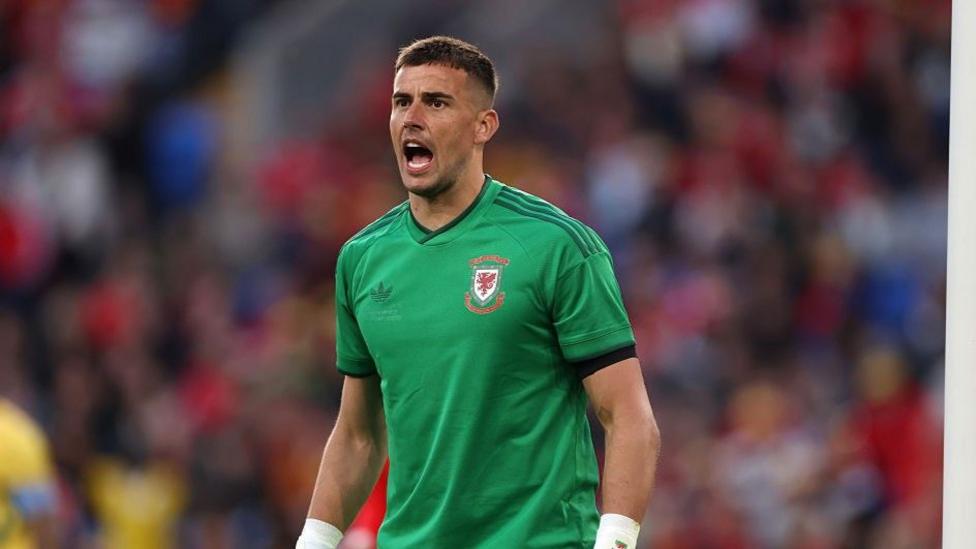
Manchester United Secure Karl Darlow in Quiet Goalkeeping Revolution
United sign veteran Karl Darlow after his Leeds exit, signalling a strategic shift in depth rather than headline glamour.