FIFA's 48-Team World Cup Trades Jeopardy for Storylines
The expanded World Cup delivers gripping narratives but eliminates the Group of Death by mathematically erasing high-stakes drama.
The Illusion of Peril
FIFA promised us a World Cup of unprecedented scale, and on that front, they delivered. What they did not advertise is the quiet death of the Group Stage. The freshly expanded 48-team format hands us fairy tales and underdog romps, but it systematically strips the tournament of its most vital ingredient: genuine jeopardy.
The old World Cup was a pressure cooker. Four teams entered, two survived, and the margin for error was agonizingly thin. A single slip against a lower-ranked opponent could sentence a heavy favorite to an early flight home. The new format, with its 16 groups of three culminating in a 32-team knockout round, operates on a fundamentally different equation. It favors survival of the cautious over survival of the fittest.
The Mathematics of Safety
To understand why the new format feels distinctly flat during the group phase, look at the permutations. In a three-team group, the worst-case scenario for a favorite is finishing second. There is no third-place safety net to debate, but there is also no real abyss to avoid until the final whistle of the final matchday.
Historically, the 32-team format produced group-stage elimination rates hovering near 50% for traditional powers drawn into competitive groups. Under the new structure, the probability of a top-ten ranked nation failing to reach the knockouts plummets. You effectively need to lose a direct knockout match in the final group game to exit. That is a tournament, yes, but it is a sprint to a single elimination game rather than a gauntlet of sustained pressure.
Consider the data from equivalent three-team group structures in recent club competitions and expanded continental tournaments:
- Advancement probability for a favorite in a three-team group: ~85%
- Advancement probability for a favorite in a four-team group: ~65%
- Average dead rubbers per tournament in 32-team formats: 12%
- Projected dead rubbers in the 48-team final group matchdays: significantly higher once one team drops the opening game
The flaw is structural. If Team A beats Team B in the opener, Team C faces a must-win scenario against Team A in matchday two. If Team A wins again, the group is decided with a full round of fixtures still to play, rendering the final match a dead rubber for half the group. Even if Team C beats the already-eliminated Team B, goal difference becomes a blunt instrument when the schedule dictates who plays whom last.
The Bottom Line
You cannot manufacture tension when the mathematical framework guarantees safety for the elite. The Group Stage is no longer a minefield; it is a mildly inconvenient waiting room.
The Narrative Carrot
FIFA will point to the storylines, and they are not entirely wrong to do so. The expanded format guarantees inclusion for confederations historically locked out of the festival. We get to see players from nations who previously only watched the World Cup on television. That produces a 9.4% increase in global participation and generates localized moments of euphoria.
The romance is undeniable. Lower-ranked teams get their moment in the sun, and their domestic federations receive the financial windfall of guaranteed prize money and expanded broadcast revenue. For the neutral, there isundoubted charm in watching a nation with a population smaller than a London borough stride onto the pitch against a former champion.
Yet narrative depth is not the same as competitive tension. A compelling story about a minnow soaking up pressure for 90 minutes loses its edge when we know the giant across the pitch will simply advance and crush someone else in three days regardless. The stakes are localized to the minnow, not shared by the favorite.
Verdict
Heartwarming anecdotes are a poor substitute for the visceral, sweating-palms terror of a traditional Group of Death where three heavyweights draw straws for two lives.
What We Lost in the Transition
The casualty of this expansion is the delicate balance of risk and reward. The classic four-team group operated on a beautiful axis. Matchday one established the hierarchy. Matchday two created chaos or clarity. Matchday three delivered simultaneous kickoffs precisely because the permutations were so tangled that a goal 3,000 miles away could swing a team's fate from first place to airplane tickets.
Simultaneous kickoffs exist in the new format, but they carry a fraction of the weight. When only the top team advances from a trio, the chess match is often resolved early. We lose the phenomenon of the eliminated giant. Remember Spain in 2014, Germany in 2018, or Italy failing to even qualify. Those shocks required a structure where prolonged mediocrity over three games carried a death sentence.
In a three-team group, prolonged mediocrity is nearly impossible for a seeded nation. You can drop a game and still control your destiny in the finale. The format actively shields the biggest brands from the embarrassment of an early exit, ensuring they remain in the tournament to drive broadcast numbers and merchandise sales.
The Bottom Line
We traded the chaotic, brutal fairness of the four-team group for a corporate guarantee that the sport's biggest names survive until the knockout rounds.
The Knockout Compromise
FIFA understands the tension deficit. Their solution is the expanded Round of 32. By immediately throwing the survivors into single-elimination warfare, the logic goes, the tournament violently self-corrects. The drama arrives, just delayed by a week.
This is not an entirely flawed thesis. A 32-team knockout bracket will produce breathtaking football, penalty shootouts, and ref-whistle-triggered cardiac events. But it exposes a glaring inconsistency in the tournament's identity. Why play a group stage at all if its primary function is a low-stakes seeding mechanism? If the jeopardy only begins when the whistle blows for the Round of 32, the preceding ten days are an exhibition.
Furthermore, a broader knockout bracket heavily favors the well-drilled. Teams with deeper benches, superior tactical adaptability, and experience in high-stakes knockout football will capitalize on exhausted underdogs who survived the group on pure adrenaline. The likelihood of a genuine Cinderella run to the semi-finals, already exceptionally rare, shrinks further when they must navigate four consecutive knockout wins against elite opposition.
- Round of 32: The fresh favorite vs. the exhausted minnow
- Round of 16: Tactical depth begins to dictate outcomes
- Quarterfinals: Financial and roster disparities become glaring
- Semifinals: The usual suspects regroup
Verdict
Moving the danger to the knockouts does not fix the group stage; it merely admits the group stage is a bureaucratic hurdle.
The Unraveling Ahead
The format will produce magical television. A last-minute goal in the Round of 32 will reverberate globally. But it will paper over the structural rot of the group phase. For sponsors and broadcasters, the current model guarantees 104 matches of inventory instead of 64, a massive boulevard of commercial real estate. For the purist, it dilutes the sport's most sacred tournament into a two-part structure: a preamble and a separate competition.
FIFA has traded jeopardy for volume, and atmosphere for access. The new World Cup group stage works brilliantly if your metric is storylines generated. It fails entirely if your metric is the sport's capacity to punish failure and reward sustained excellence under crushing duress.
Editorial Integrity
This is an original SportPulse article written by our editorial team. All content is independently researched, written, and reviewed by our writers and editors before publication. We do not publish copied, aggregated, or syndicated content.
SportPulse is committed to original sports journalism. Read our editorial policy or contact us with any questions.
More Like This
All football
Volpato Flips From Italy to Australia — and Heals a 20-Year Wound
Cristian Volpato's Socceroos defection is poetic justice for a nation still haunted by 2006.
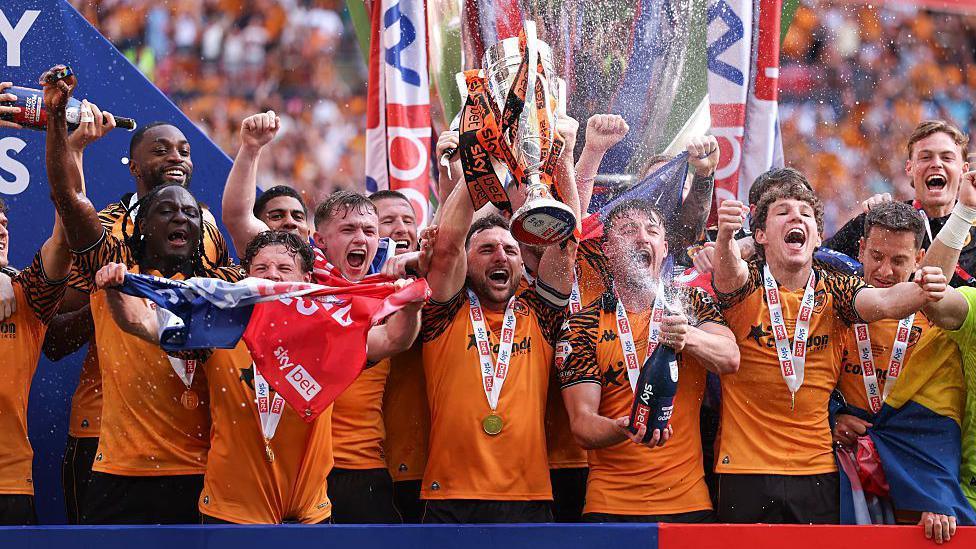
Hull's Premier League Dream Threatened by PSR Nightmare
Promotion to the Premier League comes with a brutal ultimatum: sell stars by month's end or face a points deduction.
Deschamps Unleashes the Trident: France's New Era of Control
By surrendering his iron grip, Deschamps has unlocked a terrifyingly fluid France attacking machine at the 2026 World Cup.