Broadcasting the Beautiful Game: Tactics From the Commentary Booth
How football broadcasting's tactical evolution mirrors the sport itself, as BBC Radio's elite prepare for the FIFA World Cup.
When the FIFA World Cup arrives, the tactical battleground extends far beyond the white lines of the pitch. As John Murray, Ian Dennis, and Ali Bruce-Ball convene for their first on-site synthesis at the tournament, it represents more than a logistical milestone for BBC Radio's premier commentary team. It marks the activation of a highly refined information press. Much like a modern manager shifting from a 4-3-3 to a 3-4-2-1 to audit the tempo of a match, the coordination behind the microphone requires an acute awareness of space, structure, and timing.
The work of a lead commentator operates as the tactical base of the broadcast. It is the double pivot of the production, providing the foundational structure upon which all other elements rely. John Murray, possessing decades of major tournament experience, orchestrates the tempo. His role demands a continuous reading of the game's geography, identifying which half-spaces are being exploited, which pressing triggers are being pulled, and how the rest-defence shapes up during transition phases. If the commentator is the deep-lying playmaker, the summarizer is the advanced number ten, threading the needle between raw description and analytical truth.
Ian Dennis occupies this space with a specificity that mirrors the modern demand for tactical literacy. The era of purely emotional or descriptive summarizing is obsolete. When a side lines up in a mid-block, intent on forcing the opponent into wide areas before springing a ** Gegenpressing** trap, the audience demands to know the architecture of the scheme. Dennis translates the eccentricities of a manager's philosophy into immediate, digestible insight. The best summarizers do not merely state that a team is pressing high; they identify the counter-pressing triggers, the compactness of the lines, and the specific overloads being targeted.
Ali Bruce-Ball functions as the tactical anchor, the sweeper ensuring that no narrative thread is left unattended. The coordination between the broadcast booth and the touchline reporters requires a synchronization that rivals the most drilled zonal marking system. In a World Cup environment, where matches pivot on marginal geometrical advantages, the ability to relay a formation shift or a subtle positional rotation in real-time separates a functional broadcast from a masterclass.
Tactical Shift: Adapting to the Tournament Rhythm
The World Cup imposes a unique tactical tempo on everyone involved, from the coaching staff to the media cohort. Unlike the relentless week-to-week rhythm of a domestic league, tournament football demands immediate tactical adaptation. Teams frequently alter their structural identity between group stage fixtures. A side might deploy a low-block against a possession-dominant opponent in Matchday One, only to pivot to an aggressive high line and suffocating man-to-man press in Matchday Two.
For a commentary team, recognizing and communicating these shifts instantaneously is the ultimate test of their preparation. The modern international tournament is a crucible for tactical innovation. We have witnessed the proliferation of inverted fullbacks, the deployment of half-spaces as primary creative channels, and the increasing prevalence of false nines dropping into midfield to drag defenders out of their rest-defence shape. Murray, Dennis, and Bruce-Ball must process these evolving geometries simultaneously, interpreting the game state as it fluctuates.
- Tournament maturity: Requires rapid identification of formation flips, a hallmark of elite coaching at the World Cup.
- Analytical depth: Recognizing a pressing trigger—such as a poor first touch or a forced backward pass—before the trap springs.
- Geometric awareness: Understanding how a team manipulates width to isolate a 1v1 on the weak side.
The relationship between the commentary booth and the tactical reality on the grass is inherently symbiotic. As managers have embraced data-driven approaches to space control, the broadcast has evolved to reflect an increasingly literate audience. The language of the sport has shifted. Terms like rest-defence, counter-press, and positional play are no longer confined to coaching seminars; they are the vernacular of the modern fan.
The Pressing Ecosystem of Broadcast
Operating at a World Cup requires a commentary team to function as a cohesive pressing unit. The primary commentator presses the narrative, hunting for the immediate context. The summarizer supports from the near side, looking to cut out lazy analysis and force the discussion into the most tactically relevant channel. The touchside reporter provides the deeper covering, tracking substitutions and body language. When this trinity executes their roles with synchronized precision, the broadcast achieves a level of control analogous to a team dominating the midfield phase.
This synergy is particularly critical during the chaotic transition phases of a match. A sudden turnover in midfield can collapse a 4-2-3-1 into a frantic 2-3-5 within seconds. The commentary must mirror this verticality. The shift from describing a patient possession phase to chronicling a lightning counter-attack demands an instantaneous cognitive pivot. Hesitation or miscommunication in the booth during these moments mirrors a defender caught ball-watching, a failure of the system that exposes the entire unit.
"The speed of the game dictates the speed of the broadcast. When a team transitions from a deep block to a vertical counter, our analysis has to be just as rapid and just as structured. You cannot afford to be caught out of position when the tactical shape changes." — A philosophy shared by elite broadcast cohorts navigating tournament football.
The Bigger Picture: Contextualizing the Global Stage
The presence of seasoned voices on-site at the FIFA World Cup is not merely a production requirement; it is a critical mechanism for contextualizing the global diversity of tactical thought. The tournament brings together distinct footballing cultures, each with its own structural vernacular. A South American champion might prioritize the duels and the emotional intensity of the mid-block, while a European side might obsess over the sterile control of a possession phase and the spatial dominance of half-space overloads.
Translating these philosophical differences requires a broadcast team capable of reading the subtle cues of a match. It is the difference between noticing that a winger is hugging the touchline to stretch the defensive line, versus tucking inside to create a 3v2 superiority in the central corridor. Murray, Dennis, and Bruce-Ball represent a standard of broadcasting that refuses to settle for the superficial. Their collaboration at the World Cup provides the essential framework for understanding how managers manipulate space and structure under extreme duress.
- South American tempo: Often characterized by aggressive man-marking triggers and verticality.
- European structure: Emphasizes zonal marking, positional play, and controlled rest-defence.
- African athleticism: Frequently utilizes explosive transition moments and wide overloads.
The modern broadcast must serve as a bridge between these paradigms, equipping the listener with the tactical vocabulary to appreciate the nuances. When a manager makes a substitution that shifts a team from a 4-3-3 to a 3-5-2 to chase a goal, it is a deliberate alteration of the side's risk profile. The commentary must identify not just the change in personnel, but the structural logic underpinning it.
As the World Cup unfolds, the tactical narratives will only intensify. The knockout phase invariably produces increased tactical caution, with managers terrified of exposing their back-four to transition attacks. We can expect to see deeper mid-blocks, more conservative rest-defence structures, and a heavier reliance on set-piece routines to decide marginal contests. For the commentary team, this demands an even sharper focus on the minute details, the spatial arrangements that precede a decisive moment.
The tournament will test the adaptability of every team, and by extension, the analytical rigor of the broadcast. When the next tactical innovation emerges on the grandest stage, the microphone must be ready to decode it in real-time, dissecting the geometry of the beautiful game.
Editorial Integrity
This is an original SportPulse article written by our editorial team. All content is independently researched, written, and reviewed by our writers and editors before publication. We do not publish copied, aggregated, or syndicated content.
SportPulse is committed to original sports journalism. Read our editorial policy or contact us with any questions.
More Like This
All football
Keating Rejects Man City Deal: A Goalkeeper Market Reshuffle
Khiara Keating's Man City rejection signals a shifting WSL landscape where elite ball-playing goalkeepers demand tactical centrality over squad security.
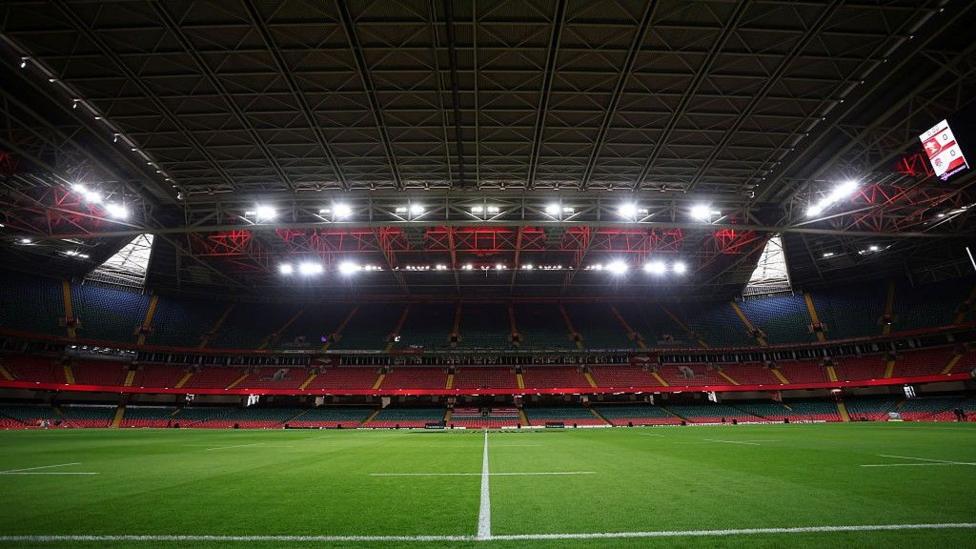
Why the 2026 Community Shield Is Headed to the Millennium Stadium
Wembley's scheduled modernisation forces English football's traditional curtain-raiser across the Severn in a logistical and commercial curveball.
SportPulse Interactive: The New Arena of Fan Engagement
Daily puzzles and guess-games are quietly rewiring how fans consume football and sport.