France vs Spain: The Real World Cup Final in Spirit
While England-Argentina grabs headlines, France-Spain promises the true tactical spectacle of the tournament's final four.
The Semi-Final That Outshines the Headline Act
The geopolitical theatre of Argentina versus England in Atlanta carries undeniable narrative gravitational pull. Forty years on from the Hand of God, England supporters will finally have the opportunity to direct choice words toward Lionel Messi in person, marking the first meeting between the two nations since Michael Owen's late headers secured a 3-2 victory in Geneva 21 years ago. Yet the semi-final that commands the attention of the tactical purist sits on the other side of the draw: Les Bleus against La Roja.
This is the fixture that functions as the final in spirit. The game that will be far easier on the eye, rewarding the viewer sophisticated enough to appreciate spatial geometry over raw emotional spectacle.
The Franco-Iberian Tactical Canvas
France and Spain represent two of European football's most refined positional wrestling partners. Didier Deschamps has gradually evolved his France side from the pragmatism that defined the 2018 World Cup triumph toward a more territorially assertive posture. The 4-2-3-1 structure he now favours provides a synthesis between defensive solidity and attacking fluidity.
Spain, under Luis de la Fuente, have undergone a more radical philosophical recalibration. Thebe patient possession principles of the senior team's tiki-taka era remain, but De la Fuente has injected verticality and directness previously absent. The 4-3-3 formation now operates with a more aggressive pressing trigger, engaging higher up the pitch and forcing turnovers in the opponent's build-up phase.
The tactical fascination of this semi-final lies in the clash between French mid-block compression and Spain's possession-with-purpose circulation. France will not chase the ball manically in the opposition half. They will retreat into a deep block, prioritising defensive shape and waiting for the transitional moment.
The Midfield Battleground
The six-zone midfield control will determine everything. France's double pivot of Aurélien Tchouaméni and Adrien Rabiot (or Eduardo Camavinga, depending on Deschamps' selection mood) must balance positional discipline with the awareness to spring forward when Spain's full-backs invert and create numerical overloads in the centre.
Spain's midfield trident, anchored by Rodri and animated by Pedri and Gavi, will seek to establish circulation dominance. The key metric in these encounters is not merely possession percentage but progressive passes per 90 against a set defensive block. This is where Spain's evolution under De la Fuente becomes visible. They now possess wider attacking corridors and willingness to play vertical passes into the channel rather than endlessly recycling possession around the perimeter of the defence.
The Beckenbauer Principle: Dissatisfaction as Competitive Fuel
There is a lesson from tournament football's historical archive that frames the mindset required at this stage of a World Cup. The documentary Ein Sommer in Italien, chronicling West Germany's 1990 World Cup campaign from the perspective of Franz Beckenbauer's squad, reveals a telling moment after their quarter-final victory over Czechoslovakia.
Beckenbauer, interviewed on German television immediately after the 1-0 win, delivered a verdict that stunned observers.
"It was an awful performance. I simply cannot understand how we played worse against 10 Czechs than against 11."
Raimond Aumann, the substitute goalkeeper, recalled the squad's reaction.
"We'd won 1-0 and we were actually very happy with the result. Only one person wasn't happy, and that was Franz."
This is the essence of elite tournament management. The squad celebrates reaching a semi-final. The manager, with cold detachment, identifies the performance deficits that will be punished by a superior opponent in the next round. West Germany went on to lift the trophy against Argentina in Rome.
Modern Application: The Standard That Separates Champions from Contenders
The Beckenbauer principle resonates powerfully with both Deschamps and De la Fuente. Both coaches know that the semi-final demands elevation from merely winning to commanding. France's path to the final will require sharper press-resistance in midfield. Spain's route demands greater penalty-box efficiency.
For France, Kylian Mbappé's ability to operate in the left half-space and drive at retreating defenders remains the ultimate tactical trump card. But Deschamps needs more than individual brilliance. He needs his mid block to become a pressing trap, enticing Spain into overcommitting before springing the transitional attack.
Tactical nuance aside, this semi-final carries weight that extends beyond a single match. The result will shape the narrative of European football's next cycle.
Tactical Shift: The Moment That Defines the Semi-Final
In tournament knockout football at the elite level, the decisive tactical adjustment usually arrives between the 60th and 75th minute. This is when coaches introduce fresh legs and recalibrate structure. The question is whether either manager dares to alter their fundamental shape.
Deschamps has shown willingness to shift from 4-2-3-1 to a 3-4-1-2 when chasing the game, using the width of his wing-backs to stretch the play and creating a front two partnership for Mbappé. This adjustment sacrifices midfield control for direct penetration.
De la Fuente's equivalent move might involve transitioning from his base 4-3-3 to a 4-2-3-1 with a dedicated number 10 operating in the inside left channel. This would allow Spain to maintain their possession structure while adding a creator between the lines of France's midfield and defence.
The coach who blinks first in this tactical chess match may well determine the outcome. If France sit deep and Spain probe patiently, the game risks descending into a war of attrition. The first tactical deviation from the established pattern will likely provoke the decisive response.
Looking Ahead: What the Winner Faces
The tactical triumph will expect to face Argentina or England in the final. Argentina's midfield structure under Lionel Scaloni would test either semi-final winner's mid-block discipline differently than Southgate's more direct, transitional approach.
A potential France-Argentina final would reunite the 2022 World Cup combatants in a contest of Deschamps' pragmatism against Scaloni's emotional intelligence. Spain against Argentina would pit two possession-oriented philosophies against each other, though with radically different tempos and pressing triggers.
France versus England would offer Deschamps a chance to test Southgate's evolved tactical approach against the tournament's most balanced squad. Spain against England would be the most stylistically intriguing final possible: De la Fuente's Spain providing the ball while Southgate's England look to exploit the transitional spaces.
But first, France and Spain must navigate the semi-final that nobody is calling the final, but which every tactical observer knows will define the tournament's aesthetic legacy. The real show starts when the referee's whistle blows.
For Deschamps and De la Fuente, the challenge now is to deliver the performance the tournament deserves. Anything less, and the narrative of this World Cup will be written by teams with less talent but greater conviction.
The stage is set. The tactics are prepared. The team that executes its plan with ruthless precision will take one step closer to immortality.
Editorial Integrity
This is an original SportPulse article written by our editorial team. All content is independently researched, written, and reviewed by our writers and editors before publication. We do not publish copied, aggregated, or syndicated content.
SportPulse is committed to original sports journalism. Read our editorial policy or contact us with any questions.
More Like This
All football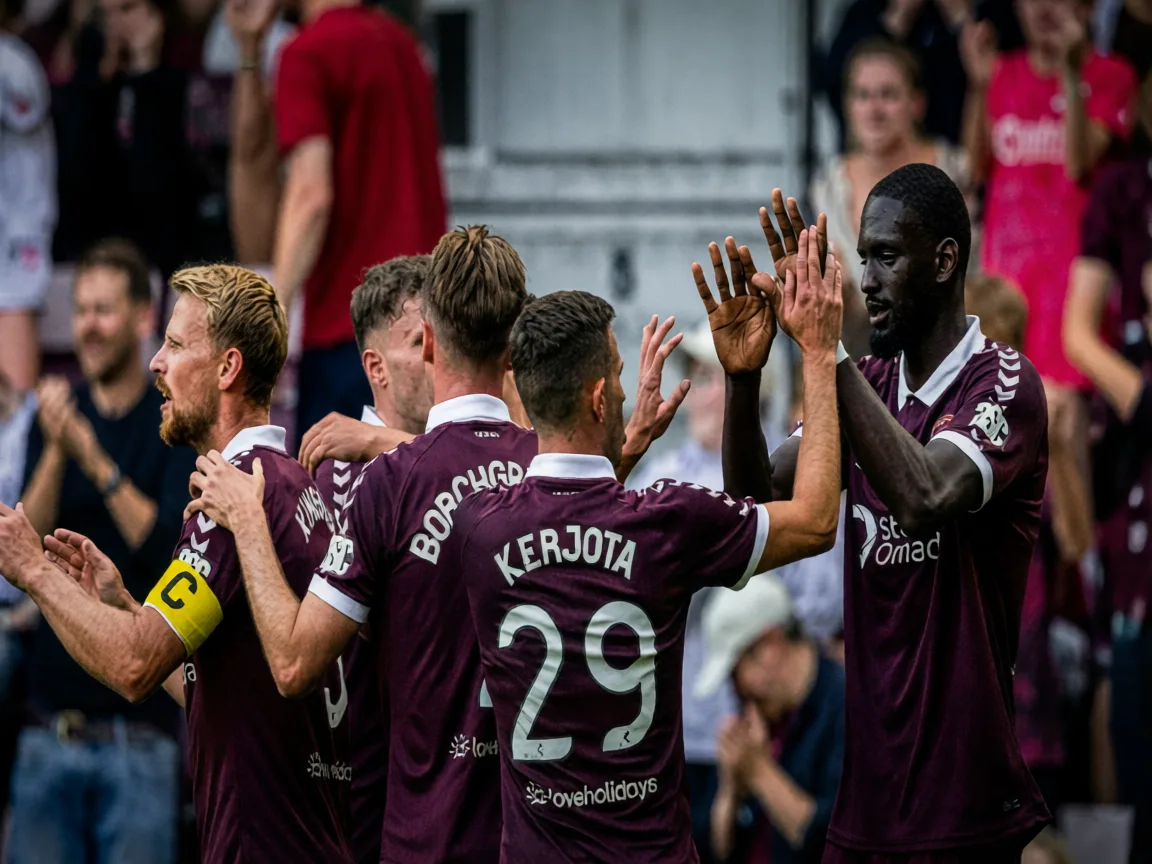
Four Scottish Clubs Brace for Pivotal European Qualifying Draws
Hearts, Rangers, Motherwell, and Hibernian face season-defining draw day with Champions League, Europa League, and Conference League paths up for grabs.
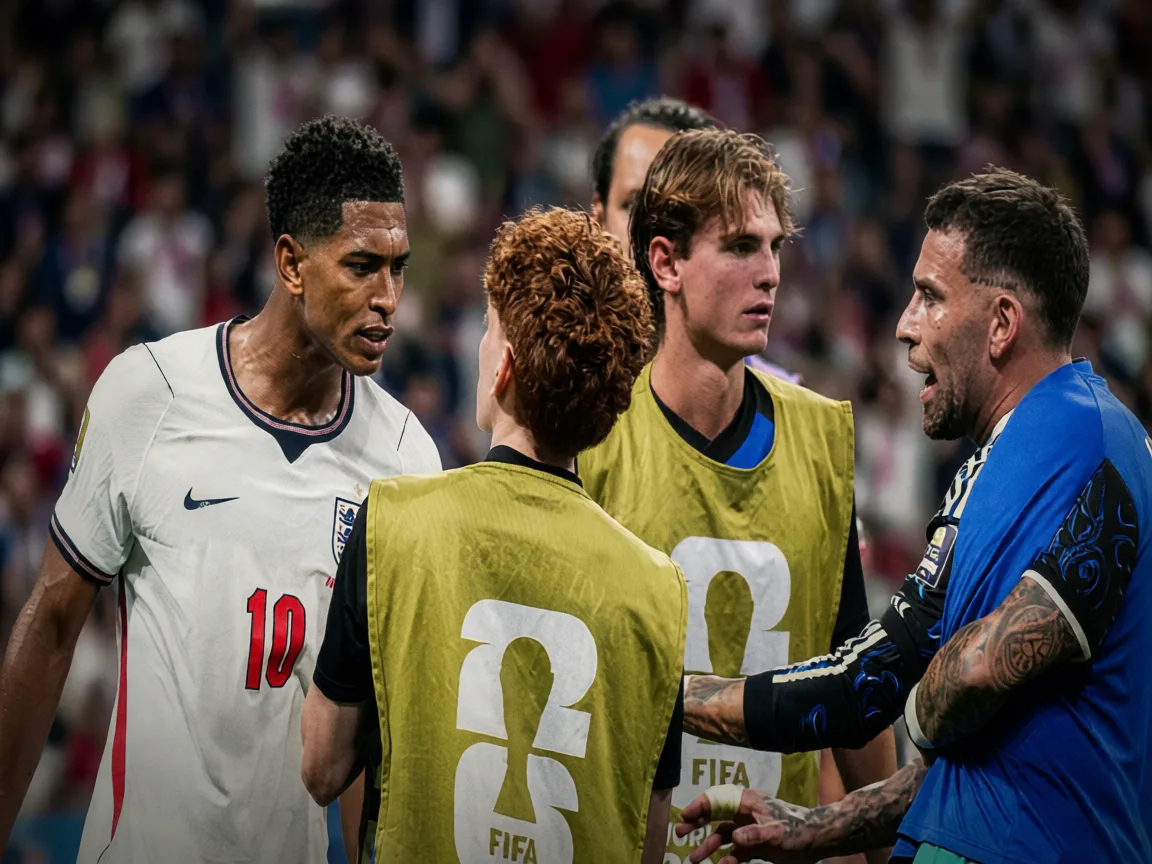
Bellingham Meltdown Masks England's Tactical Deficiencies
A slap on Barco's head exposes deeper English structural flaws and Argentina's continental tactical mastery in World Cup semi-final.

Spain Shine, Cape Verde Do It Again: International Football's Split Screen
Two nations on separate footballing trajectories delivered identical results this week: pure, unadulterated resilience.