Fulham Narrow Managerial Shortlist to Two as Post-Silva Era Looms
Tony Khan confirms two leading candidates to replace Marco Silva, raising questions about Fulham's next tactical identity.
The Succession Question at Craven Cottage
Marco Silva's departure from Fulham marks the end of one of the most quietly transformative managerial tenures in recent Premier League history. The Portuguese tactician took charge of a club bouncing between divisions and built something coherent, something sustainable. Now, with vice-chairman and director of football operations Tony Khan confirming the club has narrowed its shortlist to two leading candidates, the question shifts from when to how.
How do you replace a manager who gave Fulham tactical identity?
Khan's public comments, while deliberately vague on names, signal intent. This is not a club scrambling. Fulham have been planning for this eventuality, and the precision of "two candidates" suggests a structured recruitment process rather than a reactive scramble. That distinction matters enormously in a Premier League landscape where managerial appointments increasingly define club trajectories for years.
What Silva Built: A Tactical Audit
To understand what Fulham's next manager inherits, you need to appreciate the tactical architecture Silva constructed. His preferred 4-2-3-1 was never revolutionary in its shape, but it was meticulous in its execution. The double pivot provided defensive stability while allowing fullbacks to push high and create width. The number ten operated as a connector, linking midfield control with attacking transitions.
What made Silva's Fulham distinctive was the pressing structure. Rather than employing an aggressive high press that risked exposure, Silva implemented a mid-block that compressed space between the lines. Fulham's defensive line sat at roughly 38 meters from their own goal on average, inviting opposition pressure before triggering coordinated pressing traps. The wingers tracked back with discipline, turning the nominal 4-2-3-1 into something closer to a 4-4-2 out of possession.
This system was not without its limitations. Against elite pressing sides, Fulham's buildup could stall when the double pivot was pinned. The club's expected goals against (xGA) figures consistently exceeded what the raw defensive record suggested, meaning results sometimes masked underlying fragility. Silva's teams rode fine margins, and fine margins are exactly what separate mid-table security from a relegation fight.
The Philosophical Fork
The two candidates Khan referenced will presumably represent different tactical schools of thought. This is where Fulham's decision becomes genuinely fascinating.
Does the club double down on Silva's pragmatic, defensively organized blueprint? Or does it pivot toward a more possession-dominant identity that could unlock higher ceilings but carries greater short-term risk?
The Premier League trend data is instructive. Clubs that have thrived in the middle third of the table in recent seasons, think Bournemouth under Andoni Iraola or Brighton's Roberto De Zerbi phase, have done so by committing to a specific playing philosophy and backing the manager through initial turbulence. The clubs that have struggled are often those caught between identities, appointing managers whose philosophies contradict the squad's construction.
Fulham's squad profile currently suits a transitional, counter-attacking approach. The personnel were recruited for Silva's system. João Palhinha's departure last summer already forced one significant midfield recalibration, and any incoming manager will need to assess whether the current roster can support a different tactical framework or whether adaptation is required at board level.
Khan's Role and the Recruitment Machine
Tony Khan's involvement in this process deserves scrutiny. His dual role as vice-chairman and director of football operations places him at the nexus of strategic decision-making at Fulham. Historically, Khan has favored data-driven recruitment models, applying analytical frameworks inherited from the family's experience in professional wrestling's performance metrics to football talent identification.
This approach has produced mixed results in player recruitment but has generally been sound in structural appointments. Silva himself was a data-informed hire, a manager whose underlying performance metrics at previous clubs suggested he was operating above the level his results indicated.
The expectation is that both shortlisted candidates have been subjected to similar analytical rigor. Khan's public confirmation suggests confidence in the process, and confidence in football administration is typically calibrated against precedent. Fulham have made worse managerial decisions than this one appears to be.
Tactical Shift: The Set-Piece Dimension
One area where a new manager could generate immediate improvement is set-piece coaching. Under Silva, Fulham's set-piece output was respectable but unspectacular. The club ranked in the lower half of Premier League teams for goals from dead-ball situations despite possessing aerial threats across the squad.
Modern Premier League management increasingly treats set pieces as a distinct coaching discipline, and the candidates Fulham are evaluating will almost certainly have been assessed on their set-piece methodology. This is not a marginal concern. In a league where roughly 30% of goals derive from set plays, a specialist approach can swing positions in the table by two or three places.
If one of the two candidates brings a demonstrably superior set-piece framework, that could prove the decisive factor in Khan's calculus. Data-driven operations prize quantifiable edges, and dead-ball efficiency is among the most replicable competitive advantages in football.
What the Timeline Tells Us
The fact that Fulham are already at the two-candidate stage suggests the club anticipated Silva's departure well before it became official. This is not a reaction to a sacking or a sudden resignation. Silva's trajectory, his links to larger clubs, his visible ambition, meant Fulham had ample time to prepare contingency plans.
A swift appointment would serve the club's pre-season preparation. Every day without a confirmed manager is a day of uncertainty in transfer planning, contract negotiations, and tactical groundwork. Fulham's hierarchy understands this calculus, and Khan's public disclosure likely signals an announcement is imminent rather than distant.
"We have two candidates that we really like, and we feel very confident about the direction we're heading." — Tony Khan, Fulham vice-chairman
The phrasing is notable. "Really like" is not corporate hedging. It suggests genuine enthusiasm rather than compromise. Khan has been around football long enough to know the difference between a candidate who fits and a candidate who is merely available.
The Competitive Context
Fulham's managerial appointment does not exist in isolation. The Premier League's middle class is more ambitious than ever. Bournemouth, Brighton, Brentford, and Crystal Palace have all demonstrated that intelligent management can punch above financial weight. The margins between finishing 12th and 8th are razor-thin, and the managerial appointment is the single largest variable in that equation.
Silva's Fulham were perpetually in that zone, competitive enough to avoid danger but rarely threatening the European places. The question for his successor is whether the next evolution can push Fulham into that upper-middle tier or whether the club has already reached its structural ceiling under current ownership investment levels.
Looking Ahead
Once the appointment is confirmed, attention will immediately turn to how the new manager interacts with Fulham's existing tactical framework. The early weeks of pre-season will be telling. Does the incoming coach attempt to impose a radically different system, risking early-season turbulence? Or does he iterate on Silva's foundation, making targeted adjustments while maintaining structural familiarity?
The opening fixtures of the 2025-26 Premier League season will provide the first real test. Fulham's early schedule, combined with whatever summer transfer activity follows the appointment, will determine whether this transition represents continuity or revolution.
What is clear is that Fulham are approaching this decision with unusual clarity. Two candidates. A structured process. A vice-chairman willing to go public with confidence. The post-Silva era at Craven Cottage may not be seamless, but it appears to be well-planned.
The question now is whether good planning translates into good football.
Editorial Integrity
This is an original SportPulse article written by our editorial team. All content is independently researched, written, and reviewed by our writers and editors before publication. We do not publish copied, aggregated, or syndicated content.
SportPulse is committed to original sports journalism. Read our editorial policy or contact us with any questions.
More Like This
All football
Jiménez Tears as Mexico's Pressing Structure Dismantles South Africa
Raúl Jiménez wept after his first World Cup goal capped a dominant tactical display by co-hosts Mexico against ten-man South Africa.

Borthwick Rolls the Dice on Slade as England Stare Into the Abyss
Henry Slade's resurrection from Six Nations exile to starting XV captures a desperate England regime chasing salvation against Fiji.
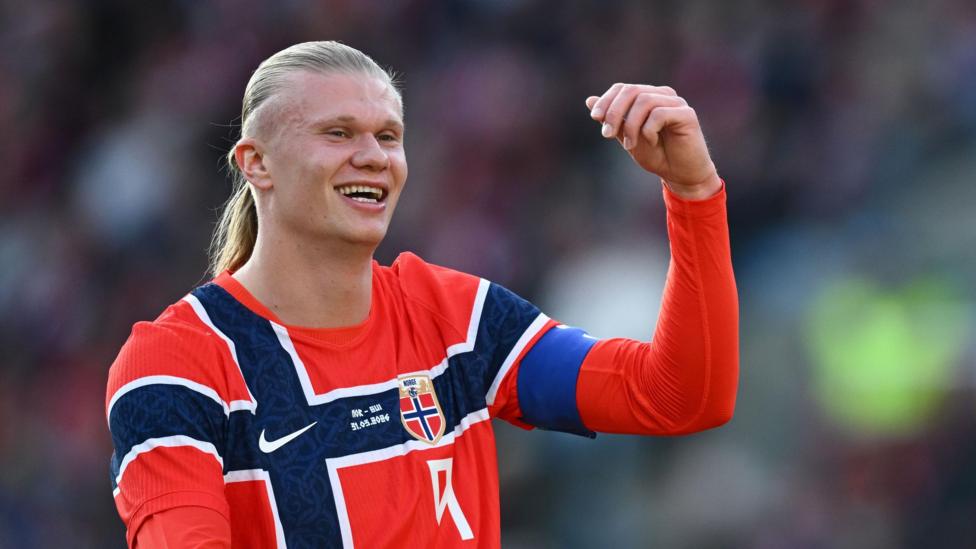
5.5 Million People, One Giant: How Haaland Dragged Norway Back to the World Cup
Erling Haaland has ended Norway's 27-year World Cup exile, carrying an entire nation on his shoulders into the 2026 tournament.