George Russell's Quiet Engineering Revolution Has Made Him a Title Threat
From Williams backmarker to Mercedes' technical linchpin, Russell's meticulous approach is reshaping his championship credentials.
The Data-Driven Contender
George Russell sat down with the BBC's Andrew Benson for a rare long-form conversation on Chequered Flag, and the framing alone tells a story: the word "title contender" was not hypothetical. It was presented as fact. A few years ago, that sentence would have read as generous. Today, it reads as overdue. The 27-year-old Briton has quietly engineered his way from being the promising kid in a Williams to the man on whom Mercedes' entire championship architecture now rests.
The shift did not happen overnight, and it did not happen by accident. What makes Russell's trajectory different from the typical "fast young driver gets a top seat" narrative is the degree to which his rise has been built on technical fluency, not just raw pace. Mercedes did not promote a talent and hope for the best. They inherited a driver who thinks like an engineer and drives like a surgeon, and the machinery has slowly started to match his ambition.
From Williams Wilderness to Brackley's Brain Trust
Russell's three years at Williams from 2019 to 2021 are often romanticized as a proving ground, but the reality was harsher. The FW42, FW43, and FW43B were fundamentally uncompetitive cars, often multiple seconds off the pace in qualifying trim. Yet Russell consistently extracted performances that defied the machinery, most famously his P2 in qualifying at the 2021 Belgian Grand Prix in torrential rain, putting a Williams on the front row for the first time in years.
What went less noticed was his engineering debrief style. Multiple paddock sources across both teams have described Russell as a driver who arrives at post-session meetings with detailed sector-by-sector overlays, correlation data from the sim, and specific questions about ride-height adjustments and aerodynamic balance shifts. He does not simply report understeer. He quantifies it.
That habit became invaluable when he arrived at Mercedes for 2022, replacing Valtteri Bottas and stepping into the seat alongside Lewis Hamilton. The timing was brutal. The new ground-effect regulations caught Mercedes off guard, producing the notorious W13 with its extreme porpoising issues. The car bounced violently at high speed, a problem rooted in floor-edge vortex instability and the team's aggressive zero-pod sidepod concept.
Engineering Insight: The Technical Fingerprint of Russell's Feedback
What separates Russell from many contemporaries is his understanding of suspension geometry and its interaction with aerodynamic load. Ground-effect cars are uniquely sensitive to ride-height fluctuations. A change of just 2-3 millimeters at the rear axle can shift the aerodynamic balance by several percentage points, transforming a car's behavior through medium-speed corners.
Russell's feedback on this front has been consistently granular. During the troubled W13 era, he was reportedly the first driver to articulate that the porpoising was not a single-frequency oscillation but a multi-modal resonance dependent on fuel load, tyre degradation state, and specific corner profiles. That distinction mattered because it pointed the engineering team toward suspension damping solutions rather than purely aerodynamic fixes.
By the time Mercedes introduced the revised W14 concept in mid-2023, abandoning the zero-pod philosophy for a more conventional downwash sidepod design, Russell's fingerprints were all over the specification. The car's improved low-speed mechanical grip, particularly in traction zones, aligned with his long-standing preference for a rear-end that he could lean on through slow corners. Think of it as an architect who insists on specific load-bearing walls: the structure changes to match the vision.
The Hamilton Departure and the Solo Era
Lewis Hamilton's move to Ferrari after the 2024 season was seismic for Formula 1, but for Russell it represented something more specific: the removal of a political and technical counterweight within Mercedes. Hamilton's preferences for front-end responsiveness and his legendary ability to fire up the front tyres had often shaped car development in a direction that sometimes conflicted with Russell's rear-stability bias.
Now the primary development driver, Russell has the team's entire aerodynamic and suspension programme oriented around his feedback. That is an enormous advantage for any driver, but especially for one with his technical vocabulary. Mercedes' 2025 challenger has shown signs of genuine competitiveness, with improved aerodynamic efficiency at medium and high-speed circuits, areas where the team struggled during the regulation transition.
"George doesn't just drive the car. He understands why the car does what it does, and he communicates that in a way that accelerates development." — Mercedes engineering leadership have described Russell's influence in similar terms across multiple media sessions.
The Numbers Behind the Claim
Russell's statistical profile has been building toward contention for two full seasons. In 2024, he achieved multiple podium finishes and demonstrated a qualifying record that put him among the top performers on the grid. His Saturday pace in particular has been devastating, a hallmark that echoes his Williams days when he routinely outqualified the car.
More importantly, his racecraft has matured. Earlier in his Mercedes tenure, Russell occasionally overdrove in wheel-to-wheel combat, a tendency that cost him positions. By the second half of 2024, his decision-making in battles, tyre management through long stints, and ability to read strategic crosswinds had sharpened significantly. He began making fewer unforced errors while maintaining the same qualifying aggression.
His consistency metric is the one that catches the eye of championship analysts. In a title fight, the driver who finishes second eight times often beats the driver who wins four races and retires twice. Russell has built a points-scoring profile that is brutally consistent, the kind of damage-limitation mentality that wins championships over 24 races.
The McLaren and Red Bull Calculus
No title bid exists in a vacuum. Russell's championship aspirations depend on the competitive landscape, which remains fierce. McLaren's resurgence under Andrea Stella and their technically innovative MCL38/MCL39 platform has made them a consistent threat, while Red Bull, despite internal turbulence, still fields Max Verstappen, a driver capable of transcending car limitations.
The engineering challenge for Mercedes is to close the aerodynamic efficiency gap at high-downforce circuits while maintaining their improving form at power-sensitive tracks. Russell's ability to provide clean, actionable data across both conditions gives the team a development edge that pure speed merchants cannot replicate. The next few races at circuits with contrasting characteristics will reveal whether the W15/W16 trajectory is genuine convergence or incremental plateau.
What Comes Next
The interview on Chequered Flag arrives at a pivotal moment in the season and in Russell's career. He is no longer the future. He is the present, carrying the weight of a legacy team's ambitions on shoulders that were tested in the worst cars on the grid and tempered alongside the greatest driver in history.
The technical foundation is there. The driving maturity is there. The team structure, now oriented entirely around his strengths, is there. What remains to be proven is whether the car-to-driver loop that Russell and Mercedes are building can close the final tenths that separate contenders from champions.
If the next phase of car development continues on its current trajectory, the quiet kid from King's Lynn may not be quiet much longer.
Editorial Integrity
This is an original SportPulse article written by our editorial team. All content is independently researched, written, and reviewed by our writers and editors before publication. We do not publish copied, aggregated, or syndicated content.
SportPulse is committed to original sports journalism. Read our editorial policy or contact us with any questions.
More Like This
All f1
Wolff Slams the Door: No Verstappen Deal, No Driver Swap
Toto Wolff shuts down persistent Verstappen-to-Mercedes speculation, declaring his current lineup is locked in.
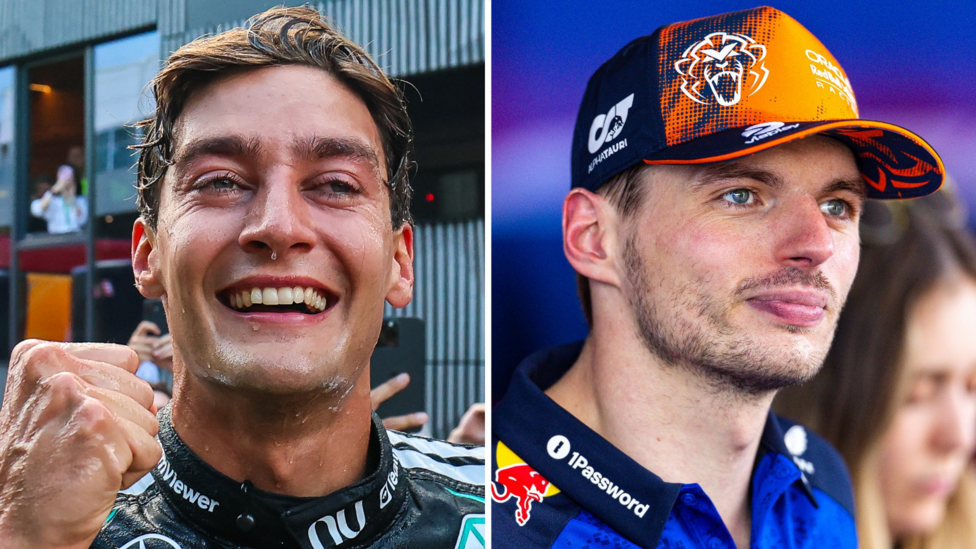
Russell Seizes the Moment as Verstappen Fights Back at Red Bull Ring
George Russell delivered a masterclass at the Austrian GP while Max Verstappen clawed back from chaos to salvage points.
The Golden Ticket: Inside Heineken's Unprecedented All-Access F1 Offer for 2027
Heineken and F1 Unlocked offer a season pass for every 2027 race, reframing what global fan access means.