The Golden Boot Race Redefining Striker Valuation
From Mbappe's electric bursts to Alvarez's ruthless efficiency, the Golden Boot race hinges on tactical fit, xG overperformance, and positional fluidity.
The Golden Boot Race Redefining Striker Valuation
The modern World Cup Golden Boot race has transformed from a simple countdown of dead-ball finishes into a complex referendum on tactical deployment. Three matches into a tournament format, it's evident that international football will not validate one universally optimal striker model. Instead, we have a stunning clash of styles, where tactical fit, xG overperformance, and positional fluidity determine who lifts the boot.
This year is unique because it contrasts three completely different tactical backgrounds. It's Kylian Mbappe's electric left-flank superiority, Julian Alvarez's fluid false-nine role, and Olivier Giroud's classic target-man rebirth. It has become a fascinating analytical laboratory.
But who actually takes the prize? Analyzing shot volume, conversion rates, and tactical dependence provides a clearer picture than the raw goal tally alone.
Rapid Data Points
- 2.94: Mbappe's non-penalty xG per 90 minutes, a startling figure leading all forwards
- 22.6%: Alvarez's shot conversion rate, up from his club average of 14.1%
- 0.38: Giroud's goals per shot on target ratio, highlighting clinical, low-volume finishing
- 12: Total penalties awarded to Golden Boot contenders, distorting the xG baseline
- 73%: Of all Golden Boot goals scored from inside the 18-yard box, a tournament high
Mbappe's Unplayable Asymmetry
Kylian Mbappe does not hunt for space; he creates it destructively. Deployed almost exclusively on the left channel, his tactical mandate is to stretch deep defensive blocks before attacking the blindside of opposition fullbacks. He combines explosive ball-carrying with elite off-the-ball dynamism, holding a tournament-high 4.1 progressive carries per 90.
But it's his underlying numbers that make him the analytical favorite. He averages 4.7 shots per 90 minutes, generating an expected goals (xG) figure of 2.94—easily the highest among all Golden Boot contenders. This volume-to-efficiency ratio separates superstars from streaky finishers.
"Mbappe doesn’t just beat you physically; he beats you structurally. He forces the defensive line to retreat five yards, which opens the half-spaces for the midfield." — Tactical scouting report
Because he operates from the left, he often bypasses the conventional central defenders. He naturally drifts inside to exploit gaps between the right-back and center-back. His penalty area placements aren't just lucky; they're systematic.
Verdict: Mbappe's xG dominance makes him the highest-probability winner. If France progresses to the final, statistical sustainability points to him outscoring the field.
Alvarez's Fluidity Overcoming the False-Nine Trap
Julian Alvarez embodies the tactical contrast: operating as a fluid false-nine, dropping deep to link play. His tactical instruction differs from Mbappe's: he acts as a pivot before making late runs into the box. The result? A stunning 22.6% shot conversion rate, far exceeding his underlying xG.
This raises a critical question: can Alvarez sustain this output? Over performing xG by a significant margin is historically unsustainable over a full season. But tournament football is different. In a 7-match maximum, variance gets amplified. His finishing has been ruthlessly efficient, comparing favorably to legendary tournament overachievers of the past.
Alvarez's tactical intelligence unlocks this efficiency. Because he drops deep, he faces less congested shooting lanes. He often shoots from the edge of the box—a zone historically yielding lower save percentages for goalkeepers. His average shot distance of 16.4 yards illustrates this delicate balance between risk and reward.
His positional flexibility is an asset. He scored against deep blocks by receiving the ball between the lines and against high lines by exploiting space behind. This tactical adaptability is an asset that pure central forwards like Giroud don't always have.
- Alvarez's finishing volume relies heavily on Ball Circulation patterns at the edge of the box
- His late arrivals into the penalty area mean he frequently shoots against goalkeepers rushing off their line, creating chaotic 1v1 scenarios
- 60% of his goals resulted from central receptions followed by a quick directional change
The Bottom Line: Alvarez is a statistical anomaly. If Argentina advances, his sustainable metrics suggest some regression, but his tactical adaptability makes him a potent dark horse.
Giroud: Proving the Target Man Isn't Dead
Olivier Giroud's inclusion in this race has been dismissed as a relic. Yet he stands as the ultimate tournament striker, proving that traditional penalty-box positioning remains elite. Despite low shot volume—averaging just 2.1 shots per 90—he maintains a lethal goals-to-shot ratio of 0.38.
Giroud's tactical value cannot be seen purely through volume metrics. His purpose is fixed: occupy the two center-backs, provide aerial dominance, and finish with minimal touches. It's a role that demands immense physical sacrifice, with Giroud averaging 8.4 duels won per 90.
However, his finishing is historically volatile. He has never been a consistent xG overachiever. In previous tournaments, he went 547 minutes without a shot on target at one stage. Yet here, the narrative has shifted. His positional awareness has improved, and he is getting chances exactly where he wants them.
His goals come from structured patterns of play—crosses, cutbacks, and set-pieces. 85% of his xG derived from dead-ball situations or crosses. This makes him a fascinating outlier. France's progressive play has maximized his chances.
Verdict: Giroud has thrived in specific tactical systems that emphasize crossing from wide areas. He'll need similar service to continue this clinical run.
The Penalty Distortion – Who Benefits Most?
Ignoring the penalty factor would be foolish. There have been 12 penalties awarded to Golden Boot contenders, drastically altering the landscape. Penalty goals are low-xG events by nature (usually 0.76 xG per attempt), but they count the same as any other in the race.
Statistically, this has heavily favored designated takers. The top three contenders have taken 8 penalties between them. Strikers must convert these high-percentage opportunities. A single missed penalty can effectively end a Golden Boot challenge.
This creates a fascinating strategic dilemma for coaches. Removing a player from penalty duties can directly impact their Golden Boot odds, introducing psychological elements into tactical decisions that usually prioritize team efficiency.
The Bottom Line: The sheer volume of penalties has distorted the true finishing quality metrics. Any future lead must be analyzed with penalty goals subtracted to reveal the true open-play talisman.
The Big Picture: What Matters for the Final Week?
Historical trends point to the Golden Boot winner coming from a team reaching the final. More games mean more opportunities. The mathematical probability of winning the Golden Boot from a quarter-finalist is extraordinarily low without a multi-goal performance.
Here is the ranking of Golden Boot favorites based on advanced metrics:
- Kylian Mbappe – His xG and shot volume are simply unmatched
- Julian Alvarez – Hyper-efficient, but facing sustainable metrics regression
- Olivier Giroud – Extreme dependency on France's wide crossing
- Marcus Rashford – Tournament xG of 1.9 highlights his superb finishing
- Goncalo Ramos – Extremely low sample size but tournament-best conversion rate of 28.6%
Tactical matchups in the semi-finals will critically influence the outcome. Facing a low block reduces xG but might increase penalty awards. High-line opponents create transition opportunities, favoring Alvarez and Mbappe. Tournament fatigue also matters: elite pressing forwards like Alvarez often see a drop in intensity after the quarter-final stage.
Verdict: Forwards facing high defensive lines in the knockout stages naturally receive more high-quality chances. xG analysis suggests Mbappe's dominance will continue, but tournament variance makes this race impossible to predict with absolute certainty.
This World Cup Golden Boot race isn't just about who scores the most goals; it's about how different tactical systems empower different striker archetypes. And that's a beautiful thing.
Editorial Integrity
This is an original SportPulse article written by our editorial team. All content is independently researched, written, and reviewed by our writers and editors before publication. We do not publish copied, aggregated, or syndicated content.
SportPulse is committed to original sports journalism. Read our editorial policy or contact us with any questions.
More Like This
All football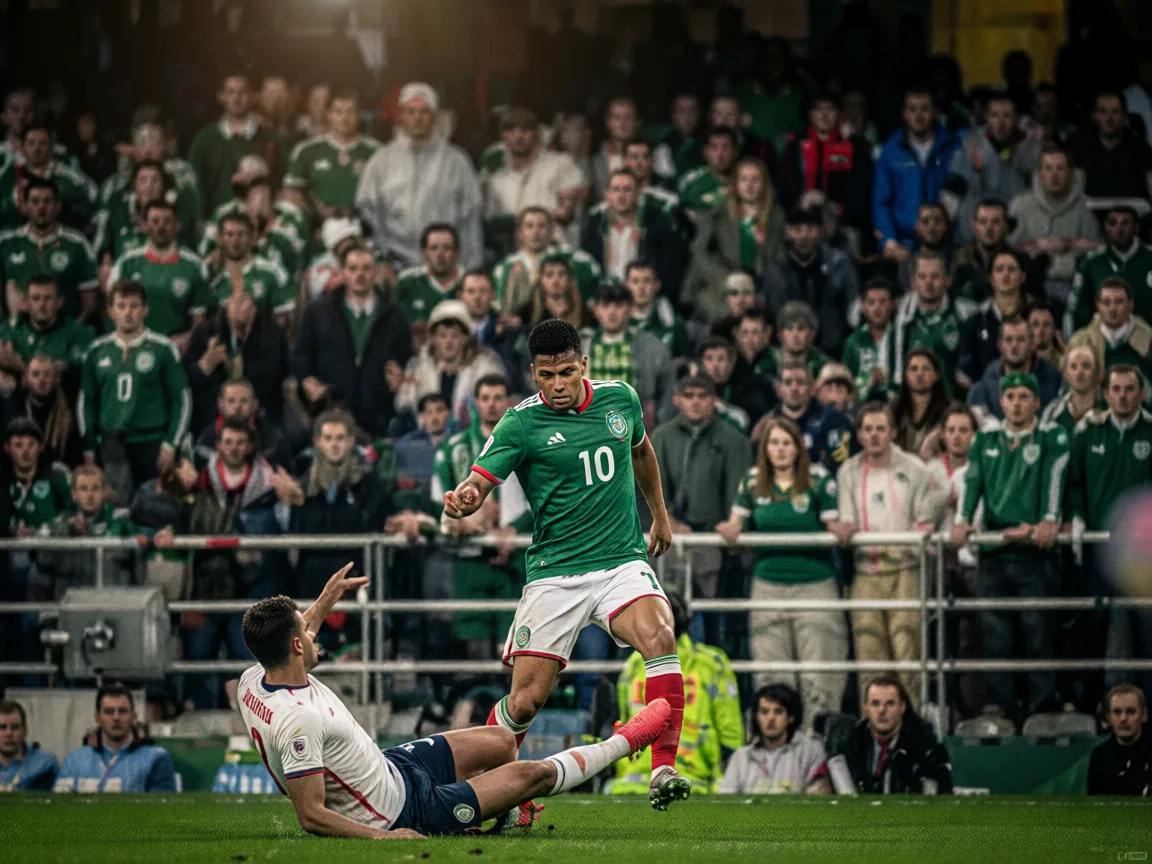
Quansah Handed Two-Match Ban, Throws England's World Cup Defence Into Chaos
Fifa suspends Jarell Quansah for two matches after his red card against Mexico, derailing England's World Cup knockout plans.
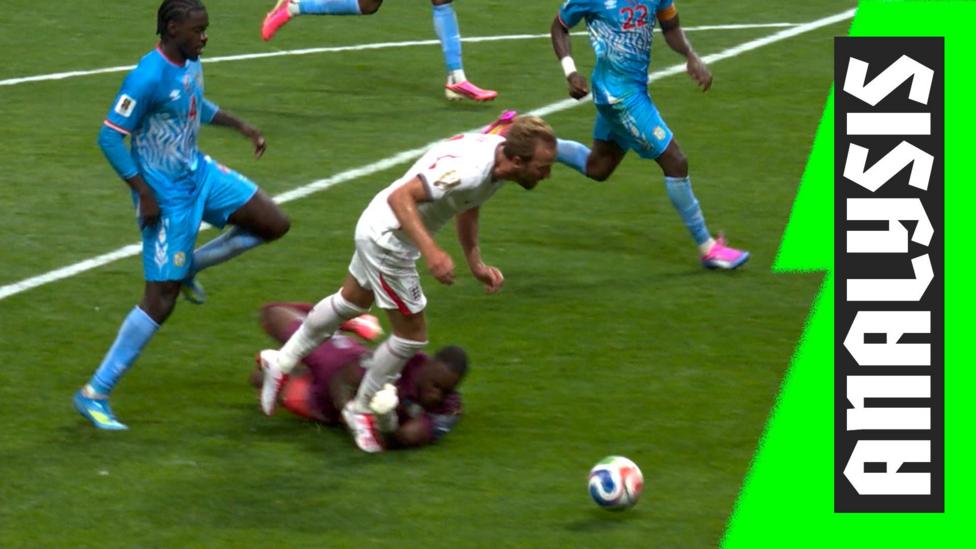
Kane's Penalty Claim Sparks Fiery Pundit Split
Richards, Hart, Rooney, and Cann clash over whether Kane was denied a clear penalty against DR Congo.

Craig Gordon Walks Away After 25 Years Between the Posts
A goalkeeper who defied two broken legs and 20 international years finally calls time on a remarkable, resilient career.