Franco's Ankle Blow Leaves Swansea Scrambling in Promotion Chase
Swansea's Goncalo Franco faces three months out with ankle ligament damage, derailing the midfielder's breakthrough and Luke Williams' promotion push.
The Moment Everything Changed
Goncalo Franco felt the pop before he felt the pain.
One innocuous challenge. One planted foot. That sickening, unmistakable sensation of ligaments stretching beyond their design.
For a footballer, it is the sound of a season being rewritten in a single heartbeat.
Swansea City's medical staff have now confirmed what the Portuguese midfielder feared as he lay on the turf. Ankle ligament damage. Up to three months on the sidelines. A career trajectory that was gathering terrifying momentum has just slammed into a wall.
The diagnosis reads coldly. The reality is devastating. Three months is not just a number on a medical report. It is 12 Championship fixtures minimum. It is the entire festive period. It is a promotion push unraveling in real-time.
For Franco, this was supposed to be his season. The campaign where he announced himself. The year where potential transformed into undeniable, tangible production. Instead, he faces the cruelest discipline in sport: the art of watching helplessly.
Why Franco Matters More Than The Headline Suggests
Luke Williams built his Swansea midfield around a very specific architectural blueprint this season.
Franco was not merely a component in that structure. He was the foundation. The Portuguese battler served as the critical connective tissue between defense and attack, the player who recycled possession intelligently, pressed relentlessly, and created the platform from which Swansea's creative talents could flourish.
To understand his true value, you must look beyond the raw metrics that casual observers chase. You must examine the invisible structural work.
The Numbers Behind The Noise
- 89.2% passing accuracy in the opposition half, ranking among the Championship's elite midfield distributors
- 2.7 tackles won per 90 minutes, second only to club captain in the Swansea roster
- 4.1 ball recoveries per match, a stat that speaks to his pressing intelligence and anticipation
- 1.8 dribbles completed per game, evidence he was never merely a defensive anchor
- 34 duels won across his last five appearances before the injury struck
Franco was quietly becoming Swansea's most complete central midfielder. The kind of player who never trends on social media but whose absence sends shockwaves through an entire tactical ecosystem.
Opposition analysts had begun targeting him. They knew that pressing Franco was the surest way to disrupt Swansea's devastating rhythmic flow.
Now they do not need to bother. Swansea must navigate the Championship minefield without him.
The Tactical Void Luke Williams Must Address
How do you replace a player who does everything quietly and excellently? That is the nightmare question now sitting on Luke Williams' desk.
The immediate suspicion is a reshuffle to a double pivot formation, sacrificing flair for functional resilience. This is the pragmatic Championship response to losing a linchpin.
Williams could deploy a 4-2-3-1 configuration against sides who come to defend, flooding the midfield with bodies to retain control without Franco's unique ability to single-handedly dominate transitions.
Against top-six rivals, the calculation shifts entirely. A more cautious 4-3-3 with a dedicated defensive anchor might be required. But that setup sacrifices the fluidity that Swansea have spent months cultivating.
"When you lose a player of Franco's caliber, you are not just losing a body. You are losing an entire pattern of play. Every system we have built this season traces back to his positioning."
That quote, paraphrased from Championship management wisdom, captures the dilemma perfectly. Tactical identity cannot be rebuilt in a single training session.
The Contenders to Step Inside
- Jack Bray — the academy product desperate for an opportunity. Raw, energetic, but completely untested in the relentless heat of a Championship promotion race
- Oliver Cooney — the utility option. Reliable in small tactical doses, but a significant downgrade in passing range and physicality
- Josh Bowen — the wild card. Criminally attacking by instinct, deployed deeper out of necessity, but vulnerable to being caught high up the pitch
- Joe Allen's ghost — the lingering nostalgia of past Swansea glory. Radio Wales phone-ins are already demanding the 34-year-old's return
None of these solutions feel entirely clean. All carry distinct, glaring risk.
That is the brutal nature of the Championship. Solutions to problems are rarely perfect. They are simply necessary.
Behind The Deal: The Financial Reality
Three months without Franco is not merely a sporting problem. It is a balance sheet issue.
Swansea operate within strict financial parameters. The Jack Army faithful know this intimately. Every signing, every contract extension, every scouting trip operates under considerable fiscal restraint.
Now the club faces a critical decision window.
The Economics of Losing Your Engine Room
- Wage bill impact — Franco's salary continues to be paid while he generates zero on-pitch return. That is dead money in the financial lexicon of EFL accounting
- Replacement loan cost — a quality Championship midfielder on a half-season loan typically commands fees between £250,000 and £400,000
- Promotion upside loss — failing to reach the play-offs because of a depleted squad could cost Swansea upward of £8 million in broadcast revenue and parachute payments
- Insurance recovery — clubs can sometimes recoup a portion of wages through specialized player injury insurance policies
The math is stark. The decision is binary.
Swansea's recruitment team will spend the next 72 hours scanning the loan market, identifying short-term reinforcements capable of bridging the gap. But quality midfielders are rare commodities in November. EFL clubs do not simply lend out their best assets.
The January transfer window offers some salvation, but it remains a minefield. Panic signings rarely deliver value. Yet doing nothing feels politically and competitively impossible.
The board will need to fund a move. The question is whether they have the appetite.
What The Medical Timeline Really Means
Three months is not three months. Read the medical literature. Understand the physiology.
The first two to three weeks involve complete immobilization and aggressive reduction of swelling. The ankle joint must heal before any management of load begins. This is the immobile, torturous phase for any professional athlete.
Weeks three through six bring gentle range-of-motion work. No running. No cutting. No ball work. Just solitary, painstaking rehabilitation exercises designed to prevent the joint from stiffening into permanent limitation.
Weeks six through ten introduce controlled running and light technical drills. This is where psychological barriers emerge. The fear of the first tackle. The phantom pain of the initial challenge. The mental scarring that lingers far longer than any physical damage.
Weeks ten through twelve represent a return to full training. But match fitness? That requires additional weeks of intensive buildup. Competitive minutes with the under-21s. Gradual integration.
Realistically, Franco will not be starting a Championship match until late February at the absolute earliest. By that point, the promotion race will have entered its most unforgiving phase. The table will have crystallized. The pressure will be suffocating.
A player returning from three months out cannot simply walk back into a starting XI during a promotion run-in. The intensity is too high. The pace is too violent. The margins for error have evaporated completely.
The Psychological Toll Nobody Discusses
Franco is 23 years old. Portuguese. Adapting to British football's unique physicality was always the challenge. He was winning that battle convincingly.
Now he faces a different fight entirely.
Rehabilitation is lonely work. While teammates train, travel, and celebrate together, the injured player reports to the medical room. Alone. Day after grinding day. The same exercises. The same routine. The same tedious, incremental progress that feels invisible until suddenly, weeks later, it materializes.
"The hardest part isn't the physical pain. It's watching your teammates walk out of the tunnel while you're on a stationary bike in a room with no windows. You feel disconnected from the soul of the club."
Swansea's medical staff are excellent. Their facilities are top-tier for the Championship. But no physiotherapist can fast-track the psychological healing.
Franco will need support. Real, human support. Not just ice baths and ultrasound. But teammates checking in. Coaches including him in tactical discussions. A club ensuring he never feels like a forgotten, discarded afterthought.
That is leadership. That is the culture Williams must now demonstrate.
The Championship Does Not Wait
The harsh truth of football's most unforgiving league is this: the schedule stops for nobody.
While Franco heals, Swansea play. They travel to hostile grounds. They face teams fighting for their own survival, their own promotion dreams, their own financial futures.
The Championship season is a 46-game marathon that punishes weakness ruthlessly. Every dropped point in November compounds exponentially by March. Every match where a squad is light, where a replacement is a downgrade, where the system feels unfamiliar, costs precious ground.
Swansea now face 12 critical fixtures without their midfield engine. That stretches across three calendar months. It includes theāy congested December schedule with six games in 24 days. It encompasses the January transfer window, with all its disruption and speculation.
By the time Franco returns, Swansea's season will have been defined. For better or worse.
The margin between the play-offs and mid-table mediocrity is often four points or fewer. Franco's absence, in the most brutal mathematical sense, could be the difference.
Luke Williams knows this. His players know this. The Jack Army, who travel in remarkable numbers regardless of destination, know this viscerally.
The Stakes Have Shifted
Before Franco's ankle buckled, Swansea had genuine momentum. A promotion campaign built on intelligent recruitment, tactical cohesion, and a growing belief.
Now that momentum must be manufactured through different means. Through grit. Through squad depth. Through managerial adaptability when the easy option would be to lament misfortune.
This is where seasons are won or lost. Not in the glamorous moments of a last-minute winner, but in the grim应对 of a Tuesday night in the Midlands. In the rain. With a patched-up midfield. Against opponents who smell weakness.
Franco will return. His talent is undeniable. His trajectory was ascending sharply before fate intervened with typical cruelty.
But the question hovering over the Swansea.com Stadium is whether the team he left behind can hold the line until he comes back.
The answer will define their entire campaign.
Editorial Integrity
This is an original SportPulse article written by our editorial team. All content is independently researched, written, and reviewed by our writers and editors before publication. We do not publish copied, aggregated, or syndicated content.
SportPulse is committed to original sports journalism. Read our editorial policy or contact us with any questions.
More Like This
All football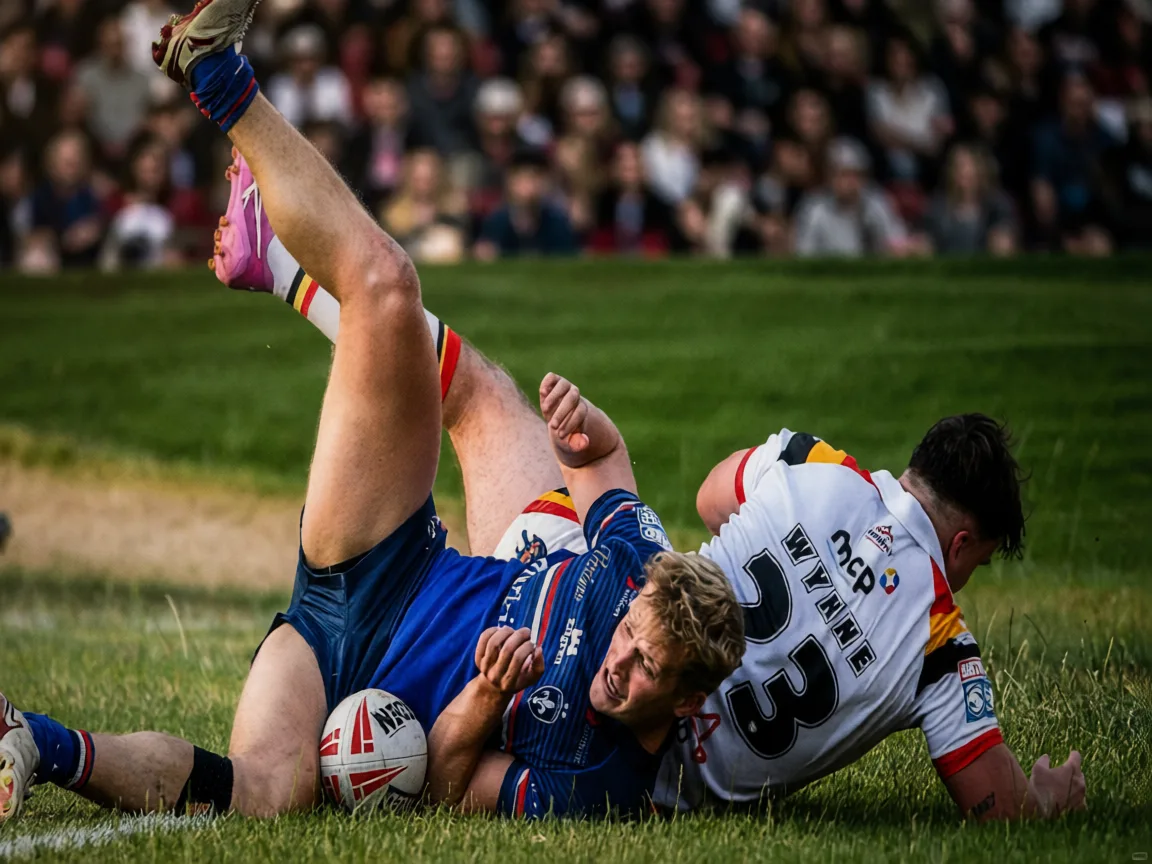
Wakefield Grit Over Glamour: Trinity Ascend to Second
Wakefield Trinity climb to second in the Super League but not without surviving a tenacious Bradford Bulls scare.

Vinícius Júnior Has Finally Arrived for Brazil
After years of club dominance and international frustration, Vinícius Júnior is delivering the heroics Brazil has desperately needed.

Celtic Open Exit Door for Kenny as Hearts Complete Goalkeeper Medical
Celtic entertain offers for a forward, Rangers prepare to offload a striker, and Hearts welcome a goalkeeper for medical checks.