Arctic Football: Inside Greenland's Wild Championship in Nuuk
BBC Sport ventures to Nuuk for the Greenlandic Football Championship, where extreme Arctic conditions and a narrow summer window create tournament football like nowhere else.
The World's Most Isolated Football Tournament
Deep inside the Arctic Circle, a football championship unfolds under conditions that would break most pitches and players. The Greenlandic Football Championship has carved out a reputation as one of the planet's most extraordinary sporting events. BBC Sport's journey to Nuuk, the capital of Greenland, has exposed a football culture that operates entirely on its own brutal terms.
Greenland is not a member of FIFA. It is not a member of UEFA. The world's 80,000-square-kilometre island exists in a footballing vacuum, governed only by the Greenland Football Association and the harsh realities of Arctic geography. This is football stripped of corporate polish, television money, and global governance.
The championship itself is a compressed, chaotic miracle of logistics. Teams from across a landmass stretching over 2,700 kilometres from north to south must converge on a single host city. In the summer of the current edition, that city is Nuuk, a coastal settlement of roughly 19,000 residents pressed between the Davis Strait and a wall of ancient rock.
The format is tournament-style, a necessity dictated by geography and climate. You cannot run a standard August-to-May league season when permafrost covers the ground and the sun vanishes for months on end. The entire championship is squeezed into a narrow window, a sudden burst of football that erupts and concludes before the Arctic reclaims the pitch.
The Climate Factor: Football At The Edge Of The World
The Arctic conditions are not a backdrop. They are the defining feature of every match, every training session, and every tactical decision. Temperatures during the championship window hover in single digits. A summer day in Nuuk can bring biting wind, sleet, and a fog that swallows the stadium whole.
The pitch itself is a subject of constant scrutiny. Grass growth in Greenland is slow and stubborn, and maintaining a surface that meets any recognizable standard requires relentless effort. Bumps, bare patches, and uneven bounces are part of the game. For players accustomed to pristine surfaces, Nuuk presents a genuine adaptation challenge.
The narrow window of time is the tournament's greatest constraint and its most thrilling feature. Because the playable season is so short, the championship becomes a condensed, high-stakes affair. There is no room for a slow start or a mid-season slump. Every match carries the weight of a campaign.
Teams travel vast distances by air and sea. Some clubs represent tiny settlements of a few hundred people, their rosters pulled from the local workforce, fishermen, hunters, and teachers who answer the call when the snow retreats. The commitment required to compete is immense, and the financial cost of assembling a squad and transporting it to the host city is staggering for amateur organizations.
Inside Nuuk: The Host City Under Pressure
BBC Sport's presence in Nuuk underscores how little the outside world sees of this tournament. The capital transforms during championship week. The city's infrastructure is pushed to its limits as visiting teams, supporters, and officials flood in. Hotels, guesthouses, and private accommodations swell to capacity.
The atmosphere inside the stadium is unlike anything in European or South American football. There are no massive ultras groups or choreographed tifo displays. Instead, the sound is raw, carried on Arctic wind across open stands. Whole communities turn out, families, elders, children, their voices cutting through the cold air with a fervent pride.
The pressure on the host city and its local club is immense. Nuuk-based teams carry the weight of home expectation, a burden amplified by the knowledge that failure on home soil is witnessed by the entire community. There is everything to lose in a place where your neighbors, coworkers, and relatives are all watching.
The visiting teams face their own crucible. They must Bond quickly, adapt to the conditions faster than their opponents, and manage physical fatigue compounded by travel. A team from a remote northern settlement might spend two or three days in transit before kicking a ball.
The Identity Of A Nation Without A Federation
Greenland's football identity is complicated by its exclusion from the global game's governing bodies. The absence of FIFA recognition prevents the island from competing in international qualifiers, depriving Greenland's best players of a pathway to the highest level of the sport.
Local footballers speak of the frustration of being invisible to the outside world. They play with passion and skill forged in extreme conditions, yet there is no ladder to climb beyond the domestic championship. No scouts descend on Nuuk. No transfers lift players to professional leagues abroad.
"We have everything to lose here. Every single player knows what this means to their town, their family. When you step on that pitch in Nuuk, you are carrying your whole community with you."
That quote, from a championship competitor, captures the essence of the tournament. It is not about global glory or financial reward. It is about identity, belonging, and the sheer will to play the game under any circumstances.
In the Nuuk stadium, coaches pace the sideline in heavy jackets, their tactical instructions competing with howling wind. The dressing room is cramped and utilitarian, a far cry from the sparkling facilities of professional clubs. Each team huddles together, breath visible in the cold, as a coach maps out their plan on a whiteboard hastily erected in a concrete room cooled by Arctic air. The contrast to a Champions League tunnel is absolute, yet the intensity etched on every face is identical. Players tape their ankles and lace their boots with the same nervous energy that consumes professionals before any major final.
Why The Greenlandic Championship Matters
The tournament's existence is a testament to football's universal power. If the sport can thrive in a treeless, ice-scoured landmass with a population smaller than a single London borough, it can thrive anywhere. The Greenlandic Football Championship is proof that the game's roots extend deeper than FIFA's bureaucratic reach and into the very bedrock of human community.
The conditions force a particular brand of football. Long balls are risky in swirling wind. Close control must be precise on uneven surfaces. Stamina, rather than finesse, becomes the ultimate currency, with players asked to endure 90-minute battles in numbing cold.
There is a purity to the championship that has been lost in the sanitized, hyper-commercialized world of elite football. No shirt sponsors dominate the view. NoVAR delays disrupt the rhythm. The game flows, interrupted only by the elements and the raw reaction of the crowd.
The presence of a major broadcaster like BBC Sport shining a light on Nuuk is a pivotal moment. It connects a remote, marginalized football community to a global audience. It validates the efforts of the Greenland Football Association and the volunteers who keep the sport alive in the most inhospitable conditions on the planet.
For the players, this visibility is earned validation. Their tackles, their goals, their celebrations in the cold are no longer witnessed only by their immediate communities. The world is watching, however briefly, a championship played at the absolute frontier of the sport.
What It Means
The Greenlandic Football Championship is a reminder that football's heartbeat is loudest at the grassroots, even when those roots are frozen into permafrost. It proves the game does not require billion-dollar infrastructure or global sanctioning to matter profoundly to those who play and watch it.
The BBC's journey to Nuuk brings vital exposure to a tournament fighting for its future and the international recognition Greenlandic football deserves. Every distant kick of the ball in the Arctic wind is an act of defiance against geography and climate. As the narrow window closes and the cold returns, the championship leaves behind a story of resilience, community, and a relentless love for football that the world should not ignore.
Editorial Integrity
This is an original SportPulse article written by our editorial team. All content is independently researched, written, and reviewed by our writers and editors before publication. We do not publish copied, aggregated, or syndicated content.
SportPulse is committed to original sports journalism. Read our editorial policy or contact us with any questions.
More Like This
All long-reads
The Open's New Fan Code: Polite Request or линия in the Sand?
The R&A quietly rolled out a behavioral code for spectators at Royal Troon. Behind the corporate language lies a stark warning.
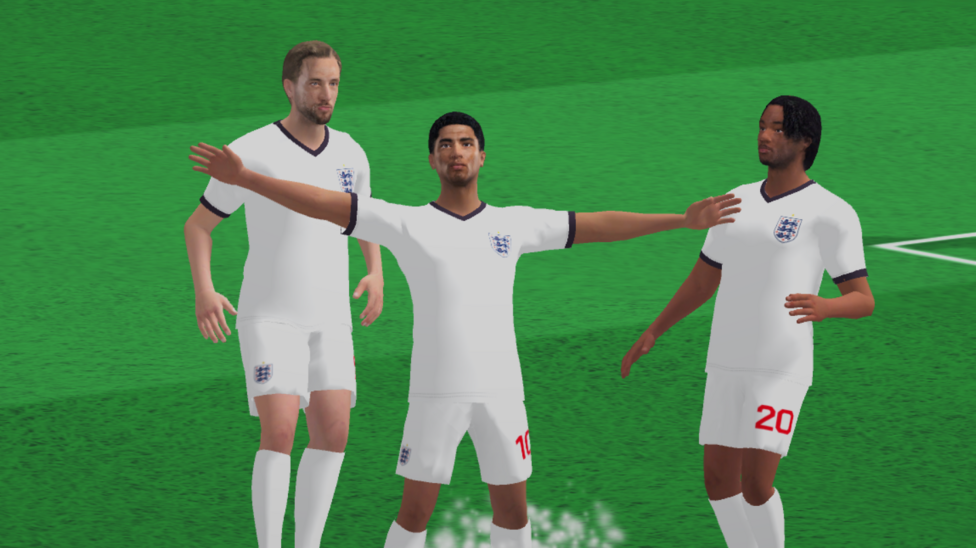
Beyond the Touchline: How BBC's 3D Experience Rewrites the Rules of World Cup Analysis
BBC's new 3D tool lets fans dissect every angle of a classic World Cup match, signaling a seismic shift in how we experience the game.

Littler Survives Springer Scare in World Matchplay Defence
Luke Littler opened his World Matchplay title defence with a gritty 10-6 win over Niko Springer, proving composure beats pure brilliance.