Haaland v Mbappé: The Tactical Duel Defining World Cup 2026
Norway and France collide as Haaland's spatial dominance meets Mbappé's verticality in a defining World Cup 2026 tactical battle.
Day 15 of the 2026 World Cup delivered a tactical confrontation, but it was Ousmane Dembele who stunned Norway with an incredible hat-trick in the opening 32 minutes, shifting the narrative in their Group I clash in Boston. The fixture transcended mere group stage positioning, becoming a collision of opposing football philosophies: the structured spatial dominance of Erling Haaland against the explosive vertical threat of Kylian Mbappé. Yet, Dembele's magic stole the show, adding a new layer to the tactical debate. This is not merely a showdown between two generational strikers. It is a debate about how modern football creates and exploits space, condensed into 90 minutes on the largest stage.
The Structural Contrast: Rigid Occupation vs Rotational Fluidity
Norway's approach under Ståle Solbakken has evolved into a system entirely calibrated to maximise Haaland's specific skill set. The operative structure is a 4-2-3-1 that shifts into a 4-4-1-1 out of possession. The tactical imperative is clear: stretch the opposition's defensive line vertically to create canyons of space between the lines for the wide playmakers. Haaland operates as a fixed reference point, occupying the covering shadows of both centre-backs. His average positional data throughout the tournament shows a remarkable 2.4 kilometres of total distance per match, but his sprint intensity metrics remain in the 99th percentile globally. He does not roam to find the ball. He waits to eviscerate gaps.
France, conversely, deploy Mbappé in a system that deliberately resists structural rigidity. Didier Deschamps has gradually transitioned from his pragmatic 4-2-3-1 into a more fluid 3-4-2-1 to accommodate Mbappé's preference for isolation on the left flank. In this setup, Mbappé is granted the freedom to start wide before inverting onto his right foot. The objective is not to occupy defenders statically, but to manipulate their orientation, drawing them out of shape before unleashing devastating diagonal runs. Where Haaland demands space by pulling defenders backward toward their own goal, Mbappé manufactures space by forcing defenders to retreat laterally.
The Data Divide
- Haaland: 23 goals in 18 qualifiers, tournament shot conversion rate of 21.8%
- Mbappé: 1.7 shots per 90 from inside the penalty area, 14 goals in 20 qualifiers
- Off-ball sprint frequency: Mbappé averages 4.2 high-intensity bursts per 15 minutes
- Box entry frequency: Norway generate 12.4 penalty box passes per match feeding Haaland
Midfield Dynamics: The Space Between the Lines
The tactical resolution of this fixture will be decided far from either penalty area. It will be dictated in the between-lines corridor where both sides seek to establish control.
Norway's double pivot of Sander Berge and Martin Ødegaard operates on distinct but complementary frequencies. Berge provides the rest-defence structure, sitting deep to screen potential Mbappé counter-attacks. Ødegaard, granted license to drift inside from the right half-space, acts as the primary progressive passer aiming to find Haaland's distinctive runs. The key tactical indicator will be Ødegaard's ability to execute third-man runs via the wide areas, drawing France's wing-backs inside to create isolated 1v1 matchups for Haaland against Dayot Upamecano or Ibrahima Konaté.
France's midfield axis of Aurélien Tchouaméni and Eduardo Camavinga offers a different profile entirely. Tchouaméni's positional discipline allows him to lock the central zones, effectively functioning as a single-pivot screen that forces Norway into wide progressions. Camavinga, meanwhile, provides the ball-carrying progression essential for transitioning from deep defence into Mbappé's vertical channel. If Camavinga can bypass Norway's initial mid-block with carrying capacity, it immediately activates Mbappé in areas where Haaland's minimal defensive contribution leaves the Norwegian right side vulnerable.
Tactical Shift: The Pressing Trigger
The pivotal tactical adjustment in this fixture will revolve around pressing triggers and the rest-defence structure left behind them. Norway cannot afford to commit bodies forward without accounting for Mbappé's devastating counter-press evasion. When Haaland makes his signature runs toward the near post, he naturally pulls a centre-back with him, destabilising the defensive structure.
If Solbakken instructs his wide midfielders to collapse into the inside channels to support the build-up, it leaves the full-backs exposed to Mbappé's wide overloads. The critical adjustment will come in the second half: if Norway trail, Solbakken must abandon the mid-block and adopt a man-oriented 4-3-3. This shifts Ødegaard into a more advanced position to support Haaland, but it concurrently removes the rest-defence shield that Tchouaméni and Camavinga will ruthlessly exploit.
Deschamps' counter-adjustment is equally fraught with risk. Should France absorb pressure and seek to counter through Mbappé's blistering pace, they must ensure their back-three maintains sufficient depth to prevent Haaland from finding the space he craves. A high defensive lineMbappé thrives against Haaland punishes without mercy.
Off-Pitch Currents: The Pride Match Controversy
While the tactical duel captivates on the pitch, off-pitch tensions simmer. Iran and Egypt faced scrutiny for their reluctance to participate in the designated "Pride Match" in Seattle, celebrating the LGBTQ+ community. FIFA's confirmation that rainbow flags will be permitted inside the stadium represents a significant policy shift for an organisation historically resistant to inclusive symbolism.
The refusal of both federations to address the matter substantively highlights the ongoing tension between FIFA's commercial inclusivity and the cultural-political positions of participating nations. This diplomatic friction adds an undercurrent of political pressure to a tournament already balancing expanded format logistics with the geopolitical complexities of a 48-team field.
Meanwhile, Scotland remain in agonising limbo, watching the third-place table permutations with mounting anxiety. The expanded format offers increased opportunities for progression, but the mathematical uncertainty of waiting on results from other groups is a psychological burden no coaching methodology can fully mitigate.
Historical Echoes and the Weight of三十年
For England, this tournament inevitably evokes the anniversary of Euro 96, a competition that ended with semi-final heartbreak against Germany. Thirty years on, the structural memory of that defeat continues to shape English football's institutional anxiety over penalty shootouts and tournament elimination.
However, the modern English side operates under Gareth Southgate's measured stewardship with an entirely different tactical identity. The psychological narrative may persist, but the 4-3-3 positional play structure now favoured bears no tactical resemblance to the 5-3-2 caution deployed in 1996.
What Comes Next: The knockout calculus
For Norway and France, the result of this match has determined their path. With Ousmane Dembele's stunning first-half hat-trick securing a commanding French victory, they advance as Group I winners, theoretically avoiding the strongest second-placed qualifiers. Norway, stunned by the early onslaught, face an uphill battle for progression and must now rely on other results. The bracketology possibilities branch extensively, but the central truth remains firm: France's counter-attacking brilliance, amplified by Dembele's heroics, validated their tactical fluidity under Deschamps.
This is more than a match. It is a referendum on the future of the striker's art, with Dembele adding a dazzling new chapter.
Updated: 2026-06-26 — Added Ousmane Dembele's first-half hat-trick against Norway, shifting match context.
Editorial Integrity
This is an original SportPulse article written by our editorial team. All content is independently researched, written, and reviewed by our writers and editors before publication. We do not publish copied, aggregated, or syndicated content.
SportPulse is committed to original sports journalism. Read our editorial policy or contact us with any questions.
More Like This
All football
Stones Blocks Out Haaland Hype As England Eyes World Cup Glory
John Stones embraced the moment after England's epic 3-2 win over Mexico, deferring Erling Haaland talk until Saturday's quarter-final.
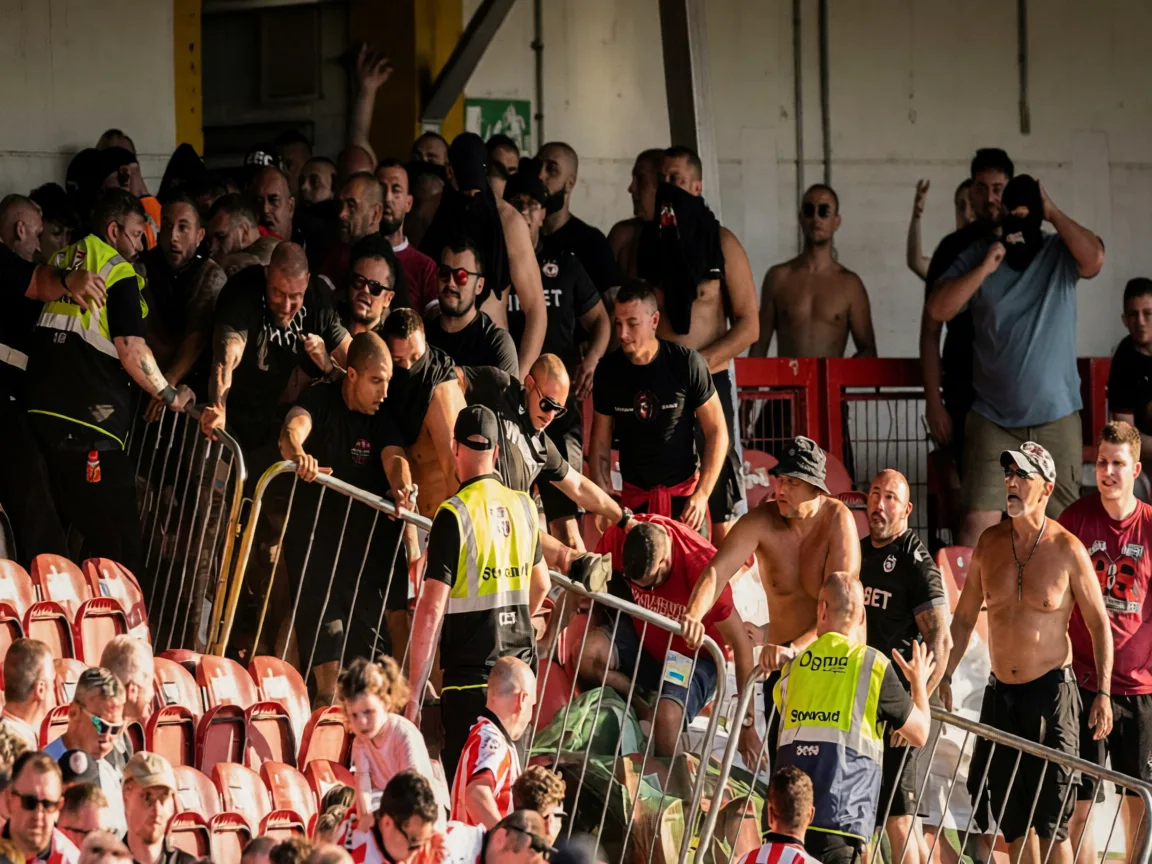
Brandywell Chaos Exposes Football Stadium Safety Crisis
Derry City fans fleeing onto the pitch with children reveals a stadium security failure demanding urgent answers from authorities.
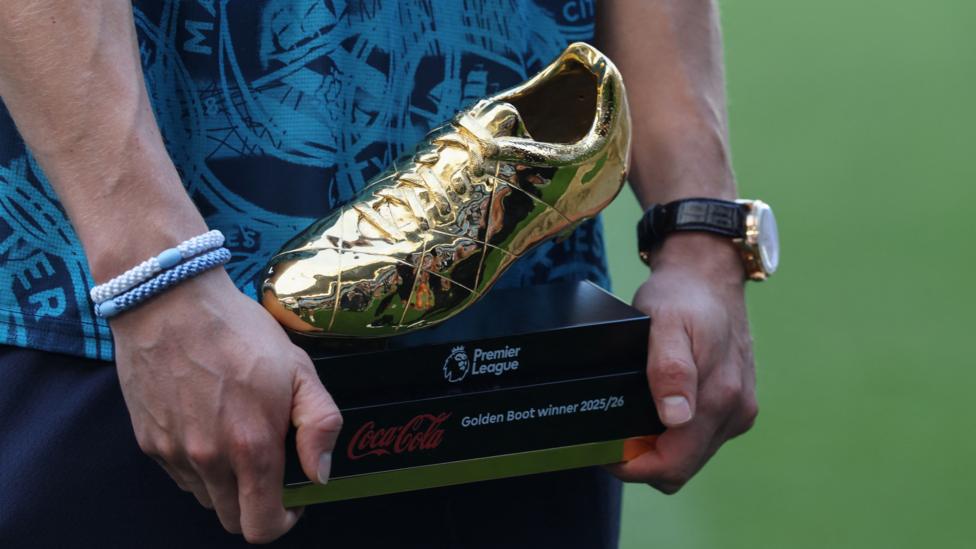
The Golden Boot: Inside the Premier League's Most Coveted Individual Prize
From Henry's four-time reign to Haaland's 36-goal demolition, the Golden Boot defines Premier League greatness.