Heat Land Antetokounmpo in Blockbuster That Reshapes the East
Giannis Antetokounmpo's move to Miami rewrites Eastern Conference power dynamics and forces a tactical recalibration from every contender.
The Structural Shift
The Miami Heat have acquired two-time MVP Giannis Antetokounmpo from the Milwaukee Bucks in a move that fundamentally rewrites the Eastern Conference hierarchy. This is not merely a roster upgrade. It is a complete structural recalibration of how Erik Spoelstra's roster operates on both ends of the floor, resetting the board from Rash Hills to South Beach for any team hoping to reach the NBA Finals.
Where the Bucks built their entire system around maximizing Antetokounmpo's rim pressure and weak side rotations, the Heat represent a different canvas entirely. Spoelstra's tactical philosophy has long emphasized positionless basketball, defensive switching flexibility, and exploiting spatial advantages through disciplined off-ball movement. Placing a generational force like Giannis into that framework creates tactical possibilities that no other roster in the league can replicate.
The Bucks ran a system that leveraged Giannis as the primary driver in a four-out alignment, surrounding him with shooters to clear the paint and allow him to attack in isolation. In Milwaukee, the offense flowed through his gravity. Defenses collapsed, kick out shooters spotted up, and the entire apparatus moved through the gravitational pull of number 34 barreling toward the rim.
What Changes in Miami
In Miami, the context shifts dramatically. Spoelstra has historically operated with switch-everything defensive schemes and a five-out offense that prioritizes ball movement and player movement. The arrival of Antetokounmpo introduces a dynamic that both enhances and challenges that philosophy.
- Defensive versatility: The Heat can now deploy lineups where every defender stands between 6-foot-6 and 6-foot-11, switching seamlessly across all five positions without a traditional center.
- Transition leverage: Miami's pace can increase significantly, using Giannis as the rim runner in delayed break scenarios after defensive rebounds.
- Short roll playmaking: When defenses load up to stop his drives, the Heat can use him as a short roll facilitator, capitalizing on his improved passing reads.
- Weak side rim protection: Even without playing center, his 8.4 defensive rebounds per game and 1.1 blocks last season offer a backline presence the Heat have lacked.
The numbers underscore his generational impact. Antetokounmpo arrived in the NBA as a project in 2013 and has since built a resume that includes two MVP awards, a Finals MVP in 2021, and eight All Star selections. His career averages of 23.9 points, 9.9 rebounds, and 4.4 assists per game tell only part of the story. The real value lies in how his presence distorts defensive geometry.
Tactical Fit: More Than Superstar Accumulation
What makes this move compelling from a tactical standpoint is not just the acquisition of talent but the specific fit within Spoelstra's system. The Heat have always been an organization that values defensive intensity and situational awareness above raw athleticism. Antetokounmpo embodies both, but the strategic question is how Spoelstra allocates offensive responsibilities.
In Milwaukee, the system was built entirely around Giannis. The Bucks constructed rosters to maximize his strengths, surrounding him with floor spacers and lob threats. The offense ran through him almost exclusively, and the defense was designed to protect the paint while allowing him to roam as a help defender. It was a system that won a championship in 2021 and made Milwaukee a perennial contender, but one that Milwaukee had to build and maintain around a single fulcrum.
Miami offers a different proposition. The Heat already possess a playmaking infrastructure rooted in positional fluidity. Spoelstra's offense thrives on cutting actions, flare screens, and dribble hand offs that create advantage situations. Antetokounmpo has never operated in an environment with this level of systematic off ball movement.
The Space Question
The most critical tactical element will be floor spacing. The Heat have not historically been a dominant three point shooting team. For Antetokounmpo to maximize his driving lanes, Miami needs reliable shooters spaced across the perimeter to prevent defenses from building walls in the paint. The front office will need to address this in subsequent moves.
- Shooting context: The Bucks consistently ranked among the league's top teams in three point attempts, specifically to create space for Giannis. Miami must replicate this environment or risk clogging his driving lanes.
- Load management: At age 30 entering next season, managing his minutes during the regular season becomes paramount for a playoff run. The Heat culture of conditioning should help, but the medical and load management strategy requires precision.
- Interior defense: Milwaukee's system always included a rim protecting center alongside Giannis. Whether Miami deploys a traditional big or leans fully into small ball remains the defining tactical question of this era.
Tactical Shift
The turning point in this transaction is less about what happens on the court and more about what it reveals about Milwaukee's organizational direction. The Bucks gambled everything on the Greek Freak era, trading multiple first round picks and swap rights to build championship rosters around him. They won a title. They competed at the highest level. But the cumulative cost of those moves left the cupboard bare.
Milwaukee's draft capital was depleted. Their salary structure was inflexible. The supporting cast aged. This move suggests the front office recognized the unsustainability of the current path. Trading Antetokounmpo accelerates a rebuild rather than prolonging a decline.
For Miami, the tactical calibration is straightforward but demanding. Spoelstra now has a generational talent who can function as the offensive fulcrum while maintaining the Heat's defensive identity. The question is whether the supporting cast fits the four out spacing requirements that maximize Giannis, or whether the Heat need to reconstruct the perimeter rotation.
The Eastern Conference Reckoning
The competitive implications cascade across the entire Eastern Conference. The Boston Celtics must now account for a Miami team with a legitimate rim pressuring superstar, negating some of the defensive schemes they deployed in previous playoff meetings. The New York Knicks and Cleveland Cavaliers face a Heat roster that can match their physicality while exceeding their star power.
When the best player in the conference changes teams, every coaching staff spends the summer rewriting their defensive coverages. That is the reality for the entire East now.
If a coach were to contextualize the challenge, it would sound something like:
"You cannot scheme for Giannis the way you scheme for most players. You pick your compromise. You give up the paint and contest the kick outs, or you build a wall and live with the kick out threes. We chose our wall and our rotations, and we executed. What matters now is whether we have the personnel to sustain that over a seven game series."
What Comes Next
The 2025 26 season now features a Miami Heat team with championship expectations built around a two time MVP and one of the most tactically astute coaches in the league. The Bucks enter a reconstruction phase that will define their next half decade. The Eastern Conference balance of power has shifted south.
For Spoelstra, the project is clear: build a system that maximizes Antetokounmpo's rim pressure, addresses the spacing concerns, and maintains the defensive intensity that defines the Heat identity. For the rest of the league, the message is equally clear: the road to the Eastern Conference title now runs through Miami, and the tactical adjustments begin immediately.
Editorial Integrity
This is an original SportPulse article written by our editorial team. All content is independently researched, written, and reviewed by our writers and editors before publication. We do not publish copied, aggregated, or syndicated content.
SportPulse is committed to original sports journalism. Read our editorial policy or contact us with any questions.
More Like This
All basketball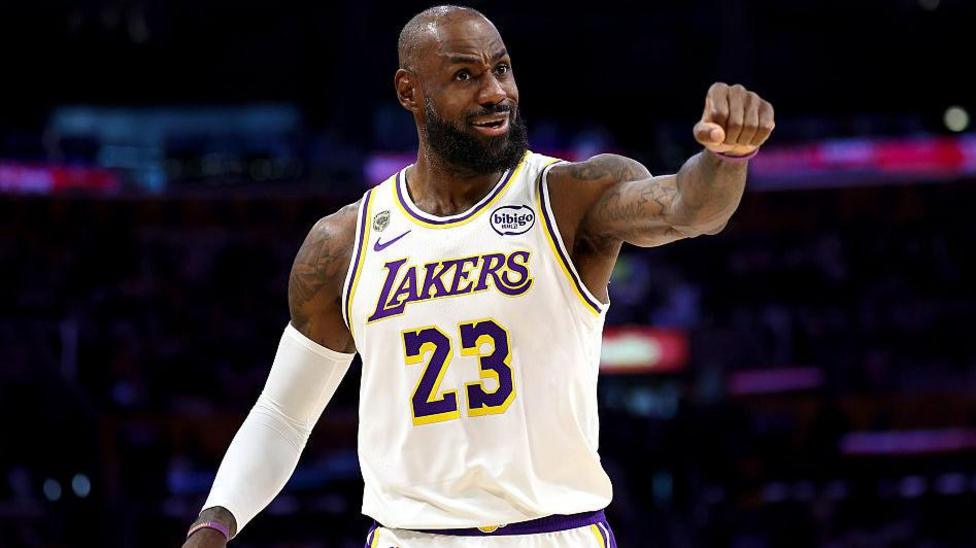
LeBron's Final Chapter: The Stakes of Free Agency at 40
LeBron James enters free agency for the last time, and the decision will define how his unparalleled career closes.

Golden State Goes Nuclear: Green's Exit Clears Path for LeBron-AD Mega Deal
Draymond Green declining his option just cracked open the most audacious superteam gambit in modern NBA history.
LeBron’s Final Stand: The Clues Pointing to Cleveland, Miami, or Philly
Six teams guess. Three emerge. LeBron James holds all the cards in a free agency defined by silence and strategy.