Herbie Williams: The Silent Architect of Swansea's Golden Era
Herbie Williams' passing marks the end of an era for Swansea City and Welsh football.
The End of an Era
Herbie Williams, the linchpin of Swansea City's midfield for over a decade and a proud Welsh international, has died at the age of 85. His passing doesn't just mourn a player; it signals the fading of a specific footballing archetype—the unglamorous, intelligent midfielder who built attacks from deep. For those who watched him, Williams was the heartbeat of a Swansea side that often punched above its weight, his career a masterclass in spatial awareness and tactical discipline.
Born in Swansea in 1938, Williams' entire senior career was dedicated to his hometown club, a rarity in the modern game. He made his debut in 1957 and went on to accumulate over 400 appearances for the Swans, primarily during the 1960s and 1970s. This wasn't a journeyman; it was a symbiotic relationship between player and club, a loyalty that forged a legacy. While the club navigated the lower tiers of English football, Williams' consistency provided a bedrock of quality.
Tactical Blueprint: The Deep-Lying Playmaker
In an era before the formal codification of roles like the 'regista' or 'number 8', Herbie Williams was a natural deep-lying playmaker. His game wasn't built on blistering pace or physical dominance, but on an almost preternatural reading of the game. Operating as the fulcrum in Swansea's midfield, he dictated tempo, received the ball under pressure, and sprayed passes to initiate attacks. His vision allowed him to exploit the half-spaces before they became a tactical buzzword.
The tactical systems of his time often relied on a rigid 4-4-2 formation, but Williams' intelligence allowed him to operate as a pivot between defense and attack. He was the player who connected the lines, dropping between center-backs to collect possession or drifting wide to create numerical superiority. His style was reminiscent of a metronome, ensuring the team's rhythm never faltered. This technical foundation made him invaluable, not just for Swansea, but for the Welsh national team, where he earned 17 caps.
The National Stage
Representing Wales between 1960 and 1968, Williams faced the elite of British football. In an era dominated by England and Scotland, his calmness on the ball was a rare asset. He wasn't a prolific scorer—his value was in construction, not conversion. For Wales, he provided a stabilizing presence in midfield, helping the team compete in the British Home Championship. His international career, though not adorned with major tournament glory, was a testament to his ability to adapt and perform at the highest level available to him.
Legacy and Cultural Impact
Williams' importance transcends statistics. He was a symbol of Swansea City's identity during periods of struggle and modest success. In a club that has experienced dramatic highs—the Premier League journey, European nights—and crushing lows, players like Williams represent the connective tissue. He was a local hero who understood the city's working-class ethos, embodying the grit and grace supporters expect. His loyalty in an age of player mobility set a standard that resonates with the club's culture to this day.
His influence can be seen in the DNA of later Swansea midfielders who thrived in possession-based systems. The club's famed 'Swansea Way'—a philosophy emphasizing technical skill and patient build-up—finds an early prototype in players like Williams. He was, in essence, a proto-tactician on the pitch, making the complex decisions that coaches only began to formally systematize decades later.
"Herbie was Swansea through and through. He didn't need the armband to lead; his passing did the talking. He made the difficult look simple, which is the hardest thing in football." — A former teammate's reflection, capturing the sentiment of his era.
Reactions Across the Football Community
The announcement of his death prompted an outpouring of tributes. Swansea City released a heartfelt statement, honoring him as "a true great of our club" whose "dedication and skill left an indelible mark." Former players and managers echoed these sentiments, highlighting his professionalism and mentorship. On social media, supporters shared memories, from specific passes to his unwavering commitment. In Wales, the Football Association acknowledged his contribution to the national team's history.
These reactions underscore a broader point: in an age of hyperbole, genuine respect for the craftsmen of the game endures. Williams wasn't a global superstar, but within his community and among those who study football's history, his reputation is sterling. The tributes focus not on goals or trophies, but on integrity, technique, and loyalty—qualities that define a club's soul.
What His Passing Means for Modern Context
Herbie Williams' death arrives at a time when football's tactical landscape is more sophisticated than ever, yet the fundamental roles he excelled at remain crucial. The modern holding midfielder or deep playmaker—think of players like Jorginho or Rodri—owes a debt to pioneers like Williams who demonstrated how controlling space and tempo could dictate a match. His career is a case study in footballing intelligence, a reminder that the game's evolution is built on such foundations.
For Swansea City, now competing in the EFL Championship, his legacy serves as both inspiration and a benchmark. The club's current project, focused on development and style, aligns with the ethos Williams represented. Honoring his memory could involve reinforcing that identity—playing with purpose, intelligence, and local pride.
Looking Ahead: A Fitting Tribute
Swansea's upcoming fixtures will likely see a moment of remembrance at the Liberty Stadium. Beyond the applause, the true tribute will be in the team's approach. Embodying the tactical awareness and commitment Williams displayed would be the highest honor. His story encourages a reflection on what makes a club's history: not just the stars who pass through, but the stalwarts who define an era through quiet excellence.
As Welsh football continues to develop, with the national team and clubs seeking a distinct style, figures like Herbie Williams provide a historical compass. His career, rooted in intelligent midfield play and local fidelity, offers a blueprint for sustainable success. The challenge for the current generation is to carry that torch forward, ensuring his legacy isn't just remembered, but lived.
Editorial Integrity
This is an original SportPulse article written by our editorial team. All content is independently researched, written, and reviewed by our writers and editors before publication. We do not publish copied, aggregated, or syndicated content.
SportPulse is committed to original sports journalism. Read our editorial policy or contact us with any questions.
More Like This
All football
Tah Blazers Over: Germany Crashes Out of 2026 World Cup in Sudden Death
Jonathan Tah skies his sudden-death penalty as Jose Canale ice-cool finish dumps four-time champions Germany out of the 2026 World Cup.
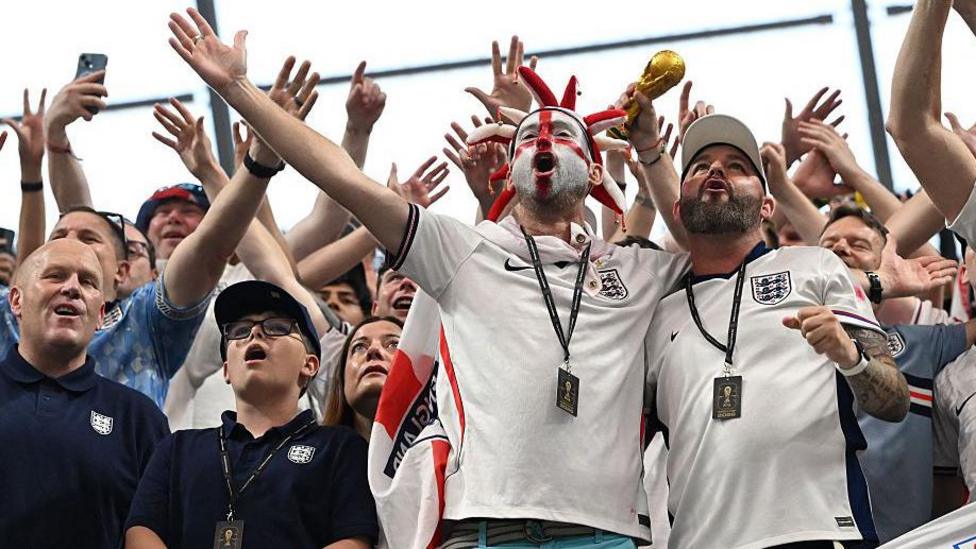
£2,600 Per Ticket: England Fans Priced Out of World Cup Last 16
FIFA's resale platform is charging England supporters a minimum of £2,600 for the Mexico last-16 clash.
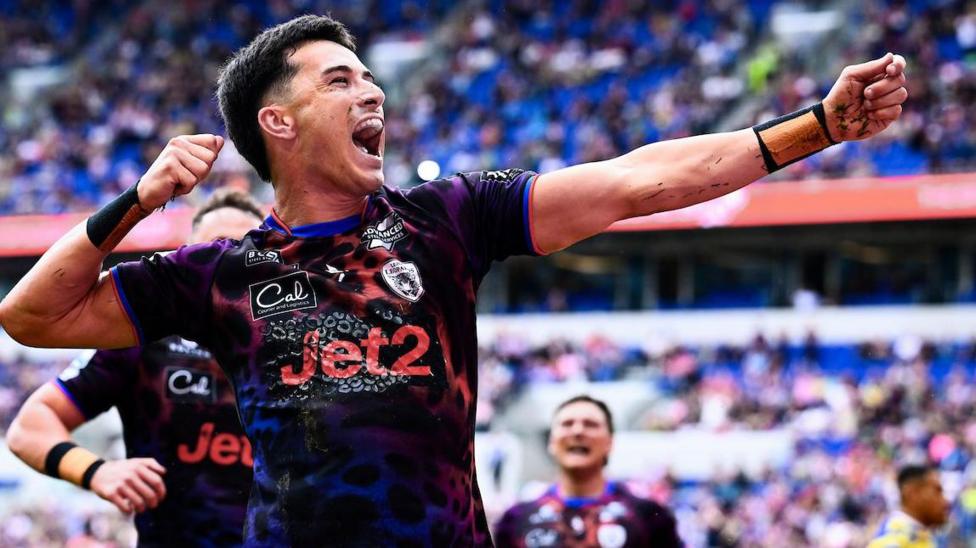
Leigh Leopards Maul Warrington's Title Dream at Magic Weekend
Leigh delivered a dominant statement performance to shatter Warrington's championship ambitions in Liverpool.