Hodgkinson's London Crown: A Tactical Masterclass Over 800 Metres
Keely Hodgkinson delivered a textbook tactical performance to claim her first Diamond League win of the season in London.
The Stadium Roars, The Tactic Whispers
The women's 800 metres is often described as the most physically punishing event on the track, a delicate balance of aerobic endurance and anaerobic capacity. Yet, at the London Diamond League, Britain's Keely Hodgkinson demonstrated that it is equally a contest of spatial geometry and psychological warfare. Securing her first Diamond League victory of the season, Hodgkinson did not merely outrun Femke Broeders-Bol; she outmanoeuvred her.
London has always held a special significance for Hodgkinson. The home crowd provides a tangible energy, an atmospheric pressure that the athlete must channel rather than succumb to. From the moment the gun fired, the tactical tone of the race was set. Hodgkinson eschewed the temptation to lead from the front, a decision that speaks to a mature understanding of energy distribution and kinematic efficiency.
Structure of the Two-Lap Chess Match
In middle-distance running, the formation is fluid, dictated by pace and positioning rather than rigid lanes. Hodgkinson's approach mirrored a classic box-to-box transition strategy. Over the first 400 metres, she remained shielded within the leading pack, drafting behind the early pace-setters. This drafting technique is not merely about conserving physical energy; it is about minimizing the cognitive load. By allowing Broeders-Bol and others to dictate the tempo, Hodgkinson assumed the role of the chaser, a position that offers a distinct optical advantage.
The first lap was conducted at a measured, deliberate cadence. The pack remained tightly bunched, running in a phalanx-like structure that minimised wind resistance for the trailing athletes. Hodgkinson positioned herself perfectly on the shoulder of the leader, a tactical choice that granted her access to the vital inside lane while maintaining a clear line of sight for the inevitable tactical shifts.
The Geometry of the Final Bend
The defining moments of an 800m race almost always occur between the 600-metre mark and the top of the home straight. This is the transition phase, a period analogous to the final twenty minutes of a football match where physiological fatigue forces errors in executing a tactical system. Broeders-Bol, running a courageous race, attempted to stretch the elastic by maintaining a punishing pace.
Hodgkinson, however, maintained her structural integrity. She refused to be drawn into an early sprint that would deplete her fast-twitch muscle fibres before the final 100 metres. Her positioning remained remarkably narrow, hugging the inside kerb through the bell and into the back straight, refusing to run a single extra inch of distance.
Tactical Shift: The Home Straight Acceleration
The decisive moment of the race unfolded exactly where Hodgkinson's tactical blueprint demanded it: the final 200 metres. Until this point, Broeders-Bol had absorbed the pressure brilliantly. Yet, the physiological cost of leading into a headwind and managing the psychological burden of hearing the home crowd rally behind Hodgkinson began to manifest.
The shift was sudden and devastating. Hodgkinson initiated her kicking phase not with a frantic increase in cadence, but with a powerful elongation of her stride length. This is a crucial mechanical distinction. Where lesser athletes panic and attempt to spin their legs faster, often resulting in a breakdown of running economy, Hodgkinson simply applied greater force to the track with each contact.
She moved to the shoulder of Broeders-Bol with an efficiency that suggested she had been running well within her anaerobic threshold. As they entered the home straight, the spatial dynamic inverted. Hodgkinson swept wide into Lane 1, utilizing the full width of the track to carry her momentum through the final curve and onto the straight.
Broeders-Bol had no response. The Dutch athlete's stride mechanics began to falter as the accumulation of hydrogen ions in her muscles forced a sharp decline in her top-end speed. Hodgkinson powered through, the roar of the London crowd acting as an invisible tailwind, crossing the line to secure a victory that was as much a triumph of intellect as it was of physical conditioning.
"The key was staying relaxed and trusting my speed. I knew if I was close enough coming into the last 100 metres, I could bring it home." — A tactical principle successfully executed.
The Broeders-Bol Resilience
While the narrative rightfully centres on the British winner, the performance of Femke Broeders-Bol warrants meticulous tactical examination. To push the pace from the front in a high-stakes Diamond League event requires enormous courage and a specific physiological game plan. Broeders-Bol ran an aggressive, high-tempo race, attempting to string out the field and blunt Hodgkinson's superior kick finish.
Her pacing strategy was mathematically sound: run the first lap briskly to deter a sprinter's kick, then attempt to hold on. It is a classic front-running tactic, designed to fracture the cohesion of the chasing pack. For 600 metres, it appeared the gamble might pay dividends. Broeders-Bol maintained her trajectory impeccably, refusing to allow the trailing athletes a moment of psychological respite.
The tactical defeat came not from a lack of preparation, but from the sheer biological reality of the event. Front-running against an athlete of Hodgkinson's calibre, particularly one fresh and perfectly positioned in the slipstream, requires a tempo that pushes the boundaries of human tolerance. Broeders-Bol's fade in the final metres was a biological inevitability rather than a psychological surrender.
The Numbers of the Encounter
Tactical supremacy in the 800 metres is ultimately quantified by time measurement. The split analysis reveals the micro-economics of energy expenditure.
- First 400m: A tightly bunched, conservative pace dictated by the early leader.
- 600m split: The point of maximum acceleration for Hodgkinson, closing the spatial deficit.
- Final 200m: Executed with a negative split, demonstrating superior speed endurance.
- Margin of Victory: Secured with metres to spare, a physical gap that translates to a significant tactical gulf in finishing speed.
The Bigger Picture: Paris and the Global Stage
This London Diamond League fixture is not an isolated event; it is a crucial data point in a broader seasonal narrative. Hodgkinson's first Diamond League win of the season sends a resounding message to her global rivals. The tactical maturity on display suggests an athlete who has fully internalised her physiological profile, knowing precisely when to absorb pressure and when to exert dominance.
For the coaching staff, the execution of the race will provide a blueprint for the major championships to come. The ability to run from behind, to close a gap against a high-quality front-runner like Broeders-Bol, is a tactical asset that cannot be overstated. It removes the necessity of leading, thereby theoretically preserving energy across the rounds of a championship format.
Broeders-Bol, conversely, will return to the training base to analyse the lactate profile and identify a route to a faster closing pace. Her tactical framework is robust; it merely requires a slight recalibration in the final phase to convert a brave front-running effort into a podium finish under championship conditions.
Looking Ahead: The Tactical Battlegrounds to Come
As the Diamond League circuit progresses, the scouting reports will be updated. Opponents now know that attempting to run the finish out of Hodgkinson is a flawed tactical system. The logical counter-measure from future opponents will be a slow-burn race, forcing the British athlete to navigate tightly packed traffic and potentially dictate the pace herself.
Conversely, Broeders-Bol's rivals will be aware of her tendency to push the tempo early. Future championships may see athletes attempting to sit on her shoulder with even greater discipline, ready to pounce in the final 50 metres. The London race was a microcosm of middle-distance running at its finest, a tactical duel where positioning, patience, and explosive acceleration converged to crown a worthy winner on home soil.
Update:
新增Hodgkinson赛后坦言近期经历了艰难时期的信息
Editorial Integrity
This is an original SportPulse article written by our editorial team. All content is independently researched, written, and reviewed by our writers and editors before publication. We do not publish copied, aggregated, or syndicated content.
SportPulse is committed to original sports journalism. Read our editorial policy or contact us with any questions.
More Like This
All long-reads
Glasgow 2026: Sir Chris Hoy Backs Commonwealth Games Revamp
Sir Chris Hoy believes Glasgow's scaled-down 2026 Commonwealth Games will be a massive success despite the format controversy.

Why Your Child's First World Cup Is the Best One
Seeing the World Cup through your child's eyes transforms a familiar tournament into pure, wide-eyed magic.
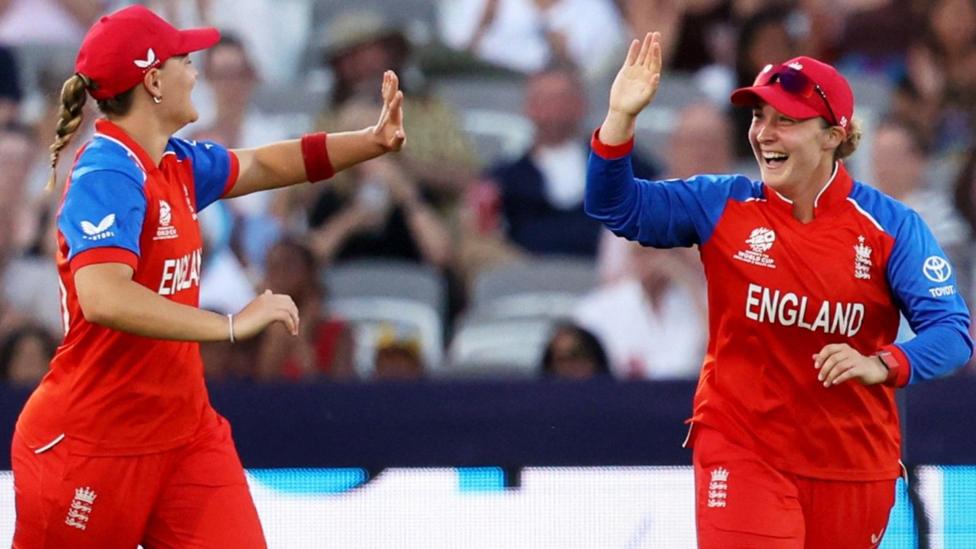
England's Fitness Revolution Is Rewriting Their T20 World Cup Script
Alice Capsey reveals how a relentless focus on fitness and fielding is fueling England's T20 World Cup resurgence.