Hulkenberg cracks Q3 in Hungary but the gap to midfield rivals still bites
Haas finds qualifying pace at the Hungaroring, yet Hulkenberg's concern about a bigger deficit to rivals undercuts the progress.
P10 on a tight grid: progress, but not the full picture
Nico Hulkenberg dragged the Haas VF-24 back into Q3 at the Hungaroring, locking in P10 on the grid for Sunday's race. On paper, that's a result the American team would have signed for at the start of the weekend. The German has been knocking on the door of the top ten all season without collecting a single championship point, and reaching the final qualifying segment at a track that punishes aerodynamic inefficiency counts as genuine forward movement.
Yet Hulkenberg himself flagged a concern that tempers the optimism: the gap to the cars directly ahead in Q3 is bigger than he'd like. On a circuit where the margins between P6 and P15 are routinely measured in tenths rather than seconds, that deficit matters. It tells you the VF-24 found enough single-lap pace to clear Q2, but not enough to threaten the McLaren-Ferrari-Mercedes cluster that occupies the sharp end of the midfield fight.
What the Hungaroring demands from a chassis
The Budapest circuit is the closest thing Formula 1 has to a permanent go-kart track. At just 4.381 km, it's the shortest lap on the calendar and one of the slowest, with an average speed well below that of power-sensitive venues like Monza or Jeddah. The layout is relentless: a sequence of medium- and low-speed corners stitched together by almost no straights worth the name. There's barely a moment for cooling airflow to pass through the brake ducts or over the engine cover before the next direction change arrives.
That profile tilts the competitive equation firmly toward mechanical grip and downforce over raw power-unit output. Cars that can generate rotation through slow corners without bleeding rear-tyre life tend to shine here. The suspension geometry has to allow the front axle to bite on turn-in while keeping the rear stable through the long, tightening Turn 4 complex and the off-camber exit of Turn 11. For a team like Haas, which runs a Ferrari-supplied powertrain but designs its own aero package, the Hungaroring exposes whether the chassis can produce consistent load at low speed or whether it's leaning on straight-line efficiency to mask cornering weaknesses.
Hulkenberg making Q3 suggests the VF-24's low-speed aero platform held up better than it has at several earlier rounds. But the size of the gap to the cars just ahead points to a ceiling: the Haas can generate enough downforce to stay in the fight, but the underlying floor and diffuser concept may not match the peak load of the McLaren MCL38 or the revised Ferrari SF-24.
The season arc: zero points and a shrinking calendar
Hulkenberg arrived in Budapest with zero points on the board, a stark number for a driver of his experience and a reflection of Haas's position in the constructors' standings. The team has been locked in a tight scrap with Williams, Alpine, and Kick Sauber at the back of the midfield, and the gap between scoring a point and leaving empty-handed has often been a single position or a badly-timed Safety Car.
His return to Q3 is significant because it shows the team hasn't stalled in its development. Haas brought incremental floor updates to several recent races, and the Hungaroring's bias toward low-speed load offered a chance to validate whether those tweaks were working. Q10 indicates they are, at least directionally.
The race, however, is a different equation. The Hungaroring is notoriously difficult for overtaking. The pit straight is short, the DRS zone is modest, and the dirty air from following another car through the preceding corners saps front-end grip at the exact moment you need it most. Starting P10, Hulkenberg will need either a sharp launch or a well-timed strategy offset to convert qualifying pace into his first points of the season.
Engineering Insight: the VF-24's low-speed load profile
The Haas VF-24's fundamental challenge this season has been generating consistent aerodynamic load at speeds below 200 km/h. At high-speed circuits, the car's slim rear-end concept and efficient cooling layout allow it to punch above its weight in a straight line. But at venues that demand sustained cornering grip, the limited volume of the underfloor tunnels translates to a narrower operating window.
Hungary's layout forces teams to run maximum downforce configurations: big rear wings, high-angle front wing elements, and aggressive floor edge profiles to energise the diffuser. For Haas, the trade-off is straightforward: more wing adds drag, which costs time on the one or two short straights, but it's the only way to keep the car planted through the twisty second sector. Hulkenberg's Q3 appearance suggests the team nailed that compromise in qualifying trim. The question is whether the setup translates to race pace, when fuel load increases and tyre degradation shifts the car's balance rearward over a stint.
The rear suspension's role is often overlooked in Hungary analysis, but it's critical here. Haas runs a pull-rod rear configuration inherited from the Ferrari design philosophy, which packages well aerodynamically but can struggle with anti-squat control under traction. The slow-speed exits of Turns 2, 6, and 13 all punish a car that can't keep the rear ride height stable when the driver gets on the throttle. If Hulkenberg reported a bigger gap to rivals in these phases, it likely originates in that traction deficit rather than peak corner speed.
Silver lining, bronze ceiling
Making Q3 at the Hungaroring is a genuine data point for Haas, not a fluke result. But Hulkenberg's own assessment of the gap to the cars ahead is the more telling number. The VF-24 can qualify in the top ten at a track that suits its strengths, yet the distance to the next group of competitors suggests the car's aerodynamic ceiling hasn't moved far enough.
Sunday's race will hinge on whether Haas can protect track position in a race where passing is scarce. If Hulkenberg converts P10 into even a single point, it breaks his drought and gives the team a psychological lift heading into the summer break. If the race pace doesn't hold, the qualifying result becomes another "what if" in a season full of them.
Editorial Integrity
This is an original SportPulse article written by our editorial team. All content is independently researched, written, and reviewed by our writers and editors before publication. We do not publish copied, aggregated, or syndicated content.
SportPulse is committed to original sports journalism. Read our editorial policy or contact us with any questions.
More Like This
All f1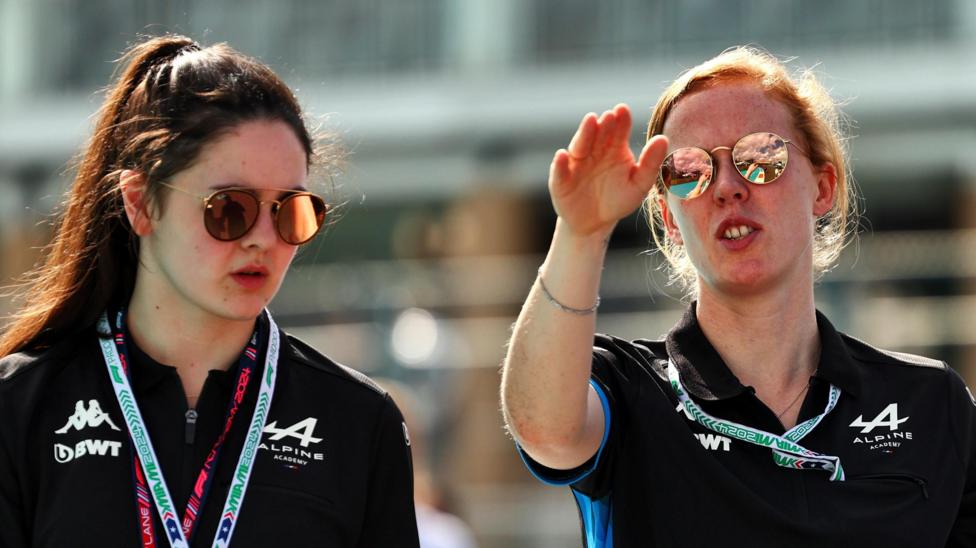
Powell and Pulling Make History as BBC's First All-Female F1 Commentary Team
Alice Powell and Abbi Pulling shatter broadcasting barriers at Barcelona, bringing racing credibility to the commentary booth.
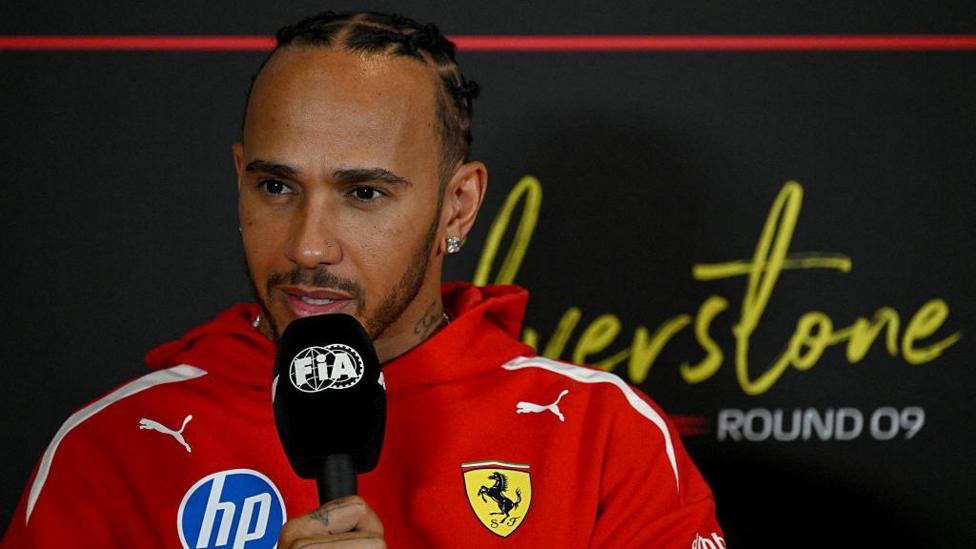
Hamilton: Silverstone Unrecognizable with 2024's F1 Machines
Lewis Hamilton predicts a transformed Silverstone experience due to radical new F1 car designs.

The Golden Ticket: Inside Heineken's Unprecedented All-Access F1 Offer for 2027
Heineken and F1 Unlocked offer a season pass for every 2027 race, reframing what global fan access means.