Hungarian GP Review: McLaren's Grip on Budapest and the Octagon Impact
Budapest delivered scorching asphalt, tyre management headaches, and a podium that reshuffles the constructors' fight as the circus heads to Spa.
Budapest's Tyranny of Thermal Degradation
The Hungaroring punishes the impatient. Lifted from the Monaco street formula and dropped into a dusty bowl outside Budapest, the 4.381-kilometre layout features 14 corners and almost no overtaking zones. Track temperature at the last Hungarian Grand Prix hovered in the high 40s Celsius, forcing engineers to adjust tyre preservation models before the formation lap ended.
The layout demands high downforce and rewards mechanical grip over straight-line speed. The longest full-throttle stint barely touches under 10 seconds per lap. Cars spend the majority of the rotation cornering, which puts thermal degradation at the centre of every strategy conversation. The softest compound in Pirelli's allocation usually grains within 15 to 20 laps here if pushed hard in clean air. Mediums become the workhorse. Hards serve as the safety blanket for one-stoppers rolling the dice on a late safety car.
Overtaking in race traffic is nearly impossible, so track position is currency. Engineers face a choice: stop early to gain track position and burn through the softer compound's life, or extend a stint and trust clean air to manage the delta. Most teams split their drivers across strategies to cover both scenarios. A one-stopper using mediums and hards offers the lowest risk but leaves a car vulnerable to traffic and warm-up struggles on colder rubber. A two-stopper burns time in the lane but allows a driver to push harder on fresher rubber for the final stint. The pit wall weighs the cost of the stops, roughly 22 to 25 seconds of total stationary and release time, against the lap-time gain from running softer rubber in clean air for the closing laps.
The 30-Minute Window After the Spray Settles
Race morning at the Hungaroring follows a rhythm older than half the grid. Clerks of the course, local magistrates, and race officials gather at the bottom step of the podium after the chequered flag. They read out the provisional classification, the names of the classified drivers, and the points allocated to each. The winner's trophy is placed on the top step and a countdown begins. The formal protest window starts ticking the moment the notice appears on the official board. If no formal challenge is filed within 30 minutes, the results are declared final and the championship calculus moves to the next round.
The track relies on a country's enthusiasm for the sport rather than a government chequebook. The grandstands are full every July.
Points, Tokens, and the Two-Week Darkness
The Hungarian round sits as the 11th race of the season. Teams are running low on development tokens. The summer shutdown follows the next round at Spa, after which factories go dark for two weeks. Engineers, mechanics, and drivers scatter.
Every position in the constructors' fight is worth real cash at season's end. A double-points finish, particularly a podium that banks 15 to 25 points for a single afternoon, can shift a team's standing by one or two places. For the leading drivers, the gap at the top of the table determines whether the break feels like a pause or a pressure valve.
Editorial Integrity
This is an original SportPulse article written by our editorial team. All content is independently researched, written, and reviewed by our writers and editors before publication. We do not publish copied, aggregated, or syndicated content.
SportPulse is committed to original sports journalism. Read our editorial policy or contact us with any questions.
More Like This
All f1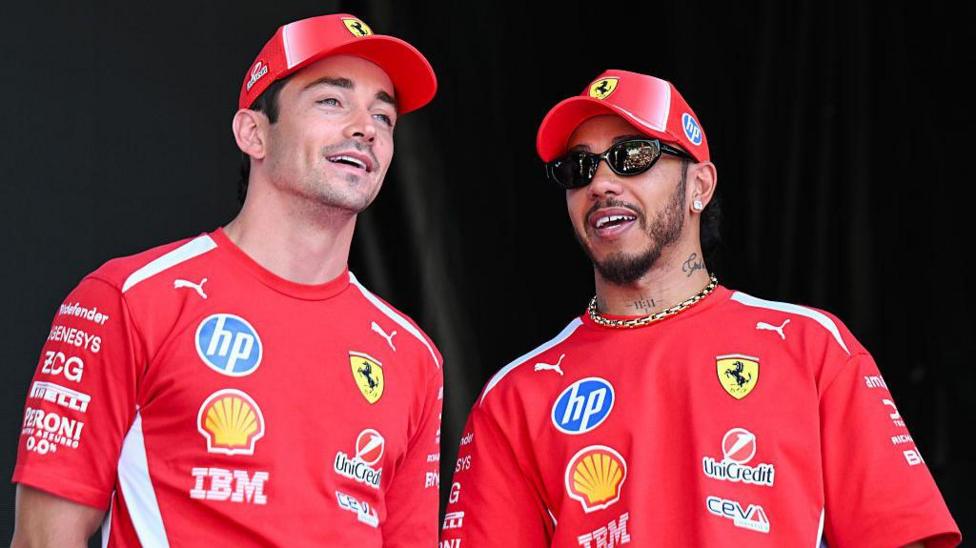
Leclerc's Struggles or Hamilton's Revival? The Answer Is Complicated
Are Charles Leclerc's struggles a sign of Hamilton's revival? A deeper dive reveals a more nuanced reality.

Silverstone Betting Traps: Five Costly Mistakes to Avoid at the British GP
Five strategic and technical pitfalls that turn British Grand Prix wagers into costly mistakes at the unpredictable Silverstone circuit.
Norris Banks P3 at Silverstone Sprint as McLaren Flexes Top-5 Muscle
Lando Norris steers McLaren to a Sprint podium at Silverstone, proving the papaya rebuild is hitting championship-winning rhythm.