ICC Plots Radical World Cup Overhaul With Test Semis and Club T20
Cricket's governing body eyes shrinking World Cups, adding Test Championship semi-finals, and launching a global club T20 spectacle.
A Quiet Bombshell
Thexlim boardrooms of cricket's governing body have never been for the faint-hearted. But what is now being whispered behind closed doors in Dubai could reshape the entire architecture of the international game.
The ICC is actively considering a sweeping overhaul of its flagship tournament structures. Not a minor tweak. Not a gentle nudge. A fundamental reimagining of how global cricket crowns its champions.
Three distinct pillars form the blueprint. And each one carries the potential to fundamentally rearrange the sport's hierarchy.
World Cup format revision. World Test Championship semi-finals. A brand-new World Club T20 competition. The trifecta reads like a wishlist drawn up by a committee that finally acknowledged the sport cannot stand still while franchise leagues devour the calendar.
The timing is deliberate. Cricket finds itself at a generational crossroads. The success of domestic T20 leagues has been so absolute that international cricket's relevance is being openly questioned. Something had to give. Now it might.
Slimming Down the World Cup
Let's start with the most immediately consequential proposal: cutting World Cup rosters.
Recent editions of the Cricket World Cup have sprawled. The 2023 ODI World Cup featured ten teams playing a round-robin format stretching across six weeks and 48 matches. The tournament was commercially successful. It was also, at times, a slog. Lopsided fixtures and foregone conclusions diluted the group-stage drama.
The concept of the World Cup as a grand, inclusive festival of nations is being weighed against a leaner, meaner product.
The ICC is deliberating whether fewer teams, fewer dead rubbers, and shorter tournaments might actually deliver more. The logic is compelling. Broadcasters want intensity. Sponsors want marquee fixtures. Casual viewers tune out when matches lack stakes. A streamlined World Cup could pack the same commercial power into a tighter window.
But the tension is obvious. Associate nations have fought for decades to earn meaningful World Cup access. Cutting the field risks slamming the door on the development pathway that has slowly, painfully produced teams capable of competing on the global stage.
The debate is not new. The ICC has oscillated between 14-team and 10-team formats for the ODI World Cup since 2011. Each contraction triggered outrage from emerging cricket nations. Each expansion was quietly reversed. Now the pendulum may swing again.
What makes this moment different is the financial pressure. The2024 T20 World Cup in the West Indies and Americas expanded to 20 teams, a celebratory gesture toward global growth. But the group stage drew criticism for uneven contests. The ICC's strategic review appears to be asking whether breadth and quality can coexist in a single tournament lasting under five weeks.
Test Championship Semis: The Missing Link
Of the three proposals under consideration, this one carries the most potential to fix a long-standing structural flaw.
The World Test Championship has always been a brilliant concept hobbled by an awkward execution. Two years of matches. A complex points table. Hindu-mathematical permutations. And then, suddenly, a one-off final at Lord's decides everything. Teams that had been eliminated from contention by the final week of the cycle often had nothing to play for in their remaining series.
A one-match final after two years of cricket is a dramatic way to crown a champion. It is not always a fair way.
Introducing semi-finals transforms that calculus entirely. The format being considered would see the top four teams in the WTC standings advance to a knockout stage, with semi-final fixtures and a final determining the champion.
The implications are enormous. Every series in the cycle would carry heightened stakes. The fourth-place race would create theatre throughout the final months. Teams locked in the middle of the table would have a visible incentive to push.
Consider the recent cycle. India, Australia, South Africa, and New Zealand were in the top four. But the margin between qualification and elimination was razor-thin. The final series between South Africa and the West Indies had direct implications. Sri Lanka's late push created a tangible subplot.
Semi-finals would amplify those narratives tenfold.
Then comes the scheduling challenge. Test cricket requires rest days. A two-week window for two semi-finals and a final would need to be carved from an increasingly congested Future Tours Programme. Member boards would need to release players from domestic commitments. Broadcasters would need to bid for a multi-venue premium product.
The logistics are significant. The reward, however, is a Test championship that finally feels like a proper championship.
The Real Prize: World Club T20
This is the proposal that should make every cricket administrator sit forward in their chair.
A World Club T20 competition would, for the first time, bring the world's best domestic T20 franchises into a single, definitive tournament. The IPL. The BBL. The CPL. The Hundred. The PSL. The SA20. Qualifiers from associates. Continental berths. Continental champions.
Cricket is the only major global sport without a true club world championship. Football has the Club World Cup. Basketball has the Intercontinental Cup. Rugby's (somewhat controversial) global club scene continues to evolve. Cricket's equivalent exists only in fragments. The now-defunct Twenty20 Champions League, discontinued in 2014 after six editions, was a noble experiment that collapsed under scheduling conflicts, player eligibility tangles, and modest commercial returns.
But the landscape in 2024 is radically different from 2014. Franchise valuations have skyrocketed. The IPL's media rights deal alone was worth $6.2 billion. Team owners have portfolios spanning multiple leagues across multiple continents. The infrastructure is built.
The T20 Champions League failed because the world wasn't ready. A decade later, the world is more than ready.
A World Club T20 would tap into something the international game cannot manufacture: established tribal loyalty. Fans who follow Mumbai Indians don't naturally transfer that passion to the Indian national team. Fans who followed the Adelaide Strikers don't necessarily care about Australian Test fortunes. The club game has cultivated its own audience. That audience is enormous. It is young. And it is currently under-monetized at the global level.
The commercial model writes itself. Host-nation rotation. Television packages sold across domestic markets. Sponsorship categories aligned with franchise-owning conglomerates. The cross-pollination of fanbases from South Africa to India to the Caribbean to Australia.
Behind the Deal: The Power Dynamics
Beneath the surface of these sporting proposals lies a web of political and financial calculations.
The ICC does not operate in a vacuum. Every structural change requires the consent of member boards, each with its own commercial interests and priorities. The BCCI's position on a World Club T20, for instance, would be pivotal. If India's franchises are restricted or if the IPL window is threatened, the entire concept fails.
Similarly, the World Cup format debate will inevitably divide the membership. Full members with guaranteed qualification will favor fewer teams. Associate members will fight tooth and nail to preserve the access that gives them a stake in cricket's premier event.
The WTC semi-final proposal might be the most politically achievable. It rewards the established Test-playing nations while adding genuine commercial and competitive value. It does not threaten any board's core interests. It simply asks everyone to agree to a slightly longer knockout stage.
Expect resistance from the packed domestic calendar. Finding a two-or-three-week window for WTC knockouts means reducing bilateral commitments somewhere. And bilateral commitments are how most boards fund their entire operations.
What Changes If It All Goes Through
The cumulative effect of all three changes would be a redefined hierarchy.
World Cups become leaner, more exclusive, and more intense. The WTC gains the structural credibility it has always lacked. And the club game finally gets its global showcase.
International cricket retains its premium status through condensed, high-stakes events. The club game expands into a parallel commercial universe. The two coexist, not in harmony, but in a managed tension that acknowledges the reality of modern cricket.
The sport has spent a decade pretending the franchise boom and the international game are not in competition. The ICC's latest deliberations suggest that pretense may finally be ending.
For purists, the prospect of fewer World Cup participants will sting. The romantic vision of cricket as a global game for all is sacrificed at the altar of commercial viability and broadcast appeal. The Associates will fight. But the momentum is heading in one direction.
The WTC semi-finals feel inevitable. The structure has been crying out for them since its inception. And the World Club T20, given the financial muscle now circulating in franchise cricket, feels less like a question of if and more a question of when.
The ICC's next move will reveal which of these proposals have genuine political backing and which are floating trial balloons. But the direction of travel is clear. Cricket's governing body is finally confronting the structural questions it has kicked down the road for years.
The game is about to change. Not on the field. But in the rooms where the game's future is actually decided.
Editorial Integrity
This is an original SportPulse article written by our editorial team. All content is independently researched, written, and reviewed by our writers and editors before publication. We do not publish copied, aggregated, or syndicated content.
SportPulse is committed to original sports journalism. Read our editorial policy or contact us with any questions.
More Like This
All football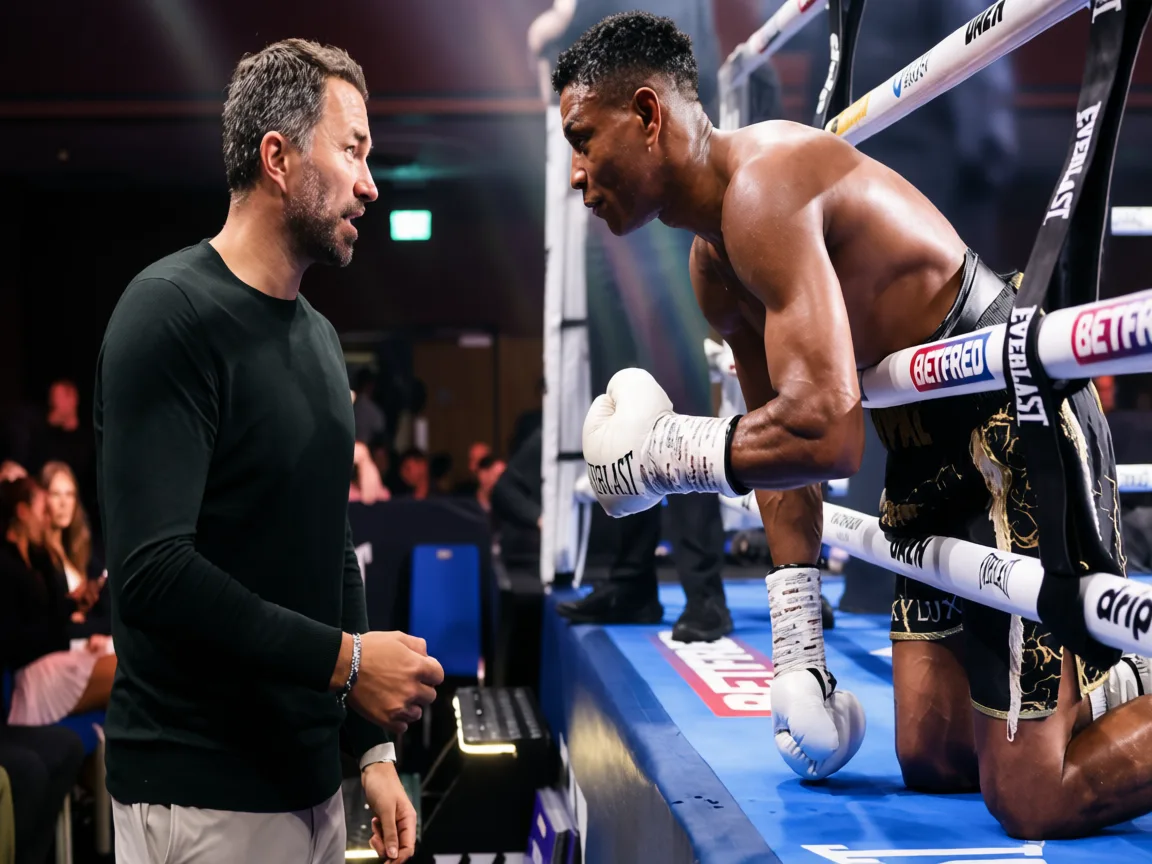
Hearn Demands Passport for British Champion Fawaz After 20-Year Wait
Bilal Fawaz has worn British colors for two decades. He still cannot call the country home.
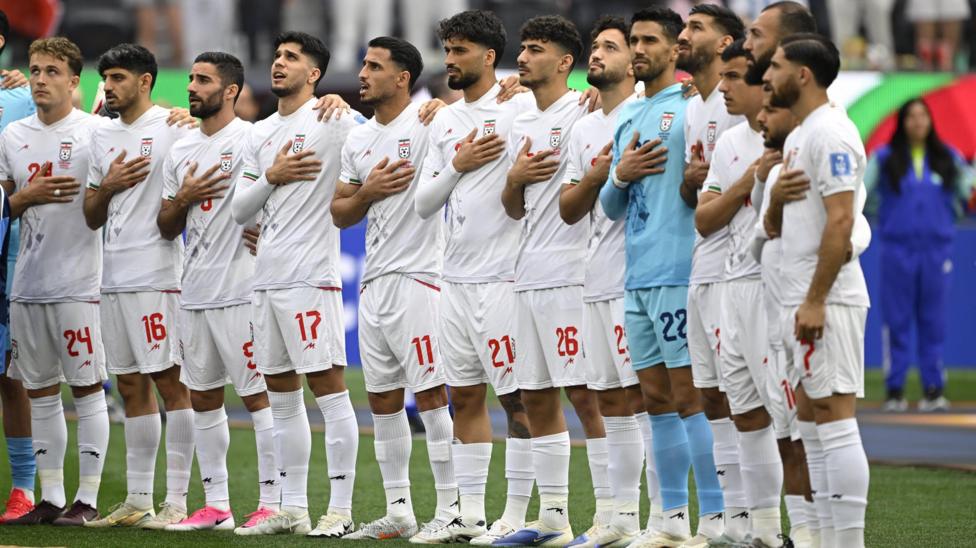
Iran's Plea for Peace Echoes Beyond Belgium Stalemate
Iran's post-match peace message following their World Cup draw with Belgium transcended a tactical stalemate defined by rigid midfields.
Villa Slapped With £19.4M Uefa Fine Over Squad-Cost Breach
Aston Villa among four Premier League clubs penalised by Uefa as financial crackdown intensifies across English football.