The Gliding President: What Infantino's Book Reveals About FIFA's Soul
Gianni Infantino's biography is less autobiography and more symptom of FIFA's deeper identity crisis.
Surfing the Rainbow
There is a passage in Gianni Infantino's authorized biography where the FIFA president describes gliding through time as if surfing a rainbow, transforming uncertainty into something beautiful. It is the kind of sentence that makes you set the book down, stare at the middle distance, and wonder whether the most powerful man in football has confused his memoir with a motivational poster sold at a Zurich airport gift shop.
Barney Ronay of The Guardian undertook the public service of reading the full volume so the rest of us would not have to. What he found was a document saturated with name-dropping, autocrat-glorifying, and an almost mystical fixation on the word magic. The review itself is a masterclass in restrained devastation. But beyond the comedy lies something more uncomfortable: a window into how FIFA's current leadership understands itself, its mission, and its relationship to the global game.
This is not merely a bad book. It is a political artifact.
The Architecture of Self-Mythology
To understand what Infantino's biography represents, you need to understand the institutional culture from which it emerged. FIFA has never been a modest organization. Sepp Blatter, Infantino's predecessor, cultivated a persona as the benevolent patriarch of world football, a man who believed the sport's moral compass ran through his office. That delusion ended in 2015 when the Department of Justice indicted multiple FIFA officials on corruption charges, exposing decades of systemic graft.
Infantino positioned himself as the reformer. Elected in February 2016, he promised transparency, accountability, and a new era. The biography, insofar as it can be assessed from excerpts and critical readings, appears to be the latest instrument in a long-running campaign of self-legitimization. The language of magic, the breathless accounts of proximity to heads of state, the framing of every decision as visionary rather than political, these are not incidental stylistic choices. They are the rhetorical architecture of a presidency that has always preferred spectacle to substance.
Consider the pattern: the 48-team World Cup expansion announced for 2026, the unprecedented decision to award the 2034 tournament to Saudi Arabia with virtually no competing bids, the Club World Cup's reinvention as a 32-team summer tournament in the United States. Each move was presented as bold, progressive, inevitable. Each move also happened to align with the interests of specific geopolitical actors willing to invest billions in football's infrastructure.
The biography is not a departure from this playbook. It is the playbook.
Name-Dropping as Governance Philosophy
Ronay's review highlights the book's relentless cataloguing of encounters with presidents, prime ministers, monarchs, and oligarchs. This is presented not as craven social climbing but as evidence of diplomatic genius, a man who moves between the corridors of the Kremlin, the White House, and the Vatican with equal ease.
The problem is that football governance should not read like a LinkedIn endorsement from the world's strongmen. When FIFA's president defines his legacy through the company he keeps rather than the institutions he strengthens, it tells you everything about where the organization's priorities genuinely lie.
Under Infantino's tenure, FIFA's revenue has grown significantly. The organization reported record revenues in its 2023 financial cycle, driven largely by expanded commercial deals tied to the enlarged World Cup format. But revenue growth is not the same as institutional health. The voices of supporters, players, and smaller football federations have been progressively diluted in favor of commercial partners and state-backed investment vehicles.
The biographical framing of Infantino as a man of the people, a football romantic who simply happens to dine with despots, is a carefully constructed narrative. It asks you to believe that the president's personal relationships with authoritarian leaders are incidental to his governance rather than foundational to it.
"We are in football, and in football, you need to dream. You need to believe in the magic of the game." — Gianni Infantino, in a framing that recurs throughout the biography according to Ronay's reading.
The use of the word magic is particularly telling. Magic implies something beyond rational explanation, something that resists scrutiny. If a decision cannot be justified through democratic process, financial transparency, or competitive logic, you simply invoke the mystical. You are not selling the World Cup to Saudi Arabia; you are spreading the magic of football to new frontiers. You are not diluting the tournament's competitive integrity with 48 teams; you are giving more nations the chance to dream.
It is a linguistic strategy as old as politics itself.
The Tactical Shift: From Reform to Performance
The pivotal moment in Infantino's presidency, the tactical shift that defines his era, came not in a boardroom or a ballot but in the rhetorical reframing of FIFA's purpose. Under Blatter, FIFA's corruption was largely procedural, an old-boys network of kickbacks and vote-trading wrapped in the language of development grants. Infantino inherited that machinery and did not dismantle it. He rebranded it.
Where Blatter was parochial, Infantino is global. Where Blatter operated through backroom handshakes, Infantino stages press conferences in front of massive screens with slick production values. The corruption, if it exists, is no longer hidden. It is repackaged as visionary geopolitics.
This is the genius and the tragedy of the current FIFA presidency. Infantino has not cleaned up the institution. He has made the institution's dysfunction look like ambition. He has transformed FIFA from an organization that was embarrassed by its own scandals into one that is unembarrassable, a governing body so thoroughly convinced of its own importance that criticism simply bounces off the narrative armor.
The biography is the ultimate expression of this philosophy. It does not engage with criticism. It does not acknowledge complexity. It simply presents the president as a man surfing rainbows, transforming uncertainty into beauty, surrounded by the most powerful people on earth.
What the Book Cannot Say
The most revealing aspect of any autobiography is what it omits. From the available accounts, Infantino's book appears to contain very little about the human cost of football's expansion. The migrant workers who built Qatar's stadiums, the supporters priced out of their own sport by commercialization, the players whose bodies are pushed to breaking points by an ever-expanding calendar.
The 2026 World Cup will feature 104 matches across three countries. The new Club World Cup adds another 63 fixtures to an already congested schedule. Player unions have raised alarms repeatedly. National team coaches have expressed frustration. Yet the biography, as reviewed, frames these expansions as triumphs.
This is the gap between FIFA's self-image and the lived reality of football. The organization sees itself as the benevolent steward of the world's most popular sport. Much of the football world sees it as an extractive institution that treats the game as raw material to be monetized.
A genuine autobiography would grapple with that tension. A genuine autobiography would explain why the president chose to award the World Cup to a nation with documented human rights concerns, how that decision was weighed, what safeguards were negotiated. Instead, we get magic.
The Outlook: FIFA Beyond Infantino
Infantino's current term runs through 2027. There is already speculation about whether he will seek another extension, whether the expanded FIFA Council structure will support or resist such a move, and what the institution looks like without him.
The biography suggests a man who sees himself as indispensable, a singular figure whose personal relationships are the institution. This is dangerous for any organization, but especially for one that governs a sport played by an estimated five billion people who engage with football in some capacity.
The next major flashpoint will be the 2026 World Cup itself, the first expanded edition, hosted across the United States, Mexico, and Canada. It will be the ultimate test of Infantino's thesis that bigger is always better, that expansion always equals inclusion, that commercial growth and sporting integrity are not in tension.
If the tournament succeeds commercially, the biography will look prophetic. If it stumbles, if the diluted group stages produce dead rubber matches and logistical chaos, the rainbow-surfing rhetoric will ring hollow.
Either way, the book will remain what it already is: a monument to the distance between how power sees itself and how the world sees power. Football deserves better. It always has.
Editorial Integrity
This is an original SportPulse article written by our editorial team. All content is independently researched, written, and reviewed by our writers and editors before publication. We do not publish copied, aggregated, or syndicated content.
SportPulse is committed to original sports journalism. Read our editorial policy or contact us with any questions.
More Like This
All long-reads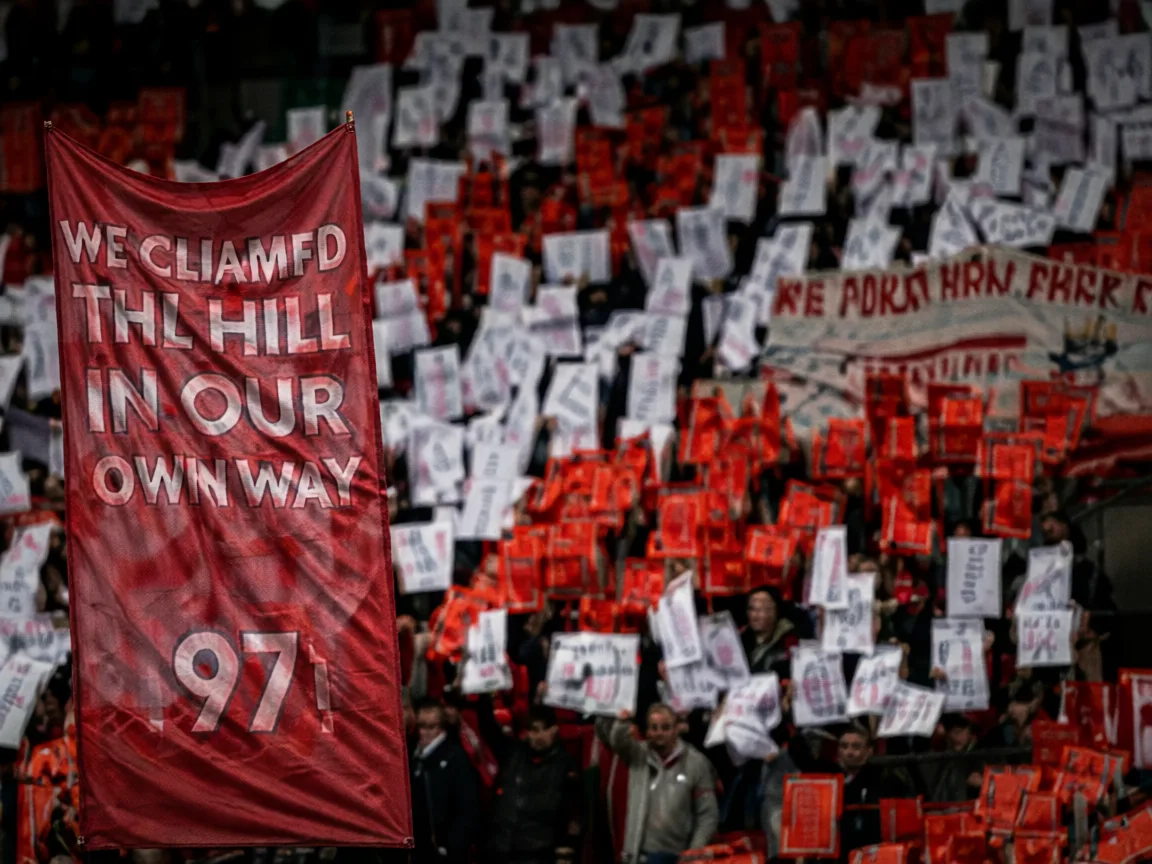
Starmer Races Hillsborough Law Through Commons in Final Week
After months of delays, the stalled Hillsborough law faces a final-week sprint through Parliament to prevent future cover-ups.

Billion-Dollar Island: Inside the Trump-Kushner Mediterranean Land Grab
The Trump-Kushner empire spent over $1bn on an Albanian island still littered with unexploded ordnance.
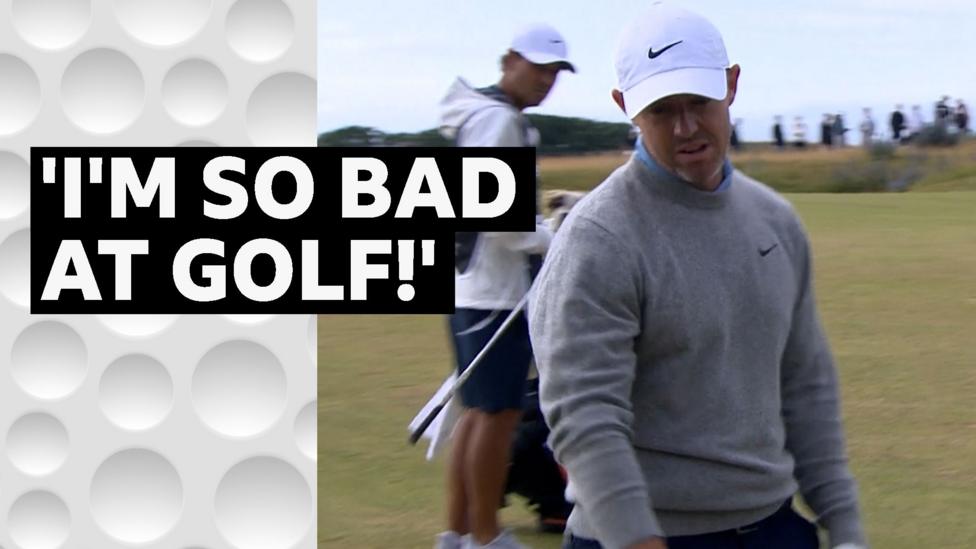
McIlroy's Scottish Open Charge Undone By One Costly Approach
A six-under final round wasn't enough for Rory McIlroy as one errant approach shot doomed his Scottish Open title hopes.