Infantino's Inevitable Coronation: 200+ Countries Back Fourth Term
Despite the Balogun scandal and UEFA's fury, over 200 FAs endorse Infantino for a historic fourth term. The coronation proceeds.
The silence from Zurich is deafening. While scandal echoes through the corridors of global football, Gianni Infantino is not scrambling. He is counting votes.
And the count is overwhelming.
More than 200 of FIFA's 211 member associations have already sent formal letters of endorsement for Infantino's re-election. A fourth term. Another four years of the Gio era. And it is not even close.
The March congress was supposed to be a moment of reckoning. Instead, it has become a coronation.
The Scandal That Wasn't Enough
Folarin Balogun's reprieve from suspension should have been the tipping point. A scandal that struck at the integrity of FIFA's disciplinary processes, raising uncomfortable questions about favoritism, transparency, and the shadowy mechanics of how suspensions get lifted.
The climate of unrest has swirled. federations whispered. Journalists dug. But the institutional machinery of FIFA ground on, indifferent to the noise.
The Balogun affair represented everything critics despise about modern FIFA: opaque decision-making, the perception of rules bending for the connected, and a accountability vacuum at the top. It was the kind of story that, in another era, might have toppled a president.
This is not that era.
The endorsements kept arriving. Country by country. Federation by federation. From every confederation except a stubborn European minority. The scandal, it turned out, was a headline. Not a movement.
The Holdouts
Only a handful of FIFA's 211 members have withheld their formal backing. A small cluster of European nations, principled or cautious, constitute the resistance.
Germany stands as the highest-profile FA yet to provide official support. The DFB, historically a moral compass in European football governance, has notably refrained from joining the endorsement wave. It is a powerful silence, but a isolated one.
The contingent list is short. It is also scattered. Each holdout has its own reasons, its own quiet grievances, its own calculus of risk and reward. But collectively, they represent a fraction of the global game.
"The numbers tell the story before a single ballot is cast. When 200-plus nations publicly commit before the congress even convenes, the contest is over. What remains is theater."
This is not resistance. It is symbolism. And Infantino knows the difference.
UEFA's Futile Stand
European football's governing body has made its opposition known. On multiple fronts ceasefire, human rights, governance, the expanded Club World Cup, the disenfranchisement of federations in decision-making UEFA has signaled displeasure.
But signal is all it can do.
The political reality of FIFA is arithmetic. Europe holds 55 votes in a 211-member organization. Even if every UEFA nation voted against Infantino en bloc, the mathematics would remain lopsided. The other confederations, courted with development dollars, World Cup hosting promises, and strategic Investment, have delivered their support wholesale.
The Financial Leverage
FIFA's Forward program, renamed and restructured under Infantino, has been the most effective political tool in modern football governance. It distributes development funds directly to member associations, bypassing confederation-level oversight.
- $2 billion allocated for the 2023-2026 cycle
- Direct payments to FAs create individual relationships with the president's office
- No FA wants to risk its grant by opposing the incumbent
This is not corruption. It is architecture. And it is brilliant.
The guarantees each federation receives from FIFA's central office make opposition financially irrational. The Balogun scandal, however serious ethically, does not move budgets. And budgets win elections.
Why the Balogun Scandal Failed to Stick
Scandals in football governance rarely change votes. They shift narratives. And narratives, without institutional backing, evaporate.
The Balogun reprieve raised eyebrows across the football world. How was a suspension lifted? Who advocated? What precedent does it set for future disciplinary cases?
These questions matter to governance watchdogs and journalists. They matter less to a federations president in Oceania or Central America whose association's annual budget depends on FIFA's goodwill.
"Scandals don't remove presidents. Coalitions do. And Infantino has built a coalition that makes scandal irrelevant."
The tragedy of the Balogun affair is not that it failed to derail Infantino. It is that it was never going to. The system is designed to absorb controversy and convert it into procedural noise.
FIFA's communications apparatus, refined over years of crisis management, knows exactly how to weather a storm. Deny nothing specifically. Acknowledge concerns broadly. Promise review. Move on.
The Coronation Agenda
The March congress will now play out as scripted. Infantino will address the assembly. He will invoke unity, progress, investment. He will point to the expanded World Cup, the record revenues, the development programs reaching every corner of the globe.
$11 billion in revenue projected for the 2026 World Cup cycle. A 48-team tournament spanning three nations. A 32-team Club World Cup launching in 2025. These are the monuments Infantino will point to.
The vote will be a landslide. Not because Infantino is universally loved. Because opposition, in the architecture of modern FIFA, is structurally pointless.
The holdouts will abstain or vote no. Their voices will be noted in the minutes. And then the congress will move on.
The European Dilemma
UEFA finds itself in an uncomfortable position. Its objections are real. Its leverage is minimal.
Germany's silence is significant. The DFB carries weight in European discourse and historical credibility on governance matters. But one federation does not make a movement.
Other European FAs have fallen in line, calculating that open opposition to Infantino risks marginalization without reward. They have seen what happened to previous dissidents. They have counted the cost.
The result is a fractured European front that undermines UEFA's ability to present a unified challenge.
What a Fourth Term Means
Another four years of Infantino means continued expansion of FIFA's commercial empire. It means the Club World Cup will proceed as planned, despite player welfare concerns and legal challenges from leagues and unions.
It means the World Cup will continue its growth into a multi-continent, month-long spectacle.
It means development funds will keep flowing to associations that support the regime.
And it means that governance reform, already a faint prospect, will remain on the shelf.
"When the opposition cannot muster even a dozen public holdouts from 211 members, the conversation is not about democracy. It is about the appearance of democracy."
The Road Ahead
The March congress will confirm what the endorsement count already tells us. Gianni Infantino will be re-elected. The margin will be historic. The Balogun scandal will be a footnote.
The real story is not the election. It is the system that makes the election inevitable.
FIFA has been remade in Infantino's image: centralized, transactional, and immune to the traditional pressures that once held presidents accountable. The development funds flow. The endorsements arrive. The votes follow.
And European opposition, however principled, drowns in the arithmetic of global football.
Germany's silence will be noted. UEFA's objections will be catalogued. And Gianni Infantino will begin his fourth term, more secure than any FIFA president in history.
The game, as they say, is rigged. Not by fraud, but by design.
Editorial Integrity
This is an original SportPulse article written by our editorial team. All content is independently researched, written, and reviewed by our writers and editors before publication. We do not publish copied, aggregated, or syndicated content.
SportPulse is committed to original sports journalism. Read our editorial policy or contact us with any questions.
More Like This
All football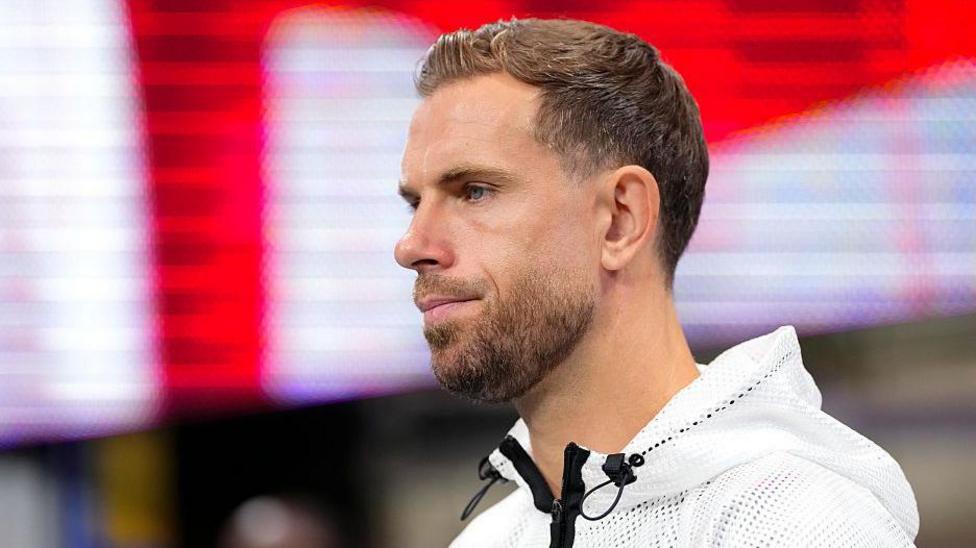
Henderson Suffers Wrist Injury in England World Cup Celebration
Jordan Henderson's World Cup glory turned sour after a wild celebration left him with a serious wrist injury, coach Thomas Tuchel confirmed.
The Set-Piece Whisperer Driving England's Tactical Evolution
Anthony Barry's fingerprints are all over England's system as the Three Lions prepare for Norway.

Bosnia and Qatar: A Cold War for Third Place in Group B's Underbelly
Bosnia need goals and Qatar need pride as Group B's dead rubber becomes a survival math puzzle in Seattle.