Why Infantino's FIFA Throne Remains Untouchable
Over 200 federations back Infantino for a fourth term despite scandals, exposing football's power structures as unstoppable.
When political scientists study authoritarian regimes, they often focus on the mechanics of patronage—the systematic distribution of resources, favors, and access that binds subordinate actors to a central authority. When football analysts study FIFA, they are beginning to observe strikingly similar dynamics. The upcoming FIFA presidential election in March should be a moment of democratic accountability. Instead, it is shaping up to be a coronation.
Gianni Infantino is on course to be re-elected for what would effectively be a fourth term as FIFA president, and the numbers explaining his invulnerability reveal a governing architecture more entrenched than any of his predecessors ever constructed. The Guardian understands that more than 200 of FIFA's 211 member associations have already submitted formal letters of support for Infantino's continuation in office. Only a handful remain undeclared, with Germany standing as the most high-profile exception.
This level of endorsement does not happen organically. It is engineered through a governance model that has perfected the art of distributed loyalty.
The Patronage Blueprint
Modern FIFA operates on what economists would recognize as a clientelist structure. The central administration in Zurich controls access to the Football Foundation funds, development grants, and competition revenues that keep many of the smaller federations financially viable. Under Infantino's tenure, the financial redistribution to member associations reached $11 billion between 2016 and the conclusion of the last cycle. This represents a substantial increase from the previous term.
The strategic transformation lies in how these funds were distributed. Infantino's FIFA restructured the global game into a series of revenue-generating properties—the expanded 32-team Club World Cup, the bloated 48-team World Cup, and new ventures in esports and women's football competitions. Each property generates revenue that flows back to the members. Each member receives a vote.
For federations from nations with minimal domestic broadcasting income—countries where association operations depend almost entirely on FIFA grants—the equation becomes straightforward. Support the president, maintain access to the funds. Withhold support, lose financial sustainability.
The Summer That Wasn't
What makes the 200-plus endorsements remarkable is their timing. The summer preceding the election cycle was steeped in governance controversies that, in a more transparent institutional culture, would prompt rigorous membership review.
The Balogun red card scandal exposed inconsistencies in FIFA's refereeing oversight protocols, yet Infantino himself appears unlikely to face IOC sanctions or institutional censure. When pressed on the governance failures by critics, Infantino dismissed concerns with characteristic rhetorical deflection, telling football fans to "chill" in response to mounting scrutiny.
Sources indicate FIFA was approached for comment on the concentration of electoral support amid these controversies. The broader silence speaks for itself.
This rhetorical posture—simultaneously dismissive and authoritative—reflects a leadership philosophy that has learned how to weaponize institutional inertia. Controversies that would have damaged predecessors are absorbed into the white noise of football's sprawling calendar.
The German Exception
Germany's hesitation carries specific institutional weight within the European footballing context. The DFB (German Football Association) operates as Europe's largest single membership federation, and its reluctance to endorse Infantino signals a strategic positioning that carries tactical significance.
Yet the DFB's influence within the broader European bloc is notably limited. UEFA's internal coalition dynamics have shifted considerably under pressures that have accompanied FIFA's expansion projects. The European Super League crisis, domestic league financial pressures, and the ongoing restructuring of European club competition revenues have fractured whatever unified front European associations once maintained.
Infantino understood this fragmentation intuitively. By securing endorsements from the African delegation, the Asian Football Confederation, and the majority of CONMEBOL and CONCACAF members early, the electoral arithmetic was settled before European dissent could organize into a coherent alternative.
Tactical Shift: The Structural Lock-In
188 of 211 members represent enough votes to render German opposition mathematically irrelevant to the electoral outcome. But the tactical significance runs deeper than electoral math.
Infantino's enduring power derives from a structural transformation of FIFA's revenue model that has rendered the traditional opposition coalitions obsolete. By expanding the World Cup to 48 teams, Infantino expanded the number of associations with direct stakes in the flagship tournament's revenue distribution. By launching the Club World Cup, he created a new property whose revenue streams flow to clubs and, by extension, to the federations that sanction those clubs' participation.
The opposition bloc that confronted Sepp Blatter in 2015 and 2016 relied on European moral authority and a coalition of reformist associations. The structural problem for any contemporary opposition is that Infantiano's FIFA has neutralized both pillars. The financial dependence of the global majority on FIFA's expansion revenues makes moral arguments about governance standards sound like European paternalism to federations that rely entirely on development grants.
"We don't wait for the perfect moment. We build the shape that creates the moment."
This statement can apply to leadership as much as to tactical formations. Infantino has built a structure where the moment of accountability can be indefinitely deferred.
The Void of Political Alternatives
The absence of a challenger to Infantino itself constitutes a meaningful political statement about the current state of global football governance. In 2016, multiple candidates competed for the presidency. The electoral process involved genuine debate about FIFA's future direction.
For the March election, there is simply one candidate. No opposition figure has emerged from within the institutional architecture of continental confederations. No consortium of reform-minded associations has rallied behind an alternative platform. The void of political alternatives reflects the institutional reality that no serious contender believes challenging the incumbent a viable career move.
This represents a fundamental tactical shift in how FIFA operates as a political institution. It has transitioned from a contested governance space to an administration characterized by managerial consensus—a transition that has neutralized the mechanisms that forced Blatter's resignation.
The Corrosive Cost of Consensus
The problem with unchallenged leadership in football governance is not merely structural—it concerns the erosion of mechanisms that maintain institutional integrity over time.
FIFA has expanded properties, distributed revenues, and survived a summer of governance controversy by distributing enough resources to enough associations that accountability becomes structurally impossible. Federation votes do not come free from institutional constraints. Each member association president knows their federation's financial planning depends on the continuation of current FIFA revenue flows.
The cost of Infantino's untouchability is a governance culture where dissent and criticism become professionally hazardous, where internal reform agendas cannot gain traction, and where future succession planning becomes hostage to a single individual's continued incumbency.
Looking Ahead: The March Coroling
The March election will confirm what the 200-plus endorsements have already established. Infantino will win by a margin that renders irrelevant the handful of abstentions.
For clubs, leagues, and federations navigating the next cycle, the strategic outlook is clear. The expanded Club World Cup and 48-team World Cup will proceed as planned. Revenues will continue to flow. Governance controversies will continue to be absorbed by the institutional inertia of member-state patronage.
The real question for the next cycle is what becomes of the reformist impulse that briefly animated global football governance in the post-2015 era. Germany's symbolic hesitation represents the last expression of that tradition. The DFB's next move, and whether any European association joins them in symbolic opposition, will signal whether the European football project retains any capacity to contest FIFA's structural direction—or whether the game's governance has become truly unipolar.
Editorial Integrity
This is an original SportPulse article written by our editorial team. All content is independently researched, written, and reviewed by our writers and editors before publication. We do not publish copied, aggregated, or syndicated content.
SportPulse is committed to original sports journalism. Read our editorial policy or contact us with any questions.
More Like This
All long-reads
England's Tactical Gaps Exposed ButFans Reclaimed
Charlotte Edwards rebuilt crowd engagement despite a heavy T20 World Cup final defeat to Australia.

Hrgovic Blasts Itauma: 'Handed Everything on a Plate'
Filip Hrgovic's simmering frustration boiled over in London as the Croatian heavyweight took aim at Moses Itauma's golden path.
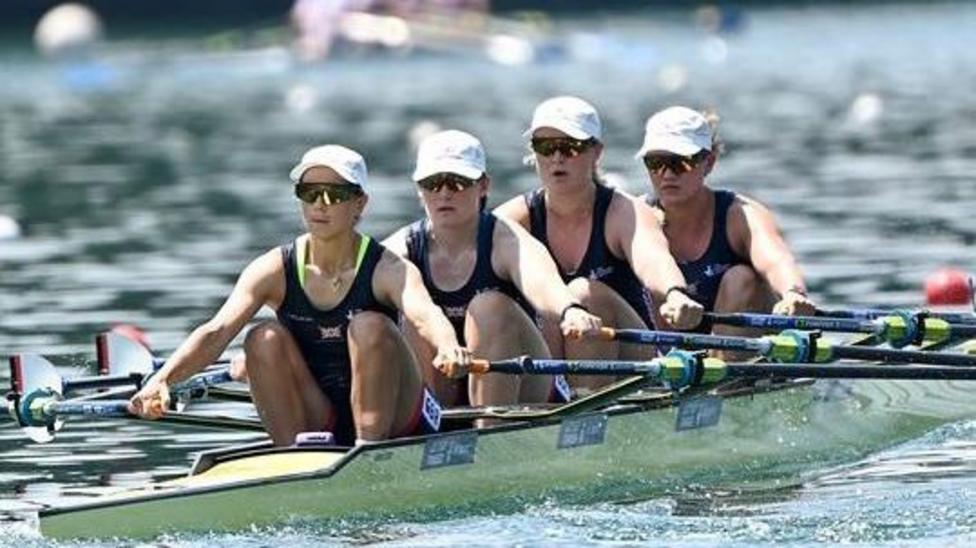
GB Rowing's Six-Gold Lucerne Haul Signals a Powerhouse Reborn
Great Britain's dominant six-gold medal haul at the Lucerne World Cup regatta is a statement of Olympic intent.