Borthwick Bets on Depth: Itoje Rested for Entire Summer Campaign
England captain Maro Itoje will sit out the entire Nations Championship as Borthwick reshapes his squad hierarchy.
The Captain Steps Back
When Steve Borthwick named his squad for the summer Nations Championship, one absence towered above the rest. Maro Itoje, England's captain and the heartbeat of the pack across multiple campaigns, will play no part in the entirety of the summer schedule, including the marquee Test against South Africa on 4 July. In his place, Borthwick has turned to fresh blood, with Caluori among five new call-ups as England prepare for a pivotal stretch without their talisman.
This is not a late fitness concern or a disciplinary matter. It is a calculated decision by a head coach who has clearly decided that the long game outweighs any short-term advantage of fielding his strongest lock against the Springboks. The question reverberating through the England setup is simple: can Borthwick afford to gamble on depth when the opposition wears green and gold?
Why Now? The Logic Behind the Rest
Itoje's omission must be understood within the broader context of the modern international rugby calendar. The Nations Championship, the revamped global competition designed to bring greater structure to the Test schedule, demands sustained intensity across a compressed window. For a player like Itoje, who carries enormous physical and psychological load as both captain and first-choice second row, the cumulative toll across a full season at Saracens and the preceding Six Nations is significant.
Borthwick has spoken previously about the need to manage his senior players intelligently. The decision to rest Itoje for the entirety of the summer rather than a single match suggests this was planned well in advance, not a reactive measure. England's medical and performance staff clearly flagged the risk of burnout or injury if Itoje were asked to front up against the physical brutality of South Africa's pack without adequate recovery time.
There is a second dimension worth considering. By removing the captain from the equation entirely, Borthwick creates a controlled experiment. He can assess how his squad functions without its leader, how the lineout operates without Itoje's unrivalled reading of opposition throws, and how the defensive system adapts when its most aggressive ball-carrier at the breakdown is absent. These are not trivial adjustments.
The Caluori Call-Up and What It Signals
The inclusion of Caluori among the five new faces is perhaps the most telling element of this announcement. It signals that Borthwick is not merely rotating for the sake of rotation but actively auditioning players for roles that could become permanent in the medium term. Itoje is 30 years old. While he remains an elite operator, the succession planning at lock has been a quiet concern for England for some time.
Caluori's call-up, alongside four others, suggests a deliberate injection of competition into a squad that has at times looked stale in its second-row options beyond the first-choice pairing. Borthwick needs to know who can step into the tight five and provide the physicality, set-piece reliability, and breakdown threat that Itoje brings week after week.
The five new selections also reflect a broader philosophical shift. Borthwick appears to be moving away from the model of a settled 23-man squad that travels together unchanged through long stretches. Instead, he is embracing a wider rotation pool, a pattern we have seen from the likes of New Zealand and Ireland in recent seasons, where squad depth has been weaponised rather than merely maintained.
Tactical Shift: How England Adapt Without Their Linchpin
The Lineout Problem
Removing Itoje from the lineup creates a cascading tactical problem that extends far beyond the simple replacement of one player. Itoje is not just England's best lineout operator; he is the architect of the entire set-piece strategy. His ability to read opposition ball, his timing on defensive steals, and his understanding of England's calling structures make him irreplaceable in the truest sense.
Without him, England must either elevate a less experienced caller or simplify their lineout menu significantly. Against South Africa, who boast one of the most destructive mauls in world rugby, any reduction in lineout precision could prove costly. The Springboks will target England's set piece ruthlessly if they sense vulnerability.
Breakdown Intensity
The second tactical consequence is at the breakdown. Itoje's work rate over the ball is extraordinary, consistently ranking among the highest in the Premiership for turnovers won and defensive pressures applied. His absence removes a primary source of turnovers that often initiate England's counter-attacking phases. Whoever fills his jersey must replicate not just the physical output but the decision-making that makes Itoje so effective at slowing opposition ball.
Leadership Void
Perhaps the most underappreciated loss is the intangible one. Itoje's captaincy, while occasionally questioned for its tactical conservatism, provides a calming authority in high-pressure moments. Against the Springboks, who thrive on confrontation and chaos, England will need a voice that commands respect across the entire XV. Borthwick must now identify an interim captain who can channel the same intensity without the same stature.
The South Africa Stakes
The 4 July Test against South Africa is no ordinary fixture. England's recent record against the Springboks has been a source of deep frustration, with narrow defeats and late collapses defining several encounters. The psychological weight of this fixture is immense, and facing it without their captain adds another layer of difficulty.
South Africa, under their current coaching setup, will not care about England's selection decisions. They will see an opportunity. The Springboks' pack, built around brute force and relentless set-piece pressure, will target the areas where Itoje's absence is felt most acutely. Expect Rassie Erasmus's side to test England's lineout defence early and often, probing for the weaknesses that emerge when the usual structures are disrupted.
This is exactly the kind of fixture where Borthwick's decision will be judged most harshly if it backfires. A heavy defeat without Itoje could undermine the broader message about squad depth and long-term planning. Conversely, a competitive performance or a victory would validate the approach emphatically and give England genuine options heading into the autumn internationals.
What the Broader Squad Changes Reveal
Beyond Itoje and the five new call-ups, the shape of the wider squad tells its own story. Borthwick appears to be settling on a core of around 15 to 18 players who form the backbone of his first-choice XV, while building a tier of eight to ten fringe players who rotate in and out based on form, fitness, and tactical requirements.
This is a more sophisticated approach than the blunt instrument of a fixed squad. It acknowledges that modern international rugby demands more than 23 capable bodies. It demands a system where the drop-off between the first-choice lock and the third-choice lock is managed and minimised through deliberate exposure to Test-level intensity.
The inclusion of Caluori and the other new faces is the clearest signal yet that Borthwick is building for the 2027 Rugby World Cup cycle. Every summer selection is now filtered through the lens of long-term development, not just immediate results. That is a significant philosophical departure from the reactive, results-at-all-costs mentality that has often characterised English rugby.
"The summer is about building depth and testing combinations. We need to know who can perform at this level when the pressure is highest." — Steve Borthwick, speaking on the squad selection philosophy
Looking Ahead: Autumn Internationals and Beyond
The real reward for this summer's experimentation will come in November, when England host the autumn internationals with a fully rested and motivated Itoje back in the fold. If the summer selections go well, Borthwick will have genuine competition at lock, back row, and across the wider squad. That internal pressure is exactly what elevates a team from good to great.
The immediate tactical question for the South Africa Test is whether Borthwick opts for an experienced replacement who offers stability or a bold call on one of the newcomers who brings dynamism. The answer will reveal whether this rest decision is truly about long-term vision or whether it is also about short-term pragmatism dressed up as strategy.
Either way, England face their most significant test of depth under Borthwick's tenure. The Springboks will not wait for them to figure it out.
Editorial Integrity
This is an original SportPulse article written by our editorial team. All content is independently researched, written, and reviewed by our writers and editors before publication. We do not publish copied, aggregated, or syndicated content.
SportPulse is committed to original sports journalism. Read our editorial policy or contact us with any questions.
More Like This
All long-reads
De La Hoya Shuts Down Garcia vs Benn Talks
Oscar de la Hoya confirms no negotiations are happening for Ryan Garcia vs Conor Benn, leaving the crossover fight on ice.
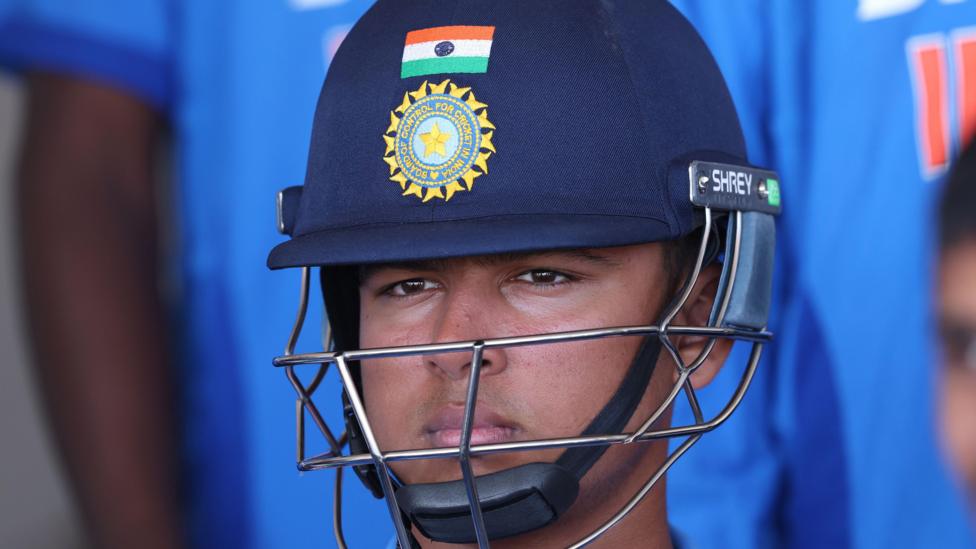
At 15, Sooryavanshi Steps Into India's Spotlight Against Ireland
A 15-year-old prodigy is about to wear India colours, and the cricket world is watching with held breath.

The 78-Year-Old Who Saved From Pelé Now Hosts Spain
Bill Nuttall saved Pelé's penalty, built the 1994 US team from scratch, and now welcomes Spain to his Chattanooga compound.