Just Fontaine: 13 Goals, Borrowed Boots, and Football's Most Unbreakable Record
In 1958, Just Fontaine scored 13 World Cup goals wearing borrowed boots. His record still stands, and his career ended at 28.
The Tactical Canvas of 1958
The 1958 World Cup in Sweden is mostly remembered for the arrival of a 17-year-old Pelé, whose precocious genius carried Brazil to their first global crown. But alongside that emergent samba style, the tournament was also a showcase of positional structures that look startlingly relevant today. France, under coach Albert Batteux, deployed a 3-2-5 formation that on paper resembled a chaotic进攻 avalanche, but in practice functioned as one of the most sophisticated pressing systems of the era.
The architecture of Batteux's 3-2-5 demanded fluency between lines that was decades ahead of its time. The inside forwards were encouraged to drop into the half-spaces, creating numerical advantages in the central corridors and pulling opposition defenders out of their restored defensive shells. This was a team built not just to attack, but to overwhelm through spatial occupation.
Central to this system was a striker whose name has become synonymous with goalscoring longevity, even though his own career was tragically short. Just Fontaine did not simply benefit from Batteux's framework. He was its apex predator, a finisher whose movement within the 3-2-5 created the very spaces his teammates exploited.
Anatomy of a Record
13 goals in six matches. That is the figure. It is a number that has defied generations of football's progress, surviving the expansion of the tournament to 32 teams and the elongation of the schedule to seven fixtures for the finalists. Fontaine's ratio of 2.16 goals per game remains unmatched by any singles-tournament winner or top scorer since.
What made Fontaine so effective within Batteux's system was his understanding of the transitional moments. The 3-2-5 was inherently vulnerable to counter-pressing traps, but Fontaine operated as the release valve. When France won the ball in their own half, his first movement was always vertical, occupying the deepest defensive line and stretching the pitch for the supporting inside forwards.
His finishing was relentless and adaptable. He scored from central penetrations, from layoffs in the box, and from situations where the ball ricocheted around the penalty area. He was not a single-dimensional poacher. He was a striker who read the geometry of the box with a scholar's precision.
The Borrowed Boots
The detail that elevates Fontaine's story from remarkable to almost mythical is the matter of his footwear. He did not arrive in Sweden with his own boots. According to the legend that has been passed down through decades of football folklore, Fontaine's equipment was either lost or unsuitable, and he was forced to borrow boots from a teammate, Stéphane Bruey, to play in the tournament.
In an era before bespoke boots, ergonomic stud configurations, and interchangeable soles for different surfaces, a player's footwear was a deeply personal matter. To achieve a record of 13 goals in ill-fitting, borrowed boots adds a layer of absurdity to the achievement that modern football, with its meticulous preparation, simply cannot replicate.
Imagine a striker today attempting to lead the line in boots that did not belong to him, in a system that demanded relentless vertical running, across six high-intensity matches. The sheer discomfort alone would be enough to derail most players. Fontaine simply scored.
The Quarter-Final Masterclass
France's campaign in 1958 was not a gentle stroll. They navigated a group stage featuring Scotland and Yugoslavia, then faced a fiercely competitive Northern Ireland in the quarter-finals.
It was in that quarter-final that Fontaine's tactical intelligence within Batteux's system was most evident. The Irish lined up in a deep 4-4-2 out of possession, flooding the midfield and forcing France to play around the block. Fontaine's response was to drift wider than a conventional striker would, drawing the central defenders into uncomfortable wide conversations and creating channels for Raymond Kopa, the tournament's creative fulcrum, to penetrate.
The result was a 4-0 demolition in which Fontaine scored twice, but his influence extended far beyond his personal tally. By moving the Irish defensive shape laterally, he created the space for Kopa and the inside forwards to operate. It was a masterclass in false nine principles executed three decades before the term entered mainstream football vocabulary.
The Semi-Final Wall
The tournament ended for France in the semi-finals against a Brazil side that was beginning to crystallize into the side that would dominate world football for the next decade.
Brazil's 4-2-4, orchestrated by Vicente Feola, was built to suffocate exactly the kind of central overloads Batteux favored. With Didi operating as a deep-lying organizer and Zito bombing forward from the second line, Brazil controlled the central corridors and forced France wide, Fontaine's domain inside the box became congested, and the supply lines were severed.
France lost 5-2 in a match that exposed the defensive fragility of the 3-2-5. Yet Fontaine still scored, bringing his tally at the point to 12 goals, before adding a final goal in the third-place playoff against West Germany to reach the mythical 13.
Tactical Shift
If there was a tactical inflection point in Fontaine's tournament, it was Batteux's decision to adjust the spacing between Fontaine and Kopa as the tournament progressed. In the early group games, the two operated on a similar vertical line, which occasionally led to congestion in the central corridor and made France predictable.
From the knockout stages onward, Batteux pushed Kopa deeper into the half-spaces while insisting Fontaine hold a higher, more central position. This created a vertical separation between the two that stretched opposing defenses and allowed Kopa to deliver the ball into the channels where Fontaine's timing was lethal.
The adjustment was subtle, but its effect was profound. In the knockout rounds, Fontaine scored 7 goals in 3 matches. The vertical stretching of the French structure made it impossible for deep-block opponents to collapse around the striker without surrendering space to Kopa, and impossible to mark Kopa tightly without releasing Fontaine into the vacant central zones.
It was a tactical solution born of necessity, but it produced the most prolific scoring run in World Cup history.
The Silence After the Storm
The most haunting aspect of Fontaine's legacy is what happened, or rather what did not happen, after 1958. He never played in another World Cup. A career that should have spanned the next decade was cut short by a series of injuries, and he retired from professional football at the age of 28.
The physical demands of leading the line in a 3-2-5 system, in an era when challenges were brutal and medical treatment rudimentary, took their toll. Fontaine's body broke down under the strain of a style of play that demanded he absorb contact, run vertically for ninety minutes, and repeat the cycle across a grueling domestic and international schedule.
His club career, spent primarily with Stade de Reims, was similarly brilliant and similarly fleeting. He helped Reims reach the 1959 European Cup final against Real Madrid, losing 2-0 to Alfredo Di Stefano's side, but the injuries that would ultimately force his retirement were already accumulating.
"Records are made to be broken, but this one feels like it belongs to another age of football, when the game was simpler and somehow harder." — A sentiment echoed across generations of coaches and analysts.
The Modern Context
From a modern tactical perspective, the survival of Fontaine's record is a testament to how dramatically football has changed. Contemporary World Cups feature 32 teams, with the finalists playing 7 matches rather than 6. The additional fixture should, in theory, provide more opportunities for a striker to accumulate goals.
Yet no one has come close. Gerd Müller's 10 goals in 1970 stood for decades as the nearest challenge. Salenko scored 6 in a single group game in 1994 but faded. Ronaldo Nazário managed 8 in 2002 en route to Brazil's fifth title. The closest recent approach came from James Rodríguez, whose 6 goals in 2014 captured the imagination but fell well short of the benchmark.
The reasons are tactical as much as they are statistical. Modern defences are far more organized than their 1950s counterparts. Low blocks, zonal marking systems, and the athletic profile of contemporary center-backs make it exponentially harder for a single striker to accumulate goals at the rate Fontaine managed. A modern forward scoring 2.16 goals per game across an entire World Cup would require not only extraordinary finishing but a systematic collapse of defensive structures that simply does not occur at the highest level.
The Legacy of a Single Summer
Just Fontaine died in 2023 at the age of 89, closing a link to an era of football that feels increasingly distant. His record of 13 goals has now stood for over 65 years. It is one of the few remaining marks from the early decades of the World Cup that has survived the modernization of the sport.
What endures is not just the number, but the circumstances. A striker in borrowed boots, in a 3-2-5 formation, scoring with a consistency that no modern system has been able to produce. It is a record built on tactical intelligence, physical courage, and a kind of luck that belongs to a bygone age.
Looking Ahead
As the modern game continues to evolve, the conditions that produced Fontaine's record have largely disappeared. The next World Cup will feature an expanded 48-team format, with even more matches and theoretically more opportunities for a striker to chase the benchmark. But the tactical sophistication of contemporary defences, combined with the physical demands of elite football, makes a 13-goal tournament an increasingly remote prospect.
The players who come closest will likely be those who, like Fontaine, combine positional intelligence with a ruthless instinct for the vertical spaces inside the box. The game has changed, but the fundamental requirement of a striker has not. Find the space. Finish the chance. Do it again.
Fontaine did it 13 times in six matches. In borrowed boots. At a tournament that belonged to Pelé, but whose scoring record belonged to a Frenchman whose career was over before his 29th birthday.
Editorial Integrity
This is an original SportPulse article written by our editorial team. All content is independently researched, written, and reviewed by our writers and editors before publication. We do not publish copied, aggregated, or syndicated content.
SportPulse is committed to original sports journalism. Read our editorial policy or contact us with any questions.
More Like This
All long-reads
Hodgkinson Stumbles Again: Odira Strikes in Eugene
Keely Hodgkinson's Eugene defeat to Lilian Odira signals a sudden, fascinating vulnerability in the 800m Olympic champion.

A Rushed Transition: Inside Sheffield United's Failures Exposed at Cusack Inquest
Sheffield United's ill-equipped shift to full-time women's football left staff making lunches and players undersupported, the Maddy Cusack inquest heard.
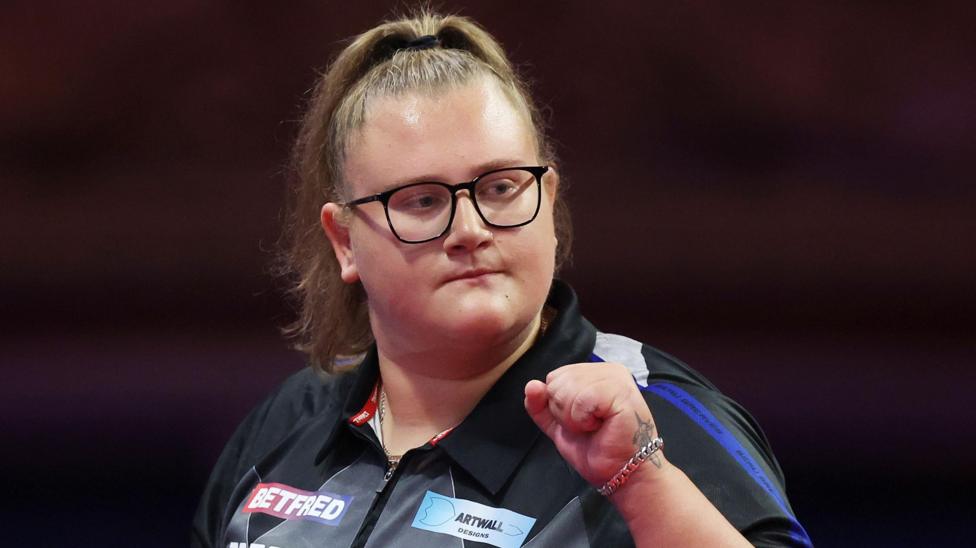
Greaves Smashes Another Ceiling as First Woman on PDC European Tour
Beau Greaves makes darts history again, becoming the first woman to qualify for a PDC European Tour event.