McCabe's Blue Betrayal: Tactical Fallout and the Cost of Loyalty in WSL
Katie McCabe's move from Arsenal to Chelsea after 11 years reshapes the WSL's fiercest rivalry — and exposes the limits of fan fury.
The Image That Broke North London
The neon flickers red for a heartbeat, then drenches the frame in Chelsea blue. Katie McCabe grins, holds up the shirt, and an 11-year chapter at Arsenal closes with the kind of silent violence only a transfer between bitter rivals can inflict.
This is not a transfer. It is a tactical and emotional earthquake measured on the Richter scale of women's football in England. McCabe — Arsenal's captain, Ireland's talisman, a player whose name had become shorthand for commitment at Meadow Park — has crossed one of the most volatile dividing lines in the Women's Super League. And the fallout is both predictable and, in places, unacceptable.
A Rivalry That Reshaped the WSL
To understand the visceral quality of this reaction, you have to understand how Arsenal and Chelsea have defined the modern WSL era. Chelsea have dominated domestically under successive coaches, hoovering up five consecutive league titles and establishing a machine that prizes recruitment depth as much as tactical sophistication. Arsenal, historically the most decorated women's club in England, have fought a running battle to reclaim that primacy, investing heavily in high-profile signings and embracing an aggressive pressing identity to challenge the west London stranglehold.
Between these two poles sits a rivalry that has produced some of the most compelling fixtures in the league's history: title-deciding matches, Champions League qualification play-offs, and flashpoints that have spilled into genuine animosity. McCabe was central to that theatre. She embodied the Arsenal ethos — combative, versatile, emotionally charged. She was the player Chelsea fans loved to despise, the left-back-turned-left-winger whose theatrics and tenacity got under their skin.
Now she is one of them.
Tactical Implications: What Chelsea Gain
From a pure footballing perspective, the acquisition makes structural sense. McCabe operates in a rare tactical mould: a full-back who can function as a wide forward in a back-three system, comfortable in both a 4-3-3 and a 3-4-3. Her crossing accuracy has consistently ranked among the WSL's elite, and her set-piece delivery adds a dimension that Chelsea's recent squads have lacked despite their wealth of attacking talent.
Chelsea's system under their coaching structure has often favoured width delivered from deep. The wing-back role in their preferred 3-4-2-1 demands not just athleticism but decision-making under pressure — knowing when to overlap, when to invert, when to hold the width and let the interior forwards drift centrally. McCabe's reading of space on the left channel has matured enormously over her time at Arsenal, and that intelligence translates directly into what Chelsea ask of their wide defenders.
More importantly, McCabe brings a psychological edge. She has captained Ireland at major tournaments. She has worn the armband in hostile environments. She has carried expectation. Chelsea's squad is not short on talent, but the capacity to inject that kind of emotional leadership into a dressing room that will face the added pressure of defending their domestic supremacy is a genuine asset.
What Arsenal Lose — And What They Cannot Easily Replace
At Arsenal, the departure is existential as much as it is tactical. McCabe's versatility allowed Arsenal's coaching staff to toggle between systems without personnel changes. In a 4-2-3-1, she was the width on the left. In a 3-5-2, she was the progressive wing-back. In a 4-3-3, she tucked inside to create overloads in the half-space. That tactical elasticity is almost impossible to replace with a single signing.
Arsenal's recruitment now faces a critical juncture. They can target a like-for-like wide player, or they can use this disruption as a catalyst to reshape their attacking structure entirely. There is a school of thought that the left channel had become too dependent on McCabe's output — that over-reliance on one player's crossing and creativity created a predictable attacking lane that elite opponents learned to compress.
The question for Arsenal's coaching staff is whether they view this as a wound or a window.
The Reaction: Where Grief Ends and Abuse Begins
The online response to McCabe's announcement has spanned a wide spectrum, and it is important to be precise about where legitimate grievance shades into something darker.
Witty commentary? Fair game. Memes riffing on the colour of the neon lights, the betrayal narrative, the cross-London commute? Football culture thrives on this kind of creative hostility. Passionate criticism of the decision, questions about loyalty, pointed analysis of what this means for Arsenal's title ambitions next season? All valid.
What is not valid, and what has reportedly crossed into the territory of direct abuse — targeted harassment on social media, threats, personal attacks that go beyond football — represents a line that no transfer, however controversial, justifies. The women's game has made extraordinary strides in building a supporter culture that mirrors the passion of the men's game, but that passion must be held to the same standards. Supporting a club means caring deeply. It does not mean weaponising that care against an individual.
McCabe is a professional footballer exercising her contractual right to choose her employer. The pain of that choice is real for Arsenal supporters. The anger is understandable. The abuse is not.
Tactical Shift: The Balance of Power in London
This transfer is the latest data point in a broader trend that is reshaping the competitive landscape of the WSL. The talent pool in women's football remains relatively concentrated compared to the men's game, and the number of clubs with genuine financial muscle and Champions League ambitions is still small. That concentration means moves between rivals are structurally almost inevitable.
Chelsea's model has been explicitly built on this reality. They have not shied from strengthening directly at the expense of their closest competitors, understanding that in a league with fewer than 15 genuinely elite-level squads, weakening a rival is almost as valuable as strengthening your own. McCabe's arrival follows a pattern that has defined Chelsea's recruitment philosophy: identify the players who matter most to their rivals, then acquire them.
For Arsenal, this creates a compounding problem. Every high-profile departure to a direct competitor shifts the tactical and psychological balance. It is not just about losing a good player. It is about that player now performing the same functions for the team you need to beat.
Looking Ahead: The First Meeting
The fixture that will be circled on every WSL calendar is Arsenal versus Chelsea next season, whenever and wherever it falls. McCabe returning to Meadow Park or the Emirates wearing blue will generate a level of theatre that few domestic women's fixtures can match.
Tactically, Arsenal's coaching staff will need to decide how to approach that game. Do they press the left channel aggressively, targeting McCabe directly? Do they sit deeper and deny the space she thrives in? Do they use it as a statement — a tactical blueprint for life without her?
Chelsea, meanwhile, will integrate McCabe into their system with the confidence of a club that knows exactly what it has acquired. The 3-4-2-1 gets more fluid. The left side gets more dangerous. The set-piece threat increases.
The football justifies the move. The emotion will take much longer to settle.
"Katie is one of the best full-backs in Europe. Her quality, her mentality, her experience in big matches — she elevates everything around her." — Chelsea head coach on the signing
The Bigger Picture
McCabe's transfer is a mirror held up to the state of women's football in 2026. The game is growing rapidly — attendances, broadcast deals, commercial investment — but the competitive structure still produces a landscape where elite talent clusters in a handful of destinations. That clustering creates intensity, rivalry, and drama. It also creates the conditions for moves that feel like betrayals.
The challenge for the sport is to channel that intensity productively. Rivalry is the lifeblood of football. Anger at a player's decision is part of the emotional contract between supporters and the game. But the line between passion and abuse is not blurred. It is clear, bright, and inviolable.
McCabe will wear Chelsea blue. Arsenal will rebuild. The WSL will be richer for the drama. And the first time she touches the ball against her former club, every tactical nuance will be secondary to the roar — from one side of the stadium, and the silence from the other.
Editorial Integrity
This is an original SportPulse article written by our editorial team. All content is independently researched, written, and reviewed by our writers and editors before publication. We do not publish copied, aggregated, or syndicated content.
SportPulse is committed to original sports journalism. Read our editorial policy or contact us with any questions.
More Like This
All football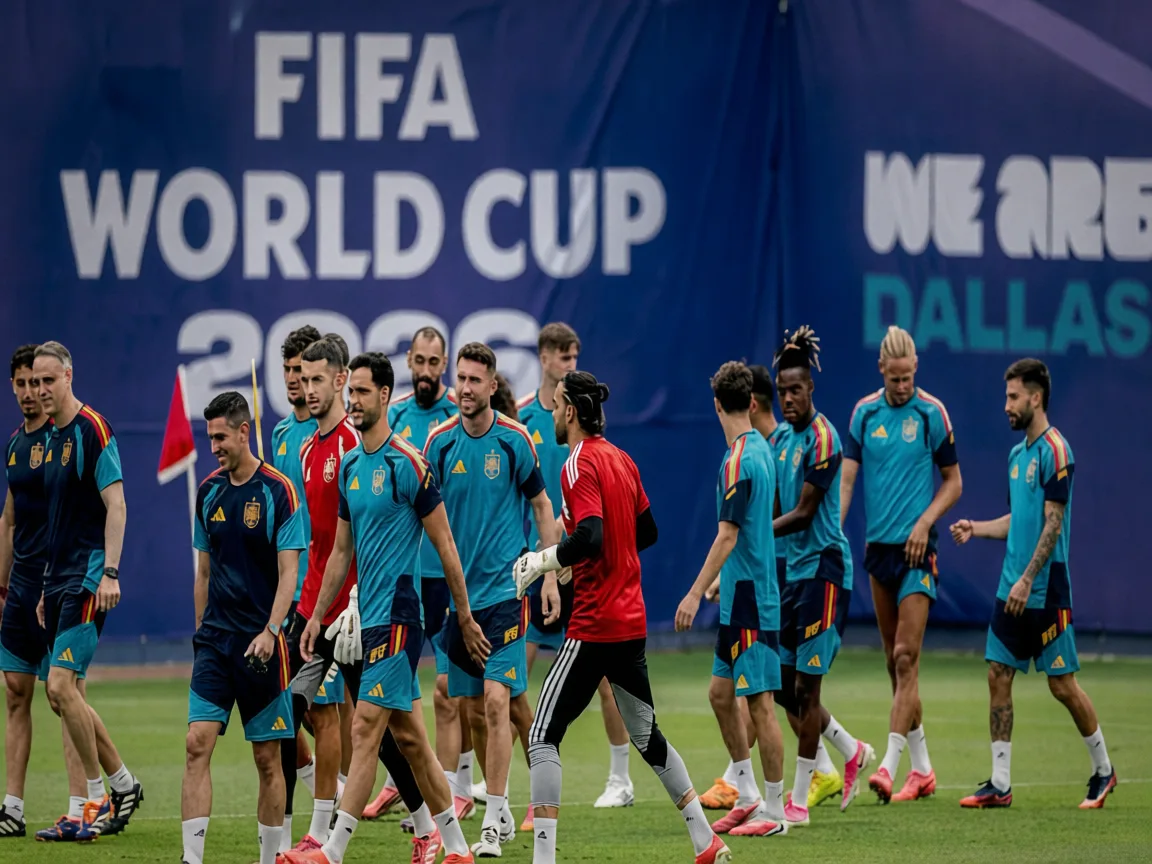
Storm Front: Spain's Cancelled Training and the Final That Defies Forecast
A thunderstorm wiped out Spain's last training session before the World Cup final, forcing tactical improvisation in hotel corridors.

Sixty Years of Hurt: England's World Cup Drought in Brutal Numbers
England's World Cup drought turns 60 in 2026. The numbers behind the wait are staggering, humbling, and deeply uncomfortable.

From Galáctico to the Boardroom: Gareth Bale's Next Chapter
The Wales legend is eyeing club ownership, joining a growing wave of retired stars reshaping football's business landscape.