Katie Swan's Long Road Back: From the Edge of Quitting to Wimbledon's Grass
Katie Swan nearly walked away from tennis forever. Now she's back on the lawns where it all began.
The Body Remembers
There is a particular silence that settles over an athlete when the body rebels. Not the roar of a crowd dying down, not the hush before a serve, but something deeper and more private: the quiet reckoning between what the mind still craves and what the flesh can no longer endure. For Katie Swan, that silence arrived not on Centre Court or under floodlights at a packed arena, but in the unglamorous solitude of rehabilitation rooms and medical consultations, where the word retirement stopped being something whispered by pundits and became a genuine conversation she was having with herself.
Two years ago, the British tennis player sat at a crossroads that no 24-year-old should have to face. A persistent back injury had hollowed out her calendar, stolen her ranking, and gnawed at the psychological foundation every professional athlete needs to survive. Tennis, the sport she had pursued since childhood with the single-minded devotion that defines those who reach the professional ranks, was asking a price her body seemed unwilling to pay.
Now she is back at Wimbledon. And the word she reaches for is not triumph or vindication, but something quieter, more textured: full-circle.
A Career Interrupted
Swan's story is not one of sudden catastrophe. Back injuries in tennis rarely work that way. They are slow erosion, the cumulative toll of thousands of serves, endless rotational forces, and the peculiar violence of a sport that demands the spine act as both whip and anchor. The back is the fulcrum of every groundstroke, the load-bearing wall of every ball toss. When it falters, everything built upon it becomes unstable.
For Swan, the injury arrived at a moment when her career trajectory had been pointing cautiously upward. She had shown flashes of the talent that made her one of Britain's most promising juniors, someone earmarked early as a future presence on the biggest stages. The WTA Tour is littered with such stories: young players whose potential burns bright before injury or circumstance dims the flame. The margins at the professional level are unforgiving. A few months away from competition can mean hundreds of ranking places. A year can mean starting over from scratch.
Starting over is exactly what Swan faced. Not once, but in the grinding, repetitive cycles of rehabilitation and tentative return that define the injury odyssey. Each comeback attempt carried its own psychological weight. Each setback reopened the question that had no comfortable answer: Is this still worth it?
The Conversation No Athlete Wants to Have
Retirement in professional sport is rarely a clean break. It is a negotiation, often conducted over months or years, between identity and reality. For athletes who have built their sense of self around a sport since childhood, walking away is not simply a career decision. It is an existential one.
Swan has spoken candidly about the period when retirement moved from hypothetical to genuine possibility. This is worth pausing over, because the honesty required to admit such a thing publicly runs against the grain of athletic culture, where pain is endured in silence and doubt is treated as weakness. The vulnerability in her admission reveals something important about the modern athlete's experience: the body is not a machine, and the mind that drives it is not infinitely resilient.
The back injury did not merely sideline Swan physically. It dismantled the architecture of her professional life: the training rhythms, the competitive momentum, the daily purpose that comes from having a match to prepare for and a ranking to defend. Stripped of these structures, she was forced to confront the fundamental question of who she was without tennis. It is a question many athletes avoid until retirement forces it upon them. Swan had to face it prematurely, and at an age when most of her peers were ascending.
The Full Circle
Wimbledon has always occupied a singular place in the British tennis imagination. It is where dreams are calibrated, where every British player's career is ultimately measured against the grass and the history that saturates those courts in SW19. For Swan to return here, not as a wildcard clinging to hope but as a player who has earned her place through the hardest possible route, gives her reappearance a narrative weight that transcends the result of any single match.
The phrase she used herself, full-circle moment, carries a resonance that goes beyond sporting cliché. Circles imply return, but they also imply transformation. The Swan stepping onto the Wimbledon grass this summer is not the same player who last walked those lawns. She is older, certainly, but also marked by an experience that most of her competitors will never fully understand: the knowledge of what it feels like to nearly lose everything, and the discipline required to rebuild from that precipice.
British tennis fans, a group whose loyalties oscillate between chronic optimism and resigned pragmatism, will recognize in Swan's return something they have seen before in the careers of other home players who endured long injury layoffs. The sport in this country has a particular appetite for comeback narratives, perhaps because the gap between expectation and reality at Wimbledon has historically been wide enough to generate a certain sympathy for those who struggle against the odds.
What the Body Has Taught Her
There is an emerging body of research in sports science suggesting that athletes who return from significant injury often develop a heightened body awareness that can, paradoxically, make them more effective competitors. The forced pause compels a deeper understanding of biomechanics, recovery, and the subtle signals the body sends before breaking down. Athletes who listen to these signals, rather than powering through them, tend to sustain their careers longer.
For Swan, the back injury may have delivered a painful education in her own physical limits and capabilities. Professional tennis at the highest level is a young person's game in its demands, but wisdom in managing those demands often comes only through suffering. If she has emerged from her injury ordeal with a smarter relationship with her own body, the setback could prove to be, in a paradoxical sense, the making of her as a competitor.
The question now is not whether Swan can compete at Wimbledon. She has answered that simply by being here. The question is what kind of ceiling still exists for a player who has been forced to rebuild her career from its foundations. The WTA Tour in 2024 is ruthlessly deep, populated by young powerhouses and resurgent veterans alike. Breaking through requires not just talent but sustained physical availability, the one commodity Swan has been unable to guarantee.
The Road Ahead
Every comeback story in tennis ultimately confronts the same test: can the narrative of return translate into sustained results? The emotional arc of the comeback is powerful, but the rankings table is indifferent to narrative. It rewards only victories.
Swan will know this better than anyone. She will know that Wimbledon, for all its symbolic importance, is a single tournament in a calendar that stretches across continents and surfaces. The real measure of her return will not be decided over two weeks in London but over the months that follow, as she attempts to string together the kind of consistent run that her ranking requires.
What Wimbledon offers her, though, is something no amount of ranking points can quantify: proof. Proof that the decision to keep playing, to resist the gravitational pull of retirement, was the right one. Proof that the body, even one that has betrayed her, can still be coaxed back to the highest level of competition. Proof that the silence of those rehabilitation rooms was not the end of her story, but a pause between chapters.
There is a Japanese art form called kintsugi, in which broken pottery is repaired with gold, the cracks becoming part of the object's beauty rather than evidence of its damage. Swan's return to Wimbledon carries something of that philosophy. The fractures in her career are real and visible, but they do not diminish what she is attempting. If anything, they illuminate it.
The grass courts of the All England Club have witnessed countless stories of loss and renewal over their long history. This summer, they will witness one more. And whatever happens in the matches themselves, the mere fact of Katie Swan walking back onto that grass, racket in hand, back holding steady, is a victory that no scoreboard can fully capture.
Editorial Integrity
This is an original SportPulse article written by our editorial team. All content is independently researched, written, and reviewed by our writers and editors before publication. We do not publish copied, aggregated, or syndicated content.
SportPulse is committed to original sports journalism. Read our editorial policy or contact us with any questions.
More Like This
All tennis
All-Czech Affair: Noskova and Muchova Storm Into Wimbledon Final
Linda Noskova and Karolina Muchova will contest Wimbledon's first all-Czech women's final, a generational showdown steeped in national tennis pride.

When the Servers Fell and the Wagtails Rose at Wimbledon
At the All England Club, technology hums, birds land on court, and the power game is quietly dying.
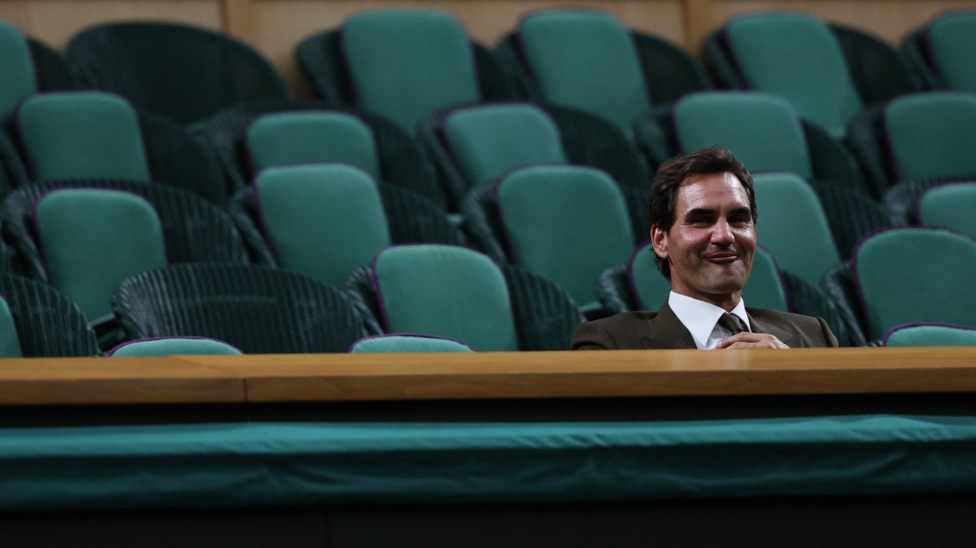
Behind Wimbledon's Royal Box: How Centre Court's Most Exclusive Seats Get Filled
Wimbledon's royal box is sport's most exclusive invitation, where celebrity, diplomacy, and tradition collide on Centre Court.