Keane and Kane: How Two England U19s Strikers Went Opposite Ways
Once inseparable in England's youth attack, Will Keane and Harry Kane now occupy different footballing worlds this week.
The Divergence
Harry Kane is preparing for a Champions League quarterfinal with Bayern Munich, his 36 goals in 32 Bundesliga appearances this season rewriting records in Germany. Will Keane is fighting for Preston North End in the Championship, a league where the spotlight burns less bright but the tackles bite considerably harder. A decade ago, they shared the same England Under-19s dressing room, queued at the same meal table, and wore the same crest. Today, their careers are separated by roughly £100 million in transfer fees, several tiers of competitive magnitude, and the cruel lottery of injuries.
Kane's path from Tottenham academy prospect to England captain and Bayern Munich talisman required exceptional talent and extraordinary resilience. He had to overcome four loan spells across the lower leagues before establishing himself at Spurs.
Keane's journey demanded equal portions of mental strength, but fortune did not match the determination. He has rebuilt his career entirely on English soil, becoming one of the Championship's most reliable forwards through sheer persistence.
The England U19s Connection
In 2013, Kane and Keane lined up together for England's Under-19s under coach Noel Blake. Kane was the emerging force, still raw but visibly destined for greater stages. Keane boasted the superior technical refinement at that juncture, possessing a first touch that coaches at Manchester United had nurtured meticulously from age eleven.
Both teenagers harbored identical ambitions within the England youth system. They wanted Premier League starting berths, senior international honors, and careers at the absolute summit of European football. The ultra-competitive environment of the St George's Park complex bred a mutual respect that endures to this day. Kane has spoken publicly about Keane's technical brilliance during those formative years, acknowledging a striking partner who made his job considerably easier at every age group.
The contrast in their physical profiles made the partnership function. Keane operated as the intelligent link player, dropping deep and knitting play together with crisp, precise passing. Kane provided the explosive finishing, the relentless pressing, and the aerial threat that would later become hallmarks of his career.
The Kane Trajectory
Kane's ascent followed a frustrating but ultimately character-building trajectory through the Football League. He sampled League One with Millwall, Championship football with Leicester City, and a brief stint in the Premier League with Norwich City before his Spurs breakthrough.
The breakthrough was seismic in its impact. 21 goals in his first full Premier League season announced his arrival as England's most exciting young striker since Wayne Rooney. From there, the records compiled at an astonishing rate. Three Premier League Golden Boots. The all-time leading scorer at Tottenham Hotspur with 280 goals across all competitions. England's record goalscorer with goals in major tournaments.
His 2023 transfer to Bayern Munich for an initial €100 million represented the logical culmination of two decades of relentless development. Kane needed European honors to cement a legacy that domestic brilliance alone could not complete. In Munich, he has delivered 44 goal contributions in 37 appearances across all competitions this season, a ratio that even exceeds his peak Spurs production.
The German adaptation speaks volumes about Kane's underlying quality. He has conquered a new language, tactical system, and dressing room culture with-autocratic efficiency, becoming a leader in the Bayern squad within months of arrival.
The Keane Resilience
Keane's narrative revolves around resilience amid setbacks that would have permanently derailed lesser characters. He departed Manchester United in 2016 having made just 3 senior appearances across eight years at Old Trafford. Ankle ligament damage in 2016, sustained while playing for the United U21s, required surgery and extensive rehabilitation that stripped away critical developmental time.
Loans to Queens Park Rangers, Sheffield Wednesday, and Preston himself offered sporadic exposure but no lasting foothold. The brutal economics of modern football dictated that United had already moved on to glamorous replacements. Keane became a casualty of the academy production line that discards players without suitable top-tier opportunities.
His permanent transfer to Hull City in 2016 for roughly £1 million represented a fresh start tempered by persistent frustration. Keane scored with reasonable consistency at the MKM Stadium and earned a move to Wigan Athletic in 2019, where he hit double figures in League One and helped secure promotion back to the Championship.
The 2021 transfer to Preston North End finally provided the stability Keane craved after years of upheaval. At Deepdale, his ratio steadily improved to the point where he registered 15 Championship goals in a single campaign, one of the most efficient strikers operating outside the Premier League.
Championship football is brutal in its intensity, forgiving in neither the tackle nor the fixture scheduling, but Keane has carved out a reputation as a trustworthy, durable goalscorer. He has scored against some of the division's best defenses, proving his technical ability outlasts the attention spans of elite academies.
The Injury Factor
Football's historical record overflows with promising strikers whose careers were fundamentally altered by injuries arriving at precisely the wrong developmental stage. The academy environment at elite clubs is structured to maximize potential but poorly equipped to manage the psychological turmoil of repeated setbacks.
Keane's ankle problems emerged during a period when he needed consistent minutes, tactical exposure, and confidence-building performances. He sustained the injury at 21 years old, a stage where strikers traditionally begin their senior acceleration.
Kane, by contrast, benefited from the rarest commodity at Spurs: patience. Mauricio Pochettino's arrival as manager in 2014 provided a coach willing to develop young talent rather than immediately purchase experienced replacements. The Argentine gave Kane a sustained starting run, and the striker repaid that faith with goals that made him undroppable within months.
The different injury outcomes illuminate the narrow margins separating elite careers from competent ones. Sustained fitness at age twenty is not merely a physical attribute but a career-defining asset that facilitates tactical understanding, physical development, and the accumulation of senior minutes.
The Dressing Room Divide
Inside the Allianz Arena dressing room this week, Kane is the squad's focal point, the player around whom Bayern construct their European assault. The atmosphere crackles with elite tension ahead of the Champions League quarterfinal against Arsenal, the club he grew up supporting but went on to torment for a decade in North London derbies. Preston's Deepdale stadium buzzes with a different energy entirely. Keane prepares for a Championship fixture against West Bromwich Albion with playoff implications cascading down the table.
The Deepdale away dressing room smells of damp turf and deep heat, the quintessential lower-league aroma. Coaches organize tactical sets on whiteboards that have seen better seasons. Keane sits quietly in the corner, lacing his boots with the deliberate concentration of a player who understands that every Championship point carries significant financial weight for the club's future.
"The Championship is unforgiving. You face different defenders every week. Physical battles, tactical variations, and relentless schedules push you to the absolute limit. I have grown immensely as a player and as a person navigating these challenges over the years."
"I have the utmost respect for players who build careers through the lower divisions. I was there myself on loan at Millwall and Leicester. Those experiences shaped everything about how I approach the game today." — Harry Kane reflecting on his early career loans
What It Means
The divergent paths of Kane and Keane illustrate football's fundamental cruelty and beauty in equal measure. One career represents the realization of transformative potential coupled with optimal timing. The other exemplifies the resilience required to build a meaningful professional career when early expectations go unfulfilled.
Their shared England U19s experience remains a historical footnote, a brief intersection of two forces heading in opposite directions before circumstances dictated their separation. Kane captains his country and chases the European Cup with Bavarian heavyweights. Keane anchors a Preston North End side pushing for Championship stability.
Neither career outcome diminishes the other. Kane's record speaks for itself across every competitive context, from domestic cups to World Cup penalty shootouts. Keane's longevity in the second tier demonstrates that academy pedigree alone cannot sustain a career without corresponding mental fortitude.
Modern football increasingly demands that precocious talent meet ideal circumstances to reach elite tiers. Clubs invest millions in scouting systems designed to identify talent but offer precious little infrastructure for players who fall short of the absolute peak. Keane's continued productivity serves as a testament to those who persist when the football world stops fully watching.
The England youth system continues to produce forward talent at a remarkable rate, but the distances between those who reach the summit and those who rebuild their careers elsewhere remain vast. Kane faces Arsenal this week seeking a Champions League semifinal berth. Keane looks for goals at the Hawthorns. From the same starting line, football's roads diverged irreversibly.
Editorial Integrity
This is an original SportPulse article written by our editorial team. All content is independently researched, written, and reviewed by our writers and editors before publication. We do not publish copied, aggregated, or syndicated content.
SportPulse is committed to original sports journalism. Read our editorial policy or contact us with any questions.
More Like This
All football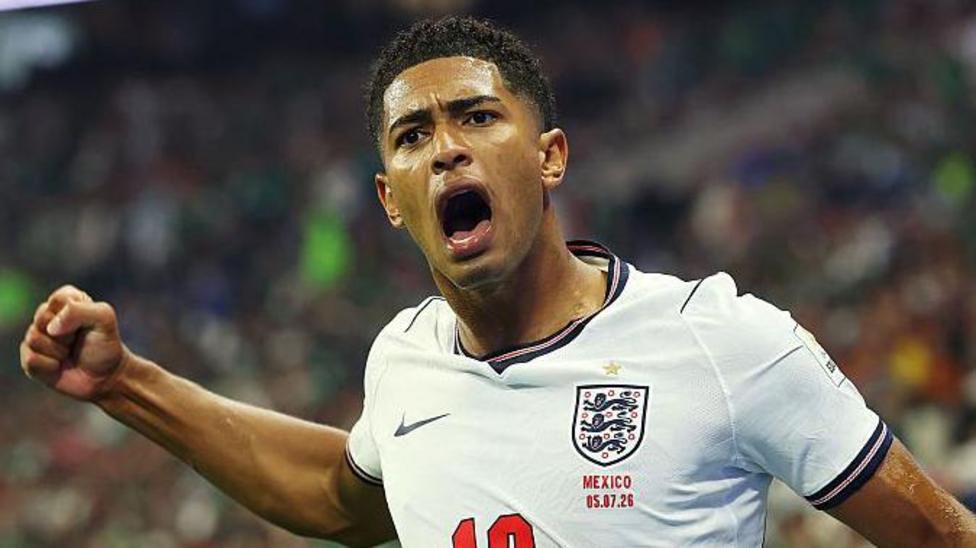
Azteca Conquered: Where Does England's Mexico Win Rank?
England stormed the Azteca to slay Mexico, but where does this iconic away triumph rank among the Three Lions' greatest road victories?

Merino Breaks Belgian Hearts as Spain Reach World Cup Semis
Substitute keeper Lammens' nightmare moment gifts Merino an 88th-minute winner and sends Spain into the World Cup semi-finals.
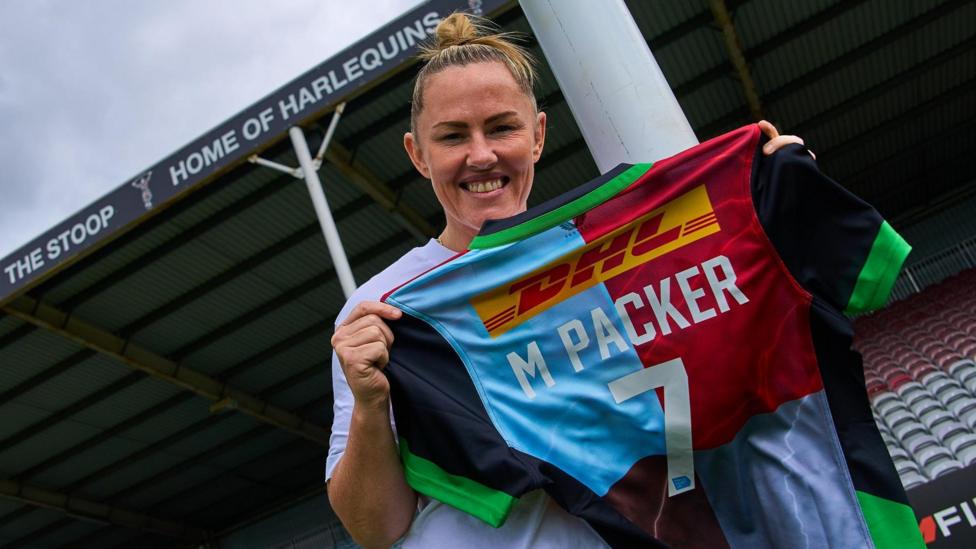
Packer to Harlequins: The End of an Era and a Tactical Masterstroke
Marlie Packer's Saracens exit for Harlequins isn't just a transfer; it's a seismic destabilization of the W Premiership's established hierarchy.