The Spartan Vow Behind the Knicks' 53-Year Curse Breaker
James Dolan invoked ancient Sparta and demanded ten weeks of sacrifice. The Knicks actually delivered the title.
Thermopylae on Eighth Avenue
Imagine the room. A sleek, corporate boardroom inside the gleaming modern fortress of Madison Square Garden. It is April. The regular season has bled into the postseason, and the air already hums with a specific, terrifying type of New York pressure. Into this room steps James Dolan, a man who has worn the skin of the league's most maligned owner for over two decades. He does not talk about profit margins or luxury tax aprons. He talks about bloodlines.
He talks about Sparta.
Before the first tip-off of the playoffs, Dolan reportedly gathered his roster and issued a decree that felt ripped from the parchment of ancient history rather than a modern scouting report. Ten weeks. Ten weeks of absolute physical sacrifice. No sex during the playoff run.
Absurdity.
Until it isn't.
The Architecture of a Fifty-Three Year Curse
For half a century, the Knicks existed in a state of perpetual winter. The franchise had not hoisted the Larry O'Brien trophy since 1973, a drought so long it had calcified into an identity. Generations of fans learned to mourn in the specific cadence of New York basketball: the false dawn, the catastrophic free-agency miss, the organizational dysfunction that seemed to seep right out of the owner's suite and onto the hardwood.
Dolan had presided over the vast majority of that famine. He had chased stars who never wanted the spotlight of Manhattan. He had cycled through coaches and executives with the reckless abandon of a man burning kindling in a snowstorm. The Isiah Thomas era. The Phil Jackson experiment. The Derrick Rose trade. Each chapter added another layer of brick to a wall of despair.
Then came Jalen Brunson. Then came Mike Brown. The calculus shifted entirely.
The Psychology of the Pledge
To dismiss Dolan's Spartan invocation as a mere billionaire's eccentricity is to fundamentally misunderstand the psychology of a championship run. The modern NBA player operates in a state of extreme physical luxury. Four-star road hotels, personal chefs, physiotherapy that borders on the surgical. The margins between winning and losing in May and June are so microscopic that any edge, any altered variable, becomes a lever of immense power.
Dolan's demand was never about the biology of abstinence. The scientific community long ago debunked the myth that sexual activity diminishes athletic performance. The real mechanism at play was psychological surrender.
"We don't wait for the perfect moment. We build the shape that creates the moment."
By asking his players to publicly and privately commit to a ten-week denial, Dolan was engineering a unique crucible. He was forcing a locker room of multi-millionaires, each accustomed to dictating the terms of their existence, to surrender a fundamental autonomy. If you can surrender the most basic of human appetites for the collective, you can surrender your shot for the open man. You can switch seamlessly on a screen. You can take a charge in the final minute of a critical Game 5.
The vow was not the point.
The submission was.
The Engine on the Floor
Rhetoric is just hot air without the muscles and scheme to enforce it. Jalen Brunson provided the gravity. Mike Brown provided the architecture.
When Brunson arrived in New York, the narrative was that he was a second option playing a first option's role on a max contract. The championship run buried that take under an avalanche of step-back threes and impossible finishes at the rim. Brunson operated at a terrifying efficiency, his pick-and-roll mastery bending defenses until they fractured. He was the engine, the absolute fulcrum of a team that finally understood its own identity.
But the identity was forged on the other end of the floor. The 2025-26 Knicks built their legacy on a suffocating, helter-skelter defense that turned the half-court into a vacuum. The spacing of the modern NBA often results in high-scoring shootouts, but the Knicks actively dragged opponents into the proverbial mud. A brutal, physical swamp of closeouts and rotating wings.
Health, that most fickle of championship prerequisites, finally smiled on New York. In previous springs, the story was always the infirmary report. This time, when the games mattered most, the core was intact.
The Paradox of James Dolan
It is the ultimate irony of this New York title. The franchise's greatest triumph in over half a century rests firmly on the foundation of a man many fans wanted run out of the city on a rail.
James Dolan has been the villain of the Knicks' narrative for so long that his presence in the hero's circle feels disorienting. He is the owner who fought with legends, who raised ticket prices in the midst of a rebuild, who made the Garden a place where free agents feared to tread. Yet here he stands, having invoked the Battle of Thermopylae, presiding over a coronation.
Perhaps the speech worked precisely because it was so outlandish, so disconnected from the sanitized corporate speak that usually emanates from ownership suites. By reaching back into antiquity for a metaphor, Dolan stripped away the noise of the modern sports industrial complex. He was not asking them to optimize their output or leverage their brand assets. He was asking them to be warriors.
And for once, the roster bought in completely.
The Confetti Settles
Madison Square Garden is quiet now. The roaring colosseum has emptied. The floats have been cleaned and stored. The 53-year silence has been shattered by a championship parade that will echo in borough folklore for generations.
Dolan's Spartan decree will linger in the mythology of this team. It will become a footnote, an anecdote, a punchline for late-night hosts and a war story for veteran players. Some will adhere to the ten-week rule for future playoff runs, a new superstition born in the fires of a genuine title chase. Others will quietly ignore it, secure in the knowledge that the real sacrifice was made on the court, not in the bedroom.
But the paradox of that April meeting remains. In a league obsessed with load management and player empowerment, where the individual often eclipses the collective, a strange billionaire demanded an ancient, uncomfortable sacrifice.
They listened.
They conquered.
New York.
Editorial Integrity
This is an original SportPulse article written by our editorial team. All content is independently researched, written, and reviewed by our writers and editors before publication. We do not publish copied, aggregated, or syndicated content.
SportPulse is committed to original sports journalism. Read our editorial policy or contact us with any questions.
More Like This
All basketball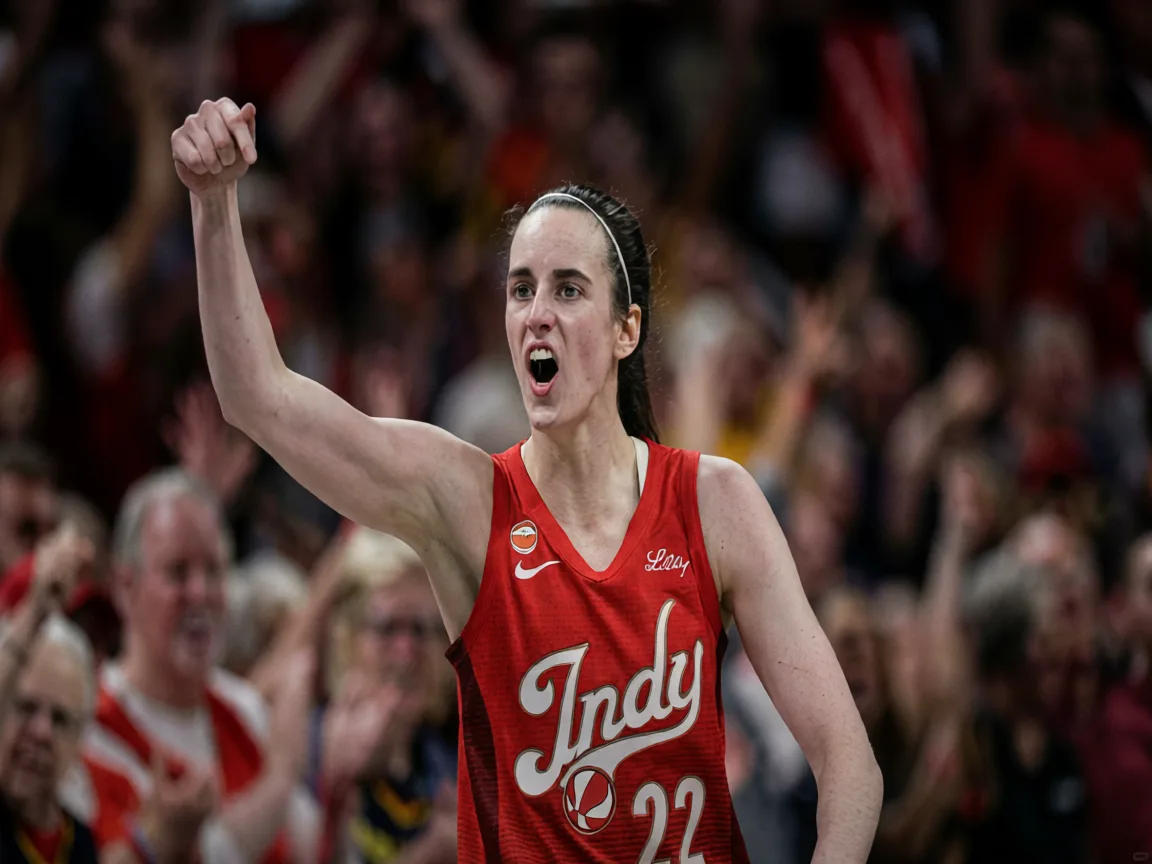
Caitlin Clark's 45-10 Night Rewrites the WNBA Record Books
Caitlin Clark became the first WNBA player ever to post 40-plus points and 10 assists in a single game, silencing doubters with a historic masterpiece.

Hilton Fires Employee After Racist Attack on Aces Star Chelsea Gray
A Hilton employee lost their job after directing a racial slur at Chelsea Gray, exposing the WNBA's persistent online abuse crisis.

The Lakers' $20 Million Question and the Kuminga Stalemate
Los Angeles is betting Kuminga fills the LeBron void, but his camp plays the long game for a bigger payday.