Leclerc Outqualifies Hamilton at Silverstone Amid Setup Epiphany
Charles Leclerc edged Lewis Hamilton in Silverstone qualifying after nearly abandoning his natural driving style to mimic the seven-time champion.
A Breakthrough at Silverstone
Under the characteristic grey skies of Northamptonshire, with track temperatures hovering in a disappointing British range that rendered tire warmup a genuine engineering headache, Charles Leclerc delivered a qualifying lap that might redefine his season. The Monegasque planted his SF-25 on the front row for the British Grand Prix, securing P2 and outpacing his teammate Lewis Hamilton by a margin of 0.139 seconds. It was a result that genuinely caught the paddock off guard.
To understand the significance, one must appreciate the aerodynamic and mechanical demands of the Silverstone circuit. It is a track of bewildering contradictions, blending absurdly high-speed corners like Copse, Maggotts, and Beckets with slower technical sections like the Luffield complex. The optimal car setup requires a high-downforce configuration to maintain momentum through the rapid direction changes, yet a slick aerodynamic platform is necessary to avoid drag-induced straight-line devastation along the Hangar Straight. Finding the sweet spot is an engineering nightmare.
The Setup Epiphany
What makes this qualifying result particularly compelling is the psychological trajectory preceding it. Entering the weekend, Leclerc had endured a frustrating run, struggling to extract maximum performance from a car that seemed perpetually unsettled at the rear and uncommunicative at the front. In a revealing admission, the 27-year-old confessed he had reached the point of desperation where he seriously considered adopting the driving style of his teammate.
Hamilton is renowned for a highly distinctive technique. The seven-time world champion relies on instinctive trail braking, turning the car into the apex with a delicate blend of steering input and differential modulation, trusting the rear axle to rotate naturally. Leclerc, conversely, operates with a more conventional, precision-based approach, favoring a stable front end and relying on his exceptional reaction times to catch mid-corner slides.
"I was so lost with the car that I thought about copying what Lewis does. It shows how desperate the situation had become."
The attempt to mimic his teammate's flowing style never fully materialized. Instead, Leclerc and his race engineer, Bryan Bozzi, embarked on a recalibration of the car's mechanical balance. By Softening the front anti-roll bar and raising the front wing incidence by a single click, they dialed out the understeer that had been plagacing him. This granted him the front-end commitment he desperately needed through the Brooklands and Luffield complex.
Technical Configuration
The qualifying setup represented a significant departure from the balanced approach Ferrari utilized earlier in the weekend. Key adjustments included:
- A more aggressive differential setting for high-speed cornering rotation
- Slightly reduced rear downforce to optimize performance along the Hangar Straight
- Modified tire preparation strategy to account for the cool 18°C track surface
Hamilton's Response
For Hamilton, qualifying third at his home grand prix represents a solid but complicated outcome. The British driver has historically excled at Silverstone, claiming a record eight pole positions here. To be outqualified by a teammate, even one of Leclerc's caliber, will undoubtedly sting.
The dynamic between the two Ferrari drivers continues to fascinate. Hamilton has consistently yzed that adapting to the SF-25 requires unlearning many of the ingrained habits that brought him unprecedented success at McLaren and Mercedes. The brake bias migration, the power steering feedback, and the aerodynamic platform all behave differently. His P3 starting position is a testament to his adaptability, yet it also underscores the reality that Leclerc currently holds the operational advantage within the team.
Strategy Breakdown
With both Ferraris starting on the clean side of the grid, the strategic picture for race day becomes genuinely intriguing. The expected conditions forecast a dry race with temperatures struggling to reach 21°C. This presents a classic one-stop scenario, with the Medium tire expected to be the race tire for the opening stint.
The strategic question revolves around when to transition to the Hard compound. Silverstone is notoriously punishing on the front-left tire, with the high-speed Allen and Stowe corners generating sustained lateral g-forces. Tire degradation here is not linear; it is sudden and violent when the surface temperature exceeds the thermal threshold.
Ferrari's pit wall will likely target a stop between Lap 18 and Lap 22 for the lead car. The fundamental decision is whether to react to the predicted early stop from the car ahead or to extend the first stint to create a tire offset for the closing laps. With Leclerc starting second, the team has a strategic shield. They can use his position to control the pace and protect against undercut attempts while Hamilton, starting third, can run a slightly longer first stint to overcut any direct rivals.
The Starting Order
The front of the grid for the British Grand Prix presents a familiar but evolving narrative.
- P1 — Pole sitter, setting a benchmark time that remained unbeaten throughout the final runs of Q3
- P2 — Charles Leclerc, +0.391s behind pole, leading the Ferrari charge with a revitalized car setup
- P3 — Lewis Hamilton, +0.530s behind pole, losing critical time through the second sector
- P4 — The best of the rest, trailing the top three by over half a second
What This Means for the Championship
The qualifying result has significant implications for the constructors' battle. Every position matters in what has become a ruthless intra-team fight for supremacy. Leclsec's front-row start provides Ferrari with a genuine opportunity to score maximum points and solidify their position in the standings.
Leclerc's admission of nearly copying Hamilton's driving style reveals a vulnerability that is rare in modern Formula 1. Drivers are typically portrayed as inflexible artisans, wedded to their来源 and resistant to change. The reality is that survival at the highest level demands the very opposite of rigidity. The willingness to abandon one's natural technique, to question the fundamental mechanics of how one interacts with a machine, demonstrates a maturity that statistical analysis alone cannot capture.
Looking Ahead
As the lights prepare to go out at Silverstone, all eyes will be on the Ferrari garage. The race will reveal whether Leclerc's setup epiphany translates into sustained race pace or whether it was merely a one-lap miracle. Hamilton, ever the racer, will be probing for weaknesses from the moment the formation lap begins.
The championship standings hinge on these margins. If Leclerc can convert his front-row start into a podium finish, it will validate the setup direction Ferrari has pursued. Should Hamilton find a way past his teammate, it will raise uncomfortable questions about Leclerc's race management. The British Grand Prix has never been a race for the faint-hearted, and the intra-team battle at Ferrari promises to add another layer of intensity to an already dramatic weekend.
The points at stake stretch gem beyond a single afternoon. They reshape the momentum, the psychological balance of power, and the technical trajectory of a team still fighting to establish its identity in a hyper-competitive era. With 21 laps of fuel load at the start, the opening stint will demand impeccable tire management. The driver who masters the thermal degradation first will likely emerge victorious.
Tags: Formula 1, British Grand Prix, Ferrari, Qualifying
Editorial Integrity
This is an original SportPulse article written by our editorial team. All content is independently researched, written, and reviewed by our writers and editors before publication. We do not publish copied, aggregated, or syndicated content.
SportPulse is committed to original sports journalism. Read our editorial policy or contact us with any questions.
More Like This
All f1
Hamilton Masters Silverstone Sprint Qualifying While Leclerc Searches For Answers
Hamilton's Sprint pole exposes a glaring setup gap at Ferrari as Leclerc admits he must work on everything ahead of the British Grand Prix.
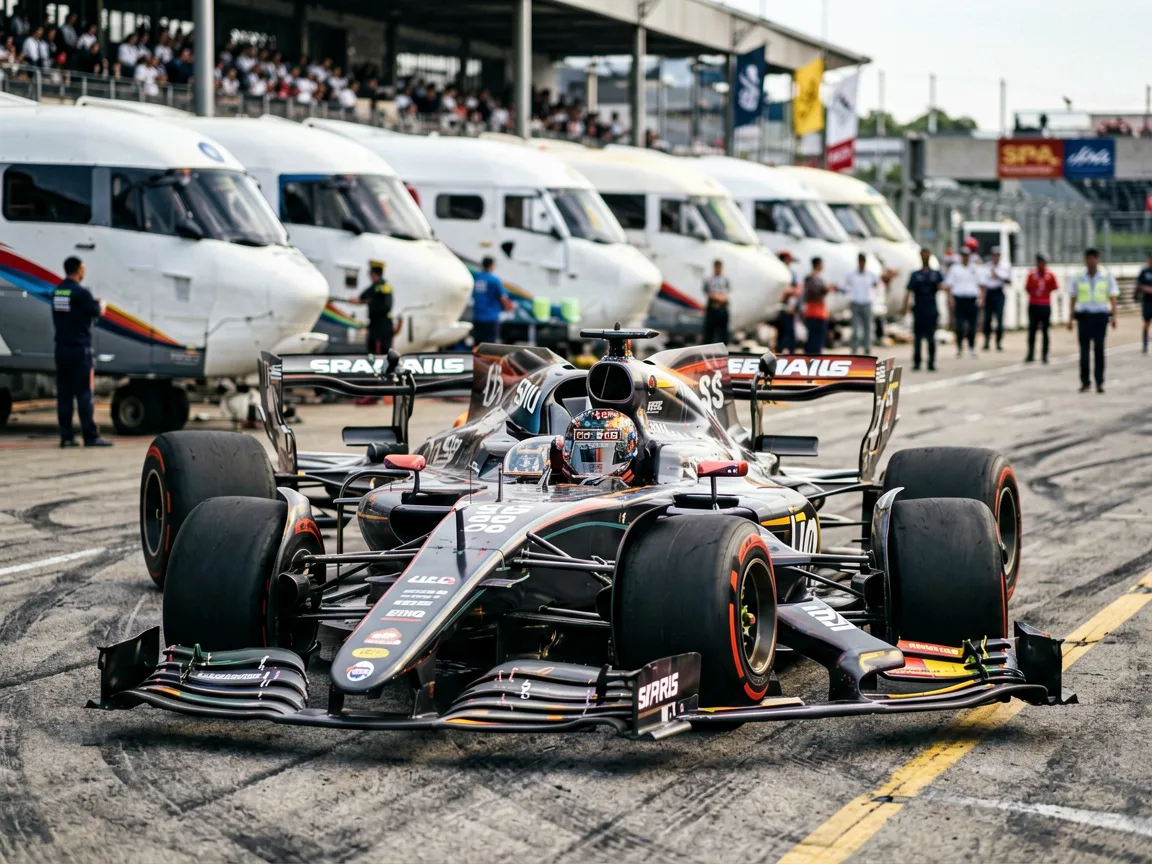
Verstappen's Future Dominates Spa Paddock as Silly Season Ignites
Max Verstappen's looming career decision hijacked the Spa paddock narrative as Formula 1's summer shutdown approaches.
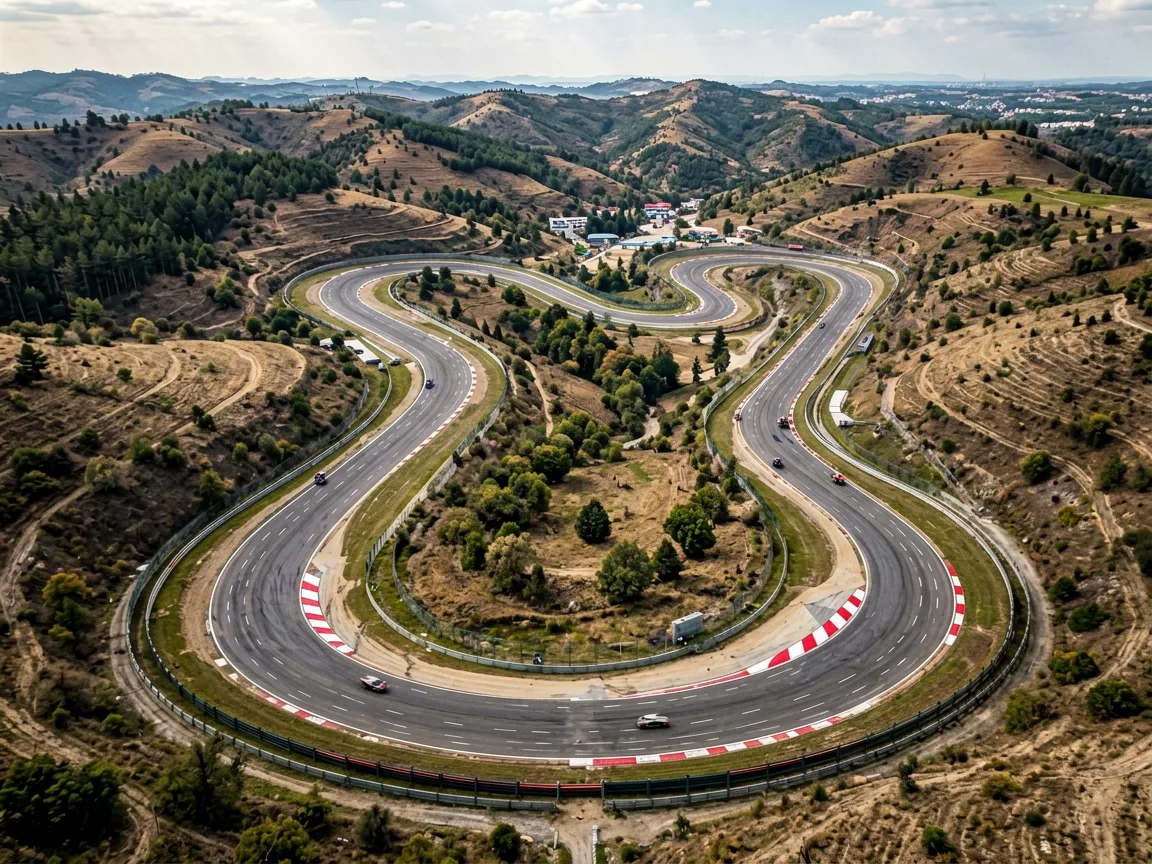
Hungaroring: Why F1's Tightest Purpose-Built Track Punishes Every Setup Compromise
Budapest's 4.381 km circuit demands peak downforce, punishes overheating rear tyres, and narrows the overtaking window to a single braking zone.