Libbok Handed Keys As Springboks Rewrite England Script
Manie Libbok takes the fly-half reins for South Africa against England, transforming a forced injury change into a tactical reset.
The silence inside the Springbok camp told its own story. Sacha Feinberg-Mngomezulu, the prodigy who had electrified the 10 jersey in recent weeks, was ruled out. A brutal blow. Or so it seemed on the surface.
By Tuesday, the narrative had pivoted entirely. Manie Libbok, the mercurial playmaker discarded for the rising star, was suddenly back in the spotlight.
He will start at fly-half for South Africa against England on Saturday. What looked like a crisis is now a calculated gamble. The Springboks haven't just replaced their injured conductor; they have changed the entire tempo of their orchestra.
The Prodigy Sidelined
Feinberg-Mngomezulu's breakthrough has been the story of the season. The 22-year-old brought a brash confidence to the Springbok backline, jaw-dropping footwork, and an audacious tactical kicking game that defied his limited test experience.
His absence against England is a genuine loss. Defenders hesitated when he had the ball. That split-second of uncertainty opened corridors for the lethal Springbok outside backs.
"Sacha gives you that X-factor, that unpredictable edge that keeps opposition defensive lines absolutely honest," a source close to the South African camp noted. "You can't coach that natural flair. You either have it or you don't."
But rugby waits for no one. A bruised body means a sidelined dream, at least for 80 minutes at Twickenham.
Enter the Magician
Libbok's demotion from the starting XV earlier in the season stung. The Stormers playmaker had been the primary architect of South Africa's attacking evolution, wearing the 10 jersey with genuine distinction throughout the previous Rugby Championship campaign.
His is a different alchemy entirely. Where Feinberg-Mngomezulu dances through contact, Libbok orchestrates from depth. His vision is telescopic. His left boot is a precision surgical instrument. If the young prodigy is a wildfire, Libbok is a controlled burn, methodically clearing the path for his forwards to dominate.
This selection against England is profoundly revealing. It signals that Springbok head coach Rassie Erasmus knows exactly what kind of game he wants to play in London.
Transfer Intel: The Tactical Shift
This isn't a like-for-like swap. The stats paint a stark picture of two different attacking philosophies.
- Libbok boasts an 82% goal-kicking success rate in major test matches this year
- Feinberg-Mngomezulu sits at 71%, relying more on open-play velocity
- Libbok averages 4.2 territorial kicks per test, prioritizing field position
- Feinberg-Mngomezulu averages just 2.1, trusting his broken-field runners to find space
Erasmus is trading chaos for control. Against an England side desperate to impose their own chaotic rhythm, South Africa are deliberately choosing ice over fire.
Behind the Deal: Erasmus' Ruthless Pragmatism
Consider the chess match unfolding from the moment Feinberg-Mngomezulu was confirmed unavailable.
Erasmus could have turned to a conservative game-manager, a steady hand to merely steer the ship. Instead, he turned to Libbok, a player whose attacking instincts border on the reckless.
The reason lies in the specific opponent. England under Steve Borthwick have built their resurgence on a suffocating kicking game and a monstrous forward pack. They want South Africa dragged into a tight, messy arm wrestle.
Libbok denies them that comfort. His willingness to launch the ball wide, to take the calculated risk, forces England's chasing wingers to think rather than simply sprint. It turns a brute-force contest into a game of reflexes.
"Rassie doesn't pick on reputation; he picks on the specific problem in front of him," an opposition analyst explained. "England want to fight in a dark alley. Libbok forces them out onto a well-lit street. It's a brutal tactical counter."
The Twickenham Cauldron
Make no mistake: this is a crucible moment for Libbok mentally, not just physically.
Twickenham has not been a happy hunting ground for Springbok fly-halves historically. The narrow pitch, the relentless aerial bombardment, the sheer physical hostility of the English defense—it all demands a pulse rate forged in steel.
Libbok's history in high-pressure situations is mixed. He engineered a famous comeback against the All Blacks in Johannesburg. He also squandered crucial points in tight series defeats away from home.
Saturday offers a defining verdict on his international trajectory. A commanding performance buries the memory of his earlier dropping. A failure to control the tempo raises uncomfortable questions about his ceiling.
The Pressure Points
- Goal-kicking under duress: England will test his nerve early from distance
- Defensive alignment: The English forwards will target the 10 channel with brutal clubbing runs
- Exit strategy: Libbok's kicking from his own 22 must be flawless against a lethal English chase
What England Gained—and Lost
Borthworth's England will be quietly relieved they don't face Feinberg-Mngomezulu. The young playmaker's unpredictable lines and offloading threat cause defensive systems to fracture in panic.
But they lose a distinct psychological advantage.
A rookie at 10 is a target. You rush him. You test his decision-making under extreme heat. Libbok, however, has absorbed every ounce of test-match heat imaginable. He has felt the weight of a Rugby World Cup final on his shoulders. You cannot rattle a man who has already survived that.
England's back row, so effective at getting in the faces of younger, less experienced fly-halves, will find a completely different proposition. Libbok reads the rush defense before it even launches. His distribution to the wide channels is lightning-fast, designed specifically to expose over-eager pursuit.
The Bigger Picture
Saturday's selection is a testament to the Springboks' staggering depth at the most pivotal position in the sport.
Most international teams lose their starting fly-half and plummet into existential dread. South Africa lose one magician and simply deploy another, with an entirely different spellbook.
This is the Erasmus project at its most refined. The system is tailored to survive any personnel loss because every replacement brings a different tactical dimension for opponents to solve.
What's Next
Libbok's performance against England will determine more than just one autumn international result. It will shape the Springbok selection landscape heading into a massive 2025 season.
If he orchestrates a victory, Erasmus faces a genuine selection headache. Does the prodigy walk straight back into the starting XV when fit? Or does the trusted veteran demand retention based on pure performance?
The cold reality of elite sport is that sentiment counts for nothing. Libbok knows this intimately. It's exactly why he was dropped in the first place.
Now he has 80 minutes to prove that control beats chaos. The stage is set, the pieces are moving, and the magician has the ball.
Editorial Integrity
This is an original SportPulse article written by our editorial team. All content is independently researched, written, and reviewed by our writers and editors before publication. We do not publish copied, aggregated, or syndicated content.
SportPulse is committed to original sports journalism. Read our editorial policy or contact us with any questions.
More Like This
All football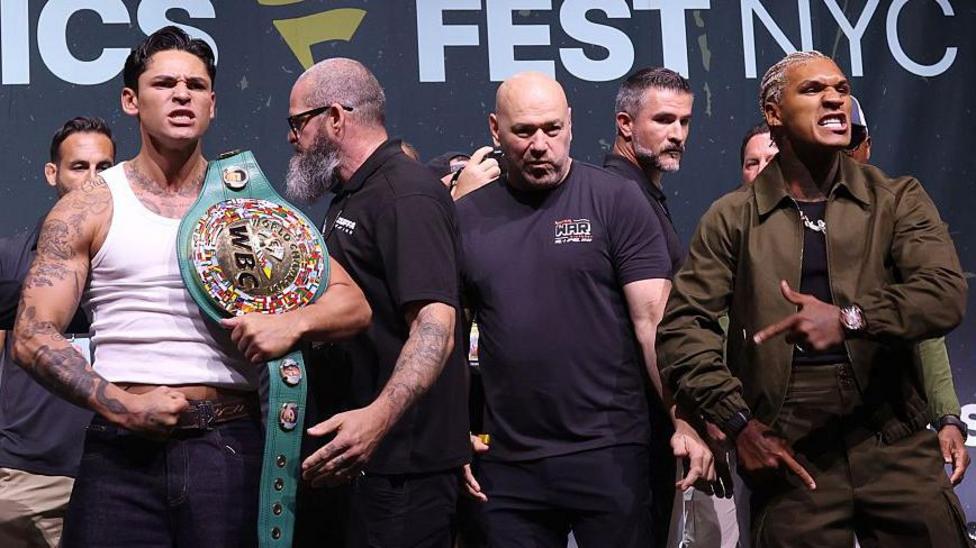
Security Intervenes as Benn and Garcia Explode at New York Media Day
Conor Benn and Ryan Garcia turned a routine press event into a chaotic scene requiring security intervention in New York.
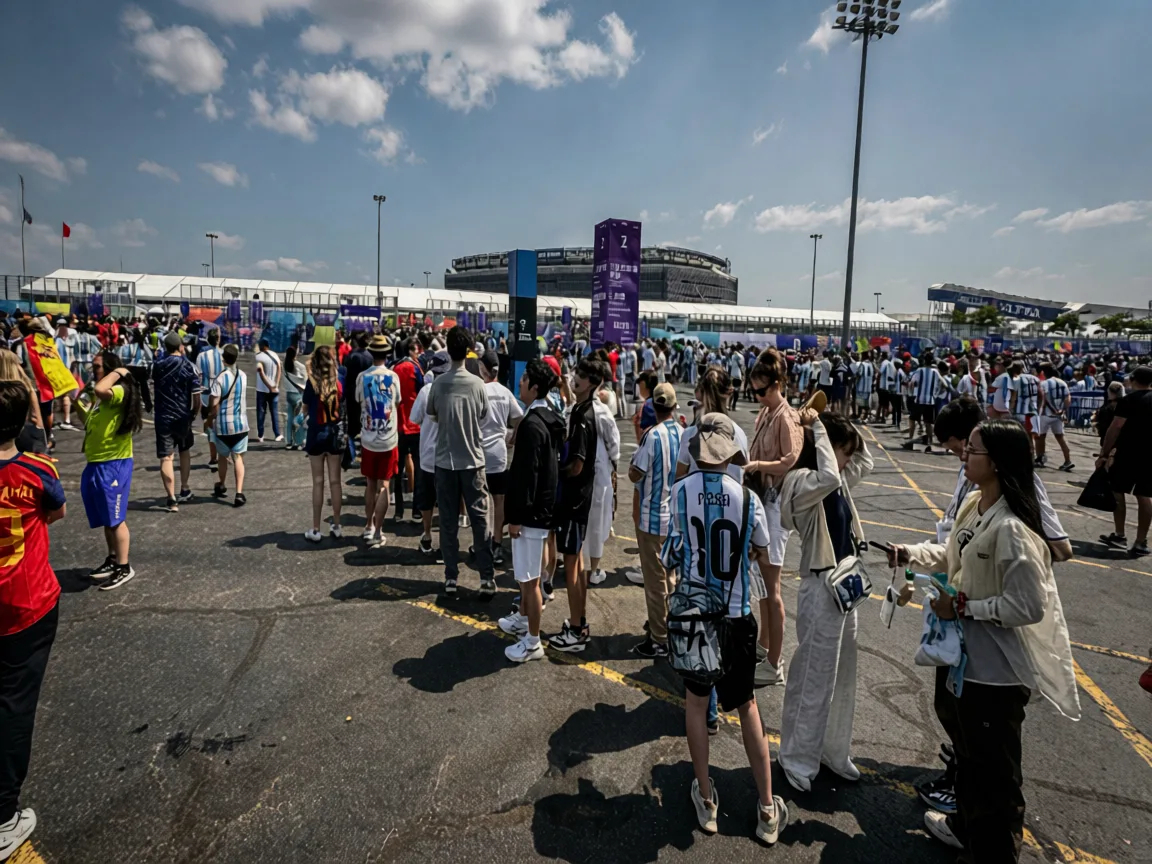
Two-Hour Queues and Lockdown: Trump Turns World Cup Final Into Security Ordeal
Fans face two-hour waits outside New York New Jersey Stadium as Trump's presence triggers unprecedented security for the 2026 World Cup final.

City Near Chelsea Payoff to Land Maresca
Manchester City are finalizing a compensation package with Chelsea after alleging Enzo Maresca breached his contract to open talks.