Mahrez Retires from Algeria Duty After World Cup Exit
Riyad Mahrez's international retirement after Algeria's World Cup defeat marks the end of a tactical era built around his right-flank superiority.
When Algeria line up for their next competitive fixture, the most significant absence will not be a body in the XI but the entire geometric framework that has defined Desert Foxes football for the past decade. Riyad Mahrez's retirement from international duty, announced in the wake of Algeria's 2-0 defeat to Switzerland in the World Cup round of 32, closes a tactical chapter that elevated a nation from African football's periphery to a continental throne.
The Switzerland defeat laid bare what had been quietly acknowledged by African football analysts: Algeria's system had become overly indexed on one player's capacity for individual brilliance. Mahrez was not merely the captain; he was the tactical strain that the entire formation was engineered to accommodate.
For much of his international prime, Algeria operated in a 4-3-3 or a situational 4-2-3-1 that functioned effectively as a 4-4-2 out of possession. The right flank was Mahrez's sovereign territory. Whether cutting inside on his favoured left foot to whip crosses or driving inside to combine with the striker, he was given the freedom to drift while the right-back tucked in to form a back three.
His 42 goals and 37 assists across all competitions for Algeria underline his statistical dominance. But the deeper story lies in the structure: Mahrez was asked to be the primary line-breaker in transition and the chief creator in settled possession.
When his pressing capacity waned, that system became a liability. Against Switzerland, Algeria's 4-2-3-1 morphed into something closer to a 4-4-2 defensive block. The Swiss midfield zipped the ball into the space between Algeria's lines.
The Burden of Creation
Algeria's second major issue was the asymmetry in their attacking structure. With Mahrez hugging the right touchline and 4-3-3 winger on the left expected to stretch play, Algeria's spacing often looked disjointed.
The central midfield pairing of Ismaël Bennacer and Nabil Bentaleb was tasked with covering enormous ground to balance the team. As Mahrez aged, his willingness to chase back diminished. The predictable chain-reaction left Bennacer isolated.
Algeria's 41% possession share against Switzerland told the story of a team that had lost its width and been dragged into a midfield battle.
Tactical Shift: The Switzerland Exposing
The round of 32 tie against Switzerland crystallized every latent flaw. Algeria set up in their familiar 4-2-3-1, with Mahrez nominally stationed on the right of the attacking three but given license to roam. Switzerland, managed with characteristic pragmatism, countered with a compact 4-4-2 diamond that deliberately flooded the central zones.
The Swiss midfield diamond outnumbered Algeria's double pivot, forcing Bennacer into a recurring overload. With Mahrez high and wide, Algeria's attack became elongated.
Switzerland's two goals both originated from turnovers where Algeria's mid-block failed to generate pressure on the ball. The first came from a switch of play that found the Swiss left-back in acres of space. The second was a direct ball over a stretched backline.
The verticality of the Swiss approach exposed Mahrez's positional indifference. When the definitive moment arrived, his influence waned.
A Generation's Open Button
Mahrez's retirement signals more than one superstar's withdrawal; it signals the end of an interconnected project. Algeria's historic 2019 Africa Cup of Nations triumph was built on a balanced collective that maximized Mahrez's strengths.
That system also relied on the mobility of a striker like Baghdad Bounedjah, whose runs opened space. As Bounedjah's own international contributions declined, the tactical ecosystem surrounding Mahrez frayed.
"After careful consideration and a lot of thought, I have decided to definitively end my international career."
The wording was cold, almost tactical. The 124 caps and 30 international goals represent a decade of service.
The End of the Continential Era
For most of his career, Mahrez thrived in a 4-3-3 at Leicester City and Manchester City that leveraged his one-on-one dominance. At City, Pep Guardiola asked him to exist within a more structured pressing framework.
In the international game, the elite coaching role has swung toward technical directors who must decide whether to maintain the old structure or rebuild.
The Burden of Succession
Replacing a player is one challenge; replacing a system is another. Algeria's next coach must decide whether to mould the existing talent into a 4-2-3-1 that maximizes different strengths.
The answer likely lies in a more symmetrical 4-3-3 or a 3-4-3 wing-back system that shares the creative burden.
Bennacer, now 27, remains the connector. But no Algerian attacker currently possesses Mahrez's capacity to win a match from nothing.
Roadmap: Rebuilding the Structure
Algeria's next competitive window marks a new tactical epoch. The Desert Foxes must reinvent themselves as a side that creates through structure rather than individual genius.
The upcoming AFCON cycle will be the proving ground. Should qualification falter, the full weight of Mahrez's absence will be felt. The tactical clock resets now.
Editorial Integrity
This is an original SportPulse article written by our editorial team. All content is independently researched, written, and reviewed by our writers and editors before publication. We do not publish copied, aggregated, or syndicated content.
SportPulse is committed to original sports journalism. Read our editorial policy or contact us with any questions.
More Like This
All football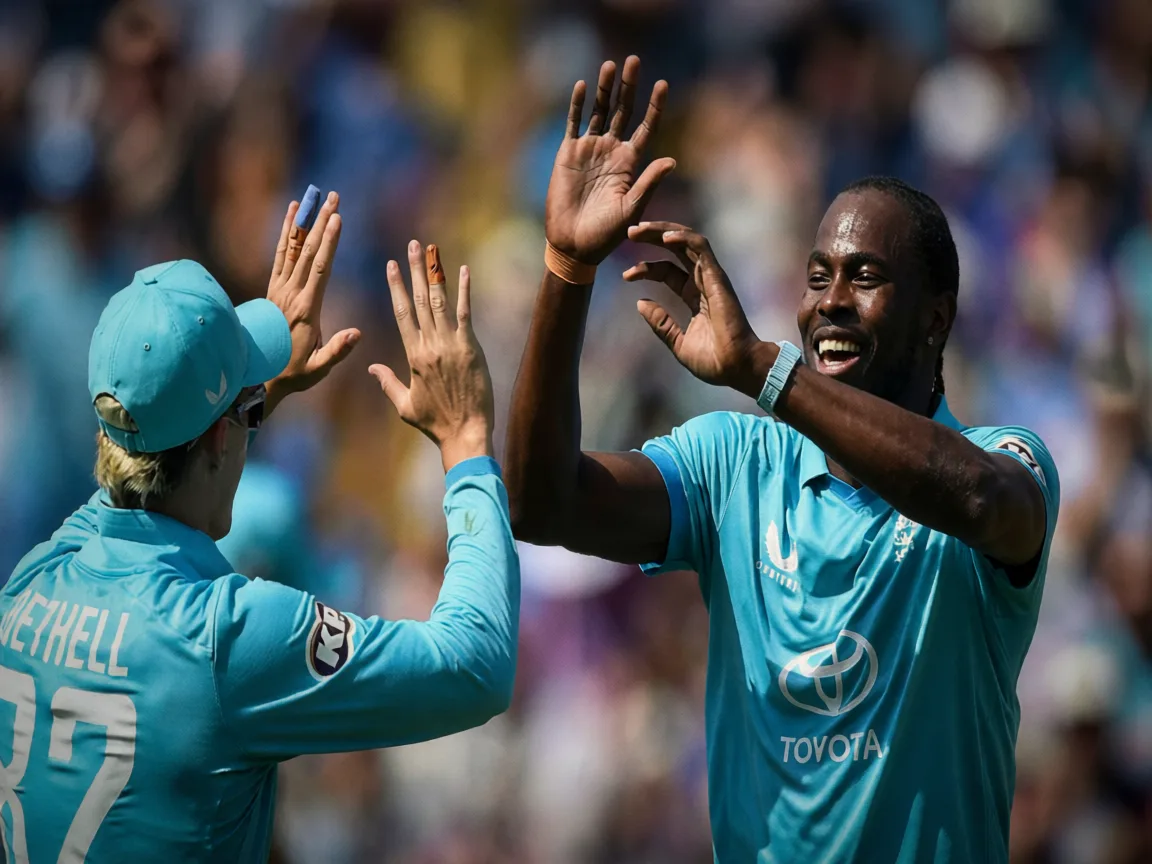
Archer and Rashid Combine to Outfox Kohli in Cardiff Thriller
Kohli survived a review only to fall next ball as Archer and Rashid delivered England a crucial breakthrough in Cardiff.
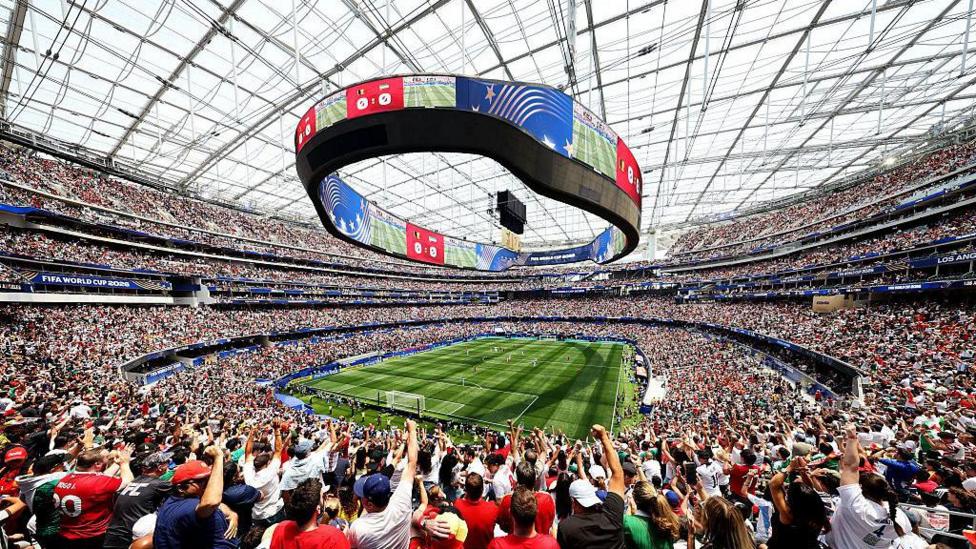
Ranking the 2026 World Cup Stadiums: Where Every Match Will Feel Like a Final
The 2026 World Cup spans 16 venues across three nations — here's where the magic will actually live.

From League Two to £116m: Anderson Becomes Britain's Most Expensive Player
Elliot Anderson's rise from Bristol Rovers loanee to British record transfer is football's most improbable ascent in years.