Marquez Commits to Ducati Through 2028
Marc Marquez extends his Ducati tenure to 2028, cementing a factory alliance built on aerodynamic supremacy and existential career stakes.
The announcement arrives not as a shock, but as the logical conclusion of a calculated reunion. Seven-time MotoGP world champion Marc Marquez has signed a new deal to remain with the Ducati Lenovo Team until 2028, extinguishing any remaining embers of the silly season rumor mill. This is far more than a routine contract extension. It is the definitive tactical realignment of a generational talent who realized his survival depended on adapting to the prevailing philosophy of the era, rather than forcing the era to adapt to him.
The Architecture of a Ducati Alliance
When Marquez first stepped onto a Desmosedici in 2024, it represented a profound ideological surrender. After years of extracting superhuman lap times from a recalcitrant Honda, the Spaniard finally acknowledged a truth the grid had long understood: the RC213V could no longer shoulder the burden of his angular, hyper-aggressive style. Ducati offered a contrasting paradigm—a seamlessly integrated ecosystem of aerodynamic efficiency, ride-height devices, and seamless power delivery.
The initial move was a deliberate step backward into the Gresini satellite squad, a low-pressure environment used as a tactical testing ground. That six-month probationary period functioned identically to a pre-season tactical camp in football. Marquez deconstructed his own muscle memory, systematically dismantling the survival instincts that had defined his Honda years. He learned to trust the front end of the Bologna bullet, reprogramming his brain to commit to corner entries without the micro-corrections that shattered his humerus at Jerez in 2020.
By mid-season, the adaptation was complete. The factory Ducati seat was his, confirming the architectural alignment between rider and machine. This extension to 2028 simply formalizes a hegemony that was already structurally inevitable.
The Metrics of Resurgence
The statistical payload of Marquez's Ducati transition tells a story of devastating efficiency:
- 3 race victories in his initial Ducati campaign, matching his cumulative Honda total from the previous three injury-plagued seasons combined
- Front-end crash rate reduced by an estimated 40%, a critical metric for a rider managing chronic bone and vision issues
- Average qualifying position improved from 9th (final Honda season) to 2nd (Ducati), immediately transforming strategic race opening phases
- Race pace delta to the leading sector cut from 0.8 seconds to under 0.2 seconds per lap
These numbers are not merely a reflection of regained physical health. They represent the structural advantage of deploying Marquez's unparalleled spatial awareness within a Motorcycle that actively manages its own physical platform through technical innovation.
The Desmosedici Ecosystem
To understand the significance of the 2028 timeframe, one must analyze the Ducati Corse philosophy. In modern MotoGP, the Italian manufacturer operates akin to a continental football club built on systemic dominance rather than individual brilliance. Gigi Dall'Igna has constructed a pyramid where aerodynamic grip, ground-effect downforce, and mechanical squat control generate a rideable torque curve. The rider is no longer required to violently manhandle the machine through corner transitions; they are instructed to execute clean inputs and let the aerodynamics delegate the physical workload.
Marquez spent a decade operating as the ultimate system-breaker—a singular talent who could force a slow, unpredictable machine to the front through sheer will and skeletal contortion. His move to Ducati represented the ultimate system-acceptance. He recognized that even his transcendent talent could no longer overcome a 15-horsepower deficit and a recalcitrant aerodynamic platform.
Signing through 2028 indicates that Marquez trusts the regulatory framework and Ducati's development trajectory to protect his physical integrity while maximizing his championship odds. It is a contract built on mutual systemic dependence.
Tactical Shift
The defining pivot of this narrative occurred not on a race track, but in the contractual landscape of the 2024 summer break. The turning point was Marquez's deliberate choice to sacrifice the psychological comfort of a satellite team for the ruthless demands of a factory seat.
Initially, the Gresini move was framed as a nostalgic return to the family atmosphere that defined his earliest career steps. The satellite environment offered structural freedom—no factory team orders, reduced media scrutiny, and the liberty to ride on pure instinct. However, to win championships in the current MotoGP climate, instinct is subordinate to information. Factory teams control the data pipeline.
When the factory Ducati ride opened up, Marquez executed his tactical shift. He abandoned the comfortable, low-pressure perimeter to enter the tactical center of the Ducati war room. This shift parallels a football manager abandoning a low-block counter-attacking system to embrace a high-possession, high-line pressing philosophy. It requires entrusting the system to protect you when the transition fails, rather than relying solely on individual recovery pace.
By committing to the factory squad, Marquez accepted the heavy tactical requirement of consistent point accumulation across sprint races and Sunday main events. He embraced the biological reality that his body could no longer absorb the punishment of overriding a flawed machine.
''This is the best project for me. I feel fresh and excited for this new challenge. When you feel the pressure, it is because you are in the right place.'' — Marc Marquez, on his factory Ducati promotion
That quote reveals a rider who views systemic pressure as a structural necessity, not an emotional burden. The factory environment forces precision. It demands adherence to the ride-height device deployment windows and the aero-setup permutations dictated by the pit wall, eliminating the chaotic, improvised riding style that sent him to the operating table.
The 2027 Regulatory Earthquake
The most fascinating element of this 2028 extension is what it implicitly guarantees: Marquez will lead Ducati through the most significant regulatory upheaval in modern MotoGP history. The 2027 season introduces a radical technical reset.
- Engine capacity reduced from 1000cc to 850cc
- Strict limitations on aerodynamic appendages, effectively banning the current winglet profiling
- Outlawing of ride-height and hole-shot devices entirely
This regulatory disruption perfectly mirrors the 2022 aerodynamic mandate in Formula 1, which reset the competitive order and forced teams to rethink aerodynamic philosophies from the ground up. By signing through 2028, Marquez is betting heavily that Ducati's engineering infrastructure—particularly the methodology of Dall'Igna—will navigate the technical reset more effectively than the prancing horses of Yamaha or the fading might of Honda.
The reduction to 850cc fundamentally alters the mechanical map of the series. It drastically reduces top-end horsepower, placing a premium on corner exit traction and mid-corner agility—attributes that disproportionately favor a rider with Marquez's historical spatial calibration. Furthermore, the removal of ride-height devices resurrects the importance of traditional rider weight distribution, an area where Marquez's obsessive on-bike body positioning has always provided a marginal advantage.
In this landscape, a contract through 2028 operates as a strategic option on the 2027 and 2028 seasons. Marquez secures the proverbial first seat on the grid for the new era, ensuring he is not locked out of the dominant technical package when the regulations inevitably shuffle the competitive hierarchy.
What the Future Demands
Looking forward, the Marquez-Ducati alliance faces immediate, pressing challenges. The intra-team dynamic at the factory squad is notoriously uncompromising. Pecco Bagnaia, a double world champion, possesses a fundamentally contrasting stylistic philosophy. Bagnaia rides with deliberate precision, relying on classical corner-speed geometry. Marquez deploys angular attack angles, heavily relying on rear-slide insertion.
Ducati's engineering corps must now manage a philosophical tectonic shift within the same garage. The data from Marquez's aggressive insertion points will clash with Bagnaia's smooth arcs. Resolving this technical dissonance without creating aerodynamic or mechanical compromises for either rider will test the limits of the team's strategic capability.
Furthermore, Marquez's physical longevity remains a lurking variable. A history of 4 major arm injuries and 1 episode of diplopia places a hard ceiling on how many highside impacts his body can reasonably absorb. The extension to 2028 represents a calculated wager that the Desmosedici's increasingly refined aerodynamic platform will continue to reduce the frequency of catastrophic crashes.
The upcoming technical reset guarantees an era of mechanical unpredictability. Marquez has cast his lot with the system he believes best equipped to survive it. The rider who once broke every system he touched has now fully embedded himself within the grid's most formidable one, betting that institutional engineering will succeed where sheer will ultimately could not.
Editorial Integrity
This is an original SportPulse article written by our editorial team. All content is independently researched, written, and reviewed by our writers and editors before publication. We do not publish copied, aggregated, or syndicated content.
SportPulse is committed to original sports journalism. Read our editorial policy or contact us with any questions.
More Like This
All long-reads
The Devil's Child: Inside the Fall of the Yakuza's Only Woman
Mako Nishimura broke into Japan's male-dominated underworld, only to be consumed by the same forces she sought to master.
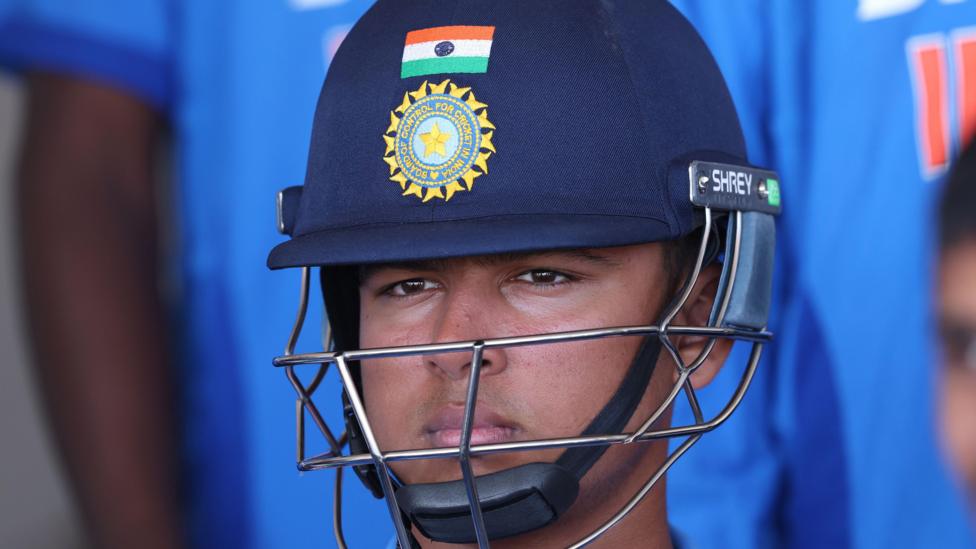
At 15, Sooryavanshi Steps Into India's Spotlight Against Ireland
A 15-year-old prodigy is about to wear India colours, and the cricket world is watching with held breath.
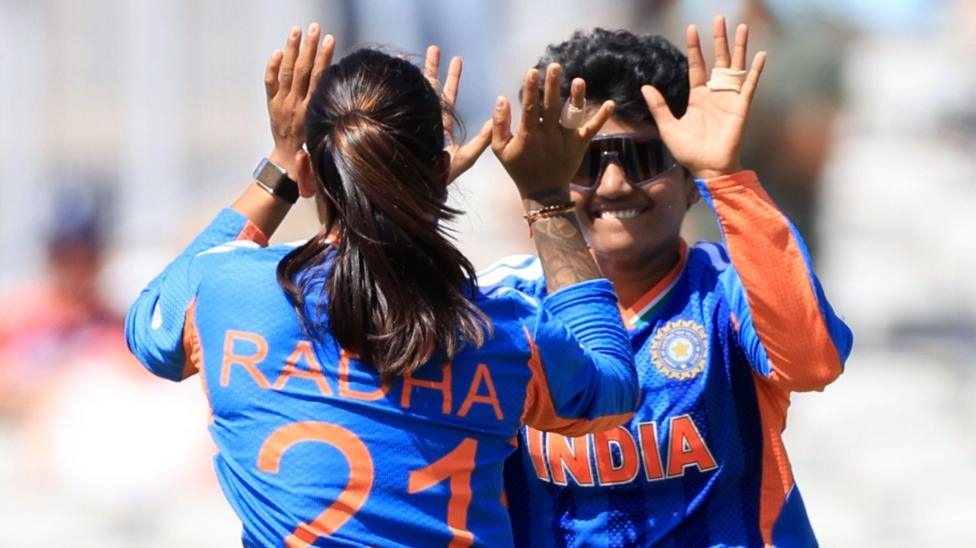
Verma's Fifty Ignites India: A Tactical Dissection
Shafali Verma's 53 ensures India's semi-final hopes hinge on a must-win clash against Australia.