The Teacher Behind Argentina's Twin Talents: How Maths Shaped Álvarez and Fernández
A schoolteacher from Argentina unknowingly helped shape two World Cup winners now chasing glory again.
The Classroom Before the Cathedral
When Luciana Alvarengue sat down to watch the 2022 World Cup final between Argentina and France, she wasn't just watching the Albiceleste chase a third star. She was watching two former students. Enzo Fernández and Julián Álvarez, midfield engine and striking dynamo respectively, both once sat in her maths class. The game ended 3-3 after extra time before Argentina prevailed on penalties, and somewhere in Argentina, Alvarengue's son turned to her and said: "Mamá, there are your students."
It's the kind of story that feels almost too cinematic to be real. Two boys from the same school, taught by the same teacher, lifting the most coveted trophy in sport on the same December night in Lusail. Yet that is precisely what happened, and as both players now eye the 2026 World Cup in the United States, Mexico, and Canada, the arc of their shared journey deserves more than a passing human-interest footnote. It deserves a proper tactical and contextual examination.
From the Same Soil
The connection between Fernández and Álvarez runs deeper than a shared classroom. Both products of River Plate's famed academy system, they represent perhaps the most significant dual export from the Buenos Aires giants since the club's conveyor belt of talent became one of South America's most prolific. Álvarez, born on January 31, 2000, is roughly a year older than Fernández, who arrived on January 17, 2001. Their time at River overlapped, and their rise through the academy ranks was nearly parallel.
Álvarez broke through first. His blistering 2021 season with River Plate, where he scored 18 goals in 21 league matches, caught the attention of European scouts en masse. Manchester City secured a deal reportedly worth around €21.4 million in January 2022, though he remained in Buenos Aires until the summer. Fernández's trajectory was slightly delayed but equally explosive. He earned a move to Benfica in the summer of 2022 for approximately €10 million plus add-ons, a figure that would look absurdly modest within six months.
"They are still my students, even if they are no longer in the classroom," Alvarengue says. The sentiment is touching, but it also hints at something deeper: the formative environment that shaped two of the most technically intelligent players in the modern game.
The Tactical DNA
Here is where the maths teacher connection becomes more than a charming anecdote. Both Fernández and Álvarez are defined by qualities that feel almost algorithmic: spatial awareness, pattern recognition, and the ability to process information faster than their opponents.
Fernández's game is built on geometry. His passing range at Chelsea, where he moved in January 2023 for a then-Premier League record fee of £107 million, is predicated on angles that most midfielders simply don't see. During the 2022 World Cup, he averaged 5.8 progressive passes per 90 minutes, a figure that placed him among the tournament's elite ball-progressors. His ability to receive on the half-turn and immediately identify the highest-value pass is a cognitive skill as much as a technical one. You don't teach that in a maths class, perhaps, but the foundations of spatial reasoning and logical sequencing are not irrelevant.
Álvarez, meanwhile, is a striker who plays like a system analyst. His movement patterns at Manchester City under Pep Guardiola, where he won a historic treble in his debut season of 2022-23, were not random. His pressing triggers, his diagonal runs to create space for teammates, his tendency to drift into half-spaces rather than occupying traditional centre-forward positions, all reflect a player who understands the geometry of attacking football at an elite level.
The numbers support this. Across his time at City, Álvarez posted 20 goals and 8 assists across all competitions in his second season (2023-24), while maintaining a pressing success rate that ranked him among the top forwards in the Premier League. His transfer to Atlético Madrid in the summer of 2024 for approximately €95 million was not a step down but a lateral move into a system that would demand even more tactical versatility from him under Diego Simeone.
Two Paths, One Origin
What makes the Fernández-Álvarez story genuinely remarkable is not that two talented players emerged from the same school, but that they did so while occupying entirely different roles in the same national team. Fernández is Argentina's tempo-setter, the deep-lying playmaker who dictates the rhythm of possession. Álvarez is the pressing forward, the first line of defence who turns defensive actions into attacking transitions.
Together, they represent two halves of the same tactical equation that Lionel Scaloni solved to win the 2022 World Cup. In Qatar, Fernández was named the tournament's Best Young Player, a recognition of his composure in midfield across seven matches. Álvarez scored four goals in the tournament, including strikes against Australia and Croatia, earning his place as one of the breakout stars.
Their complementary skill sets are not coincidental. River Plate's academy has long prioritised technical intelligence over raw athleticism, and the fact that both players adapted to European football with minimal transition periods speaks to the quality of their formative years. It also speaks to the environment in which they learned, one that included teachers like Alvarengue.
The Bigger Picture for 2026
Argentina enter the 2026 World Cup cycle as defending champions with an ageing core. Lionel Messi will be 39 by the time the tournament kicks off. Ángel Di María has retired from international duty. The question of who carries the torch is no longer hypothetical.
Fernández, who will be 25, and Álvarez, who will be 26, are the obvious answers. Both are entering the prime years of their careers at top European clubs. Fernández has endured a turbulent period at Chelsea, where managerial instability and squad turnover have made consistent performances difficult, but his quality remains undeniable. At Atlético Madrid, Álvarez is flourishing in a system that demands exactly the kind of relentless, intelligent movement that defines his game.
Scaloni's challenge will be building the next iteration of Argentina around these two pillars while integrating emerging talents from the domestic league and Europe's smaller competitions. The 2024 Copa América triumph, where Argentina beat Colombia 1-0 in the final, offered a glimpse of this transition. Fernández and Álvarez were central figures, with the midfielder orchestrating play and the forward stretching defences.
The Bottom Line
The story of Luciana Alvarengue and her two famous former students is, at its heart, a reminder that elite athletes are not manufactured in academies alone. They are shaped by communities, by classrooms, by the people who teach them to think before they learn to play. Fernández processes passing lanes like a mathematician solves equations. Álvarez reads defensive structures like a logic puzzle.
Argentina's bid to become the first team since Brazil in 1962 to retain the World Cup will rest heavily on the shoulders of these two players. Their shared origin story is charming. Their shared quality is what makes the Albiceleste's future genuinely frightening for the rest of the world.
As Alvarengue puts it, they are still her students. The next lesson begins in June 2026.
Editorial Integrity
This is an original SportPulse article written by our editorial team. All content is independently researched, written, and reviewed by our writers and editors before publication. We do not publish copied, aggregated, or syndicated content.
SportPulse is committed to original sports journalism. Read our editorial policy or contact us with any questions.
More Like This
All football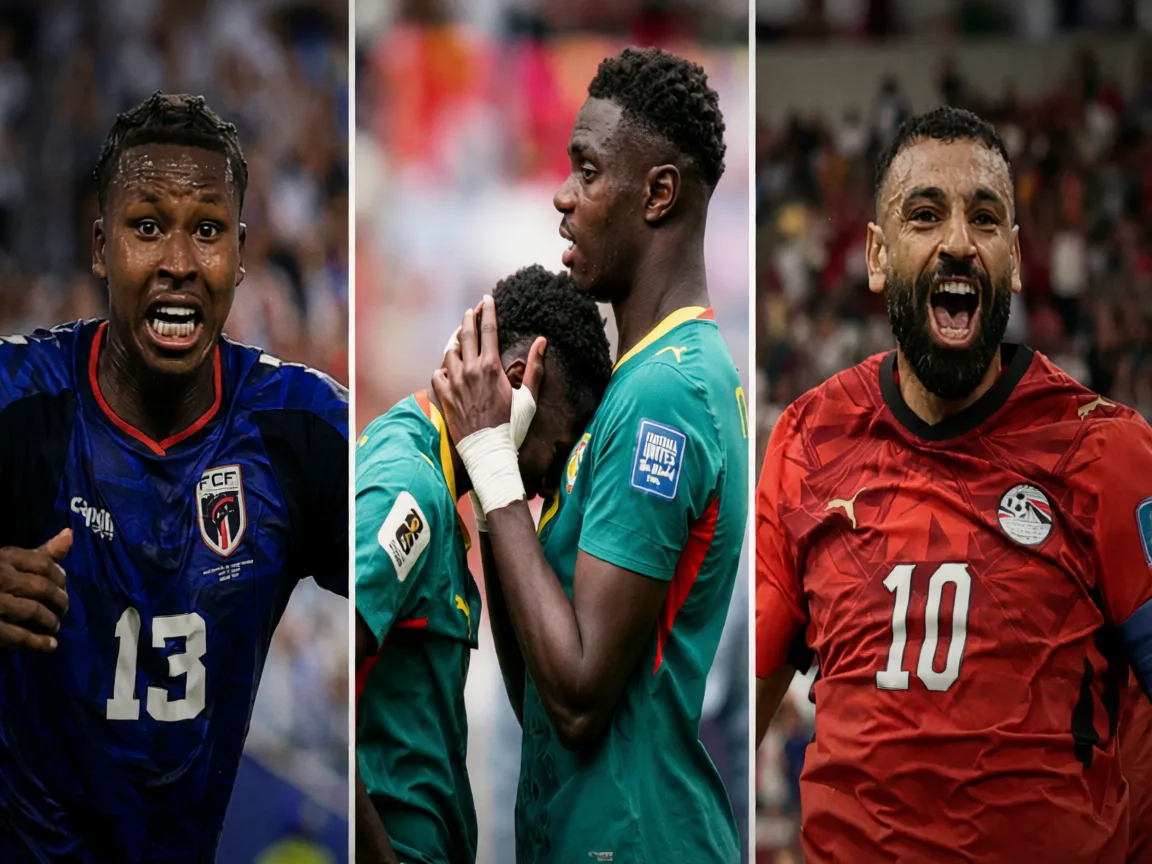
Africa's 2026 World Cup: Late Heartbreak and Blue Shark Magic
Nine African teams. Five eliminated by late goals. Cape Verde's fairytale run defined the continent's most painful tournament yet.

De la Fuente's Spain Back Themselves Against Tournament Favourites France
Spain's midfield-driven quarter-final win over Belgium sets up a fiery semi-final clash with France in Dallas.

Davies Absence Exposes Canada's Tactical Fragility in World Cup Exit
Canada's World Cup elimination without Alphonso Davies against Morocco reignites fierce debate over the star's injury management.