Mbappe's Thunderbolt Sums Up France's Evolving Blueprint
Kylian Mbappe's long-range stunner against Iraq highlights his expanding tactical repertoire and France's shifting attacking paradigm.
A New Weapon in the Arsenal
Kylian Mbappe has built a career on exploiting the final ten yards of the pitch. Breakaway speed, devastating close-range finishing, and an almost unfair capacity to shift through gears have made him the most feared forward in world football. But against Iraq, the French superstar offered a stark reminder that his game is no longer constrained by the penalty area.
His opening goal, a ferocious, swerving drive from outside the box, was the defining moment of the fixture. It was the kind of strike that forces opposition coaches to rip up their tactical boards. If you cannot press him high and you cannot drop deep to suffocate his runs, what exactly is the defensive prescription?
One touch to set, the next to unleash. The ball barely deviated from its violent, parabolic trajectory before stitching into the back of the net. It was a goal of pure, unadulterated violence, but also one born of calculated evolution.
The Evolution of a Predator
For years, the book on defending Mbappe was straightforward: force him wide, show him onto his right foot, and deny him the half-yard of space in the central channels. Defenders sat deep, terrified of the pace over the top. The byproduct of that defensive cowardice was an ocean of space opening up between the midfield and the defensive line.
Mbappe has spent the last eighteen months methodically learning to punish that specific tactical compromise. During his final season at Paris Saint-Germain, the shift became quantifiable. His shot map began to resemble a scatter diagram rather than a clustered heat map around the six-yard box.
Consider the data from his recent campaigns. In Ligue 1 last season, 37% of his shot attempts originated from outside the penalty area, a notable uptick from 28% two seasons prior. His expected goals (xG) per shot from distance jumped from 0.07 to 0.11, indicating a shift from speculative, pressure-relief efforts to genuine, calibrated goal-threat.
Against Iraq, that calibrated threat became a tangible reality. The Iraqi defensive block dropped to the edge of the eighteen-yard line, prioritizing stopping the sprint. Mbappe recognized the geometry, accepted the invitation, and pulled the trigger.
The Technical Breakdown
The strike itself was an exercise in biomechanical efficiency.
- Touch count: Two. The first to control, the second to shoot. Zero friction.
- Ball speed: Estimated at 78 mph upon impact.
- Starting position: Approximately 24 yards from goal.
- Approach angle: Slightly arc-shaped, opening his hips to generate maximum hip rotation and follow-through.
There was no wind-up, no telegraphed backlift. The power came from the sheer snap of the kinetic chain, transferring energy from his core through his striking foot. The goalkeeper was given roughly 0.3 seconds to react, an impossible task when the ball is moving with that combination of velocity and late movement.
You cannot defend against a player who beats you in a phone box and beats you from the next postcode. That is the Mbappe problem in its simplest terms.
The Bottom Line: Mbappe's expanding shooting range transforms him from a transitional threat into a half-space assassin. Defenders who retreat now face a different kind of executioner.
France's Structural Shift
Didier Deschamps has never been mistaken for a tactical radical. His France tenure has been defined by pragmatism, defensive rigidity, and a willingness to cede possession in favor of devastating transitions. The 2018 World Cup triumph and the 2022 final run were built on the bedrock of a deep-lying midfield and merciless counter-attacks.
But the landscape of international football is shifting. Germany, Spain, and England are pushing their defensive lines higher, employing aggressive pressing triggers. To combat this, France requires flexibility. They need ways to break down mid-blocks without abandoning their fundamental defensive structure.
Mbappe's willingness to shoot from distance is the cheat code. It forces the opposition's midfield to step out and close him down, which in turn creates vertical passing lanes for the lightning-quick runners surrounding him. Against Iraq, the goal was the headline, but the broader tactical impact was equally significant. The Iraqi midfield was suddenly caught in two minds, unsure whether to stick to their compact shape or engage the dangerman 25 yards from goal.
This hesitancy is precisely what Deschamps craves. It creates the micro-lag in defensive synchronization that players like Antoine Griezmann—who continues his metamorphosis into a deep-lying orchestrator—can exploit with surgical through-balls.
Verdict: France are no longer just a counter-attacking menace. With Mbappe pulling the trigger from deep, they possess the tactical tools to dismantle parked buses without changing their underlying identity.
The Opponent's Dilemma
Iraq arrived with a game plan typical of underdogs facing heavyweight opposition. Sit deep, maintain numerical superiority in the central zones, and pray the opposition's finishing abandons them. It is a strategy that has frustrated better teams than this iteration of Iraq.
But Mbappe's goal exposes the fundamental flaw in low-block defending against modern, multi-faceted attackers. By conceding the space outside the box, teams are essentially playing Russian roulette. The odds might favor the defender over a 90-minute sample, but the penalty for losing that gamble is catastrophic.
Iraq's midfield shield, deployed to cut off the central supply lines to the forwards, was rendered irrelevant by the sheer velocity of the strike. By the time a recovering midfielder attempted to close the angle, the ball was already past the goalkeeper.
This is the new reality of elite football defense. Aggression is mandatory. Passive containment is a losing equation. You must step to the shooter, risk the one-on-one beat, and force them into uncomfortable decisions. Failing that, you accept your fate as target practice.
The Escaping Pressure
What made the goal particularly demoralizing for Iraq was the sequence leading up to it. France had just begun to circulate the ball with a hint of frustration. The defensive lines were compact, the lanes were plugged. Mbappe's willingness to pull up and strike was born of recognition rather than impatience. He saw the block had settled and elected to hammer it apart.
The Bottom Line: Low-block defending relies on the premise that teams lack the individual brilliance to break the structure from range. Mbappe renders that tactical premise entirely obsolete.
Implications for the Road Ahead
This match was a routine international fixture, but the goal was a statement of tactical evolution. Mbappe is adding layers to a game that already appeared maxed-out in transition.
For France, the upcoming international schedule presents a series of opponents who will adopt varying degrees of defensive cowardice. When the European Championship rolls around, the ability to score from distance is not merely an aesthetic bonus. It is a tactical requisite against top-tier opposition.
The best teams in international football will not afford Mbappe the green grass he thrives on. They will congest the final third. They will force the ball to his feet in pockets of minimal space. His performance against Iraq proves he now possesses the toolkit to punish them regardless.
Football's tactical pendulum is swinging. High-pressing, aggressive defending is the new orthodoxy, designed to suffocate creators at source. Mbappe's response is a shrug and a thunderbolt from 25 yards. You cannot press what you cannot reach. You cannot suffocate a talent that refuses to be contained by conventional geometry.
The era of Mbappe the pure sprinter is over. Welcome to the reign of Mbappe the complete attacking threat.
Editorial Integrity
This is an original SportPulse article written by our editorial team. All content is independently researched, written, and reviewed by our writers and editors before publication. We do not publish copied, aggregated, or syndicated content.
SportPulse is committed to original sports journalism. Read our editorial policy or contact us with any questions.
More Like This
All football
Villa Land Vangsgaard From Juventus in WSL Statement Move
Aston Villa secure Denmark striker Amalie Vangsgaard from Juventus, injecting elite European experience into their WSL attack.
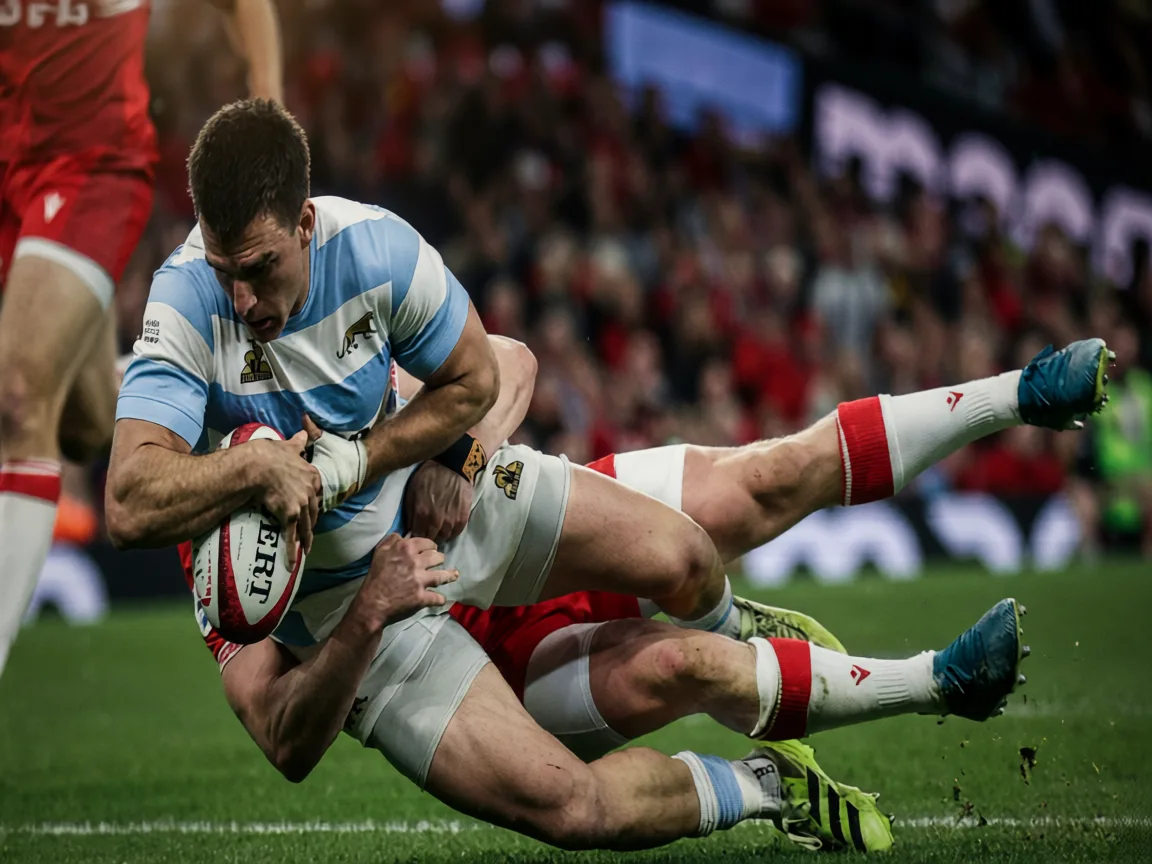
Wales Hunt Revenge Against Pumas After Cardiff Humbling
Steve Tandy's Wales face Argentina seeking redemption after November's Principality Stadium collapse left fans stunned.

Champions St Mirren Cruise as Linlithgow Rose Stun Morton
St Mirren's Premier Sports Cup defence begins with a 4-0 dismantling of Dumbarton while Lowland League Linlithgow Rose pull off the upset of the round at Greenock Morton.