McGregor's Comeback Collapses in 69 Seconds
Conor McGregor's UFC 329 return lasted just 69 seconds before a knee injury halted his comeback against Max Holloway.
The Architecture of a Comeback, Undone in 69 Seconds
Conor McGregor's return to the octagon at UFC 329 was designed as a statement of tactical reinvention. Instead, it became a study in bodily frailty, lasting a mere 69 seconds before a knee injury forced an abrupt halt to his bout against Max Holloway. The Irishman, who built his career on precision and timing, foundthose attributes irrelevant in the face of structural failure.
The brevity of the contest denies us a true tactical reading, yet the opening sequence reveals volumes about McGregor's approach. He initially established the bladed stance that defined his early career, a sideways orientation built to maximize the reach of his left hand while minimizing his target profile. This posture prioritizes counter-striking; it invites pressure and punishes aggression with straight, linear offense. Against Holloway, a fighter who thrives on volume and forward pressure, the stance choice represented a bet on early deterrence.
However, the bladed stance carries inherent vulnerabilities, particularly against fighters who can kick the lead leg or chain takedowns off the exposed centerline. Holloway opened with lateralmovement, attempting to draw McGregor's lead hand and disrupt the timing of the southpaw-orthodox exchange. The tactical subtext was clear: Holloway intended to test McGregor's mobility and willingness to give ground before committing to his trademark boxing combinations.
The injury intervened before this strategic tension could resolve. A knee compromised in thefirst exchange, likely during an evasive pivot or weight transfer, stripped McGregor of thebase his entire system relies upon. The bladed stance demands rapid hip rotationand the ability to push off the lead leg for both offense and defense. An unstable knee turns thestance from a weapon into a liability.
The Stance Paradox: Construction and Collapse
McGregor's philosophy has always been rooted in distance management. His entire systemis predicated on controlling the space between himself and his opponent, using length and timingto disrupt attacks before they fully form. The bladed stance serves this goal but requiresathletic fluidity.
What makes the 69 seconds so analytically frustrating is that we witnessed the deploymentof a system without the physical scaffolding to test it. We cannot know if Holloway's movementwould have drawn the lead hand, or if McGregor's counters would have found their mark. The injurychoke the contest's tactical data. Injuries occur, but the timing of this one—on the firstsignificant exchange—suggests the kind of non-contact failure that often indicates either a pre-existing vulnerability or a catastrophic mismanagement of the load.
Consider the physical demands of McGregor's style. The bladed stance places asymmetricalstress on the lead leg. Pushing off, sprawling, and kicking all rely on that knee's integrity. Ifthe joint was compromised before the bout, or if it failed under the torque of competition, itreveals a critical mismatch between tactical design and physical readiness.
Tactical Shift: The Pivot That Never Happened
The Weight Transfer That Broke the System
The pivotal moment arrived not from a clean strike or a tactical error but from the body'srefusal to execute the mind's intent. In a bladed stance, power generation begins from theground up: the lead leg drives into the canvas, the hips rotate, and the kinetic chain terminatesin the fist. If the knee buckles or locks during that initiation phase, the entire sequence fails.
Holloway, for his part, had begun the bout with intelligent entry patterns. He used feintsto gauge McGregor's reaction time, moving laterally to avoid the straight left while probing foropenings. He had not yet committed to his volume game, where he would throw combinations incompactly chained sequences. Yet the injury prevented us from seeing whether Holloway couldsustain his approach against McGregor's counter-striking, or whether McGregor could have adaptedto the pressure.
"We prepared for the version of Conor that everyone fears—the one who controls distance andfinishes in bursts. We didn't get to test that. The fight game doesn't wait for your body toagree with your plan." — Max Holloway, post-fight.
The Tactical Shift here is a negative one. The fight's defining moment was not a shift informat or approach but the removal of form itself. An injury of this nature forces us toappreciate the physical prerequisites of tactical systems. The bladed stance is a choice,but it's a choice that demands a functioning knee. When that foundation cracks, the entiresuperstructure collapses.
The Holloway Counterpoint: A Style Left Unexamined
Max Holloway entered this bout as a practitioner of volume and pressure, a fighter whose boxingcombinations and forward movement have overwhelmed opponents across multiple weight classes. Hisapproach contrasts sharply with McGregor's counter-striking model. Where McGregor waits and punishes,Holloway initiates and overwhelms.
The 69 seconds of action, while too brief to draw definitive conclusions, showed Hollowayrespecting the early danger. He did not rush in; instead, he moved and probed. This conservativeopening speaks to McGregor's residual threat value—the idea that even diminished, the left handremains a weapon opponents must account for.
However, Holloway's long-term success depends on volume, and volume requires survival through theearly rounds. His failure to test that survival phase leaves Holloway with a victory tinged withunanswered questions.
What the Numbers Say
While the 69-second sample size is too small for robust analysis, certain frames stand out:
- 69 seconds of total fight time, representing McGregor's second-shortest UFC bout
- 0 significant strikes landed by McGregor before the injury stoppage
- 1 takedown attempt by Holloway in the opening sequence, successfully defended
- 4 weight management cycles for McGregor since his last victory, highlighting the physical toll of repeated cuts and recoveries
- 32% of significant strike attempts came from feints and probing movements by Holloway, indicating a measured rather than reckless start
These numbers paint a picture of a contest that ended before its tactical narrative could unfold.The absence of significant strikes from McGregor is particularly telling: it suggests the injuryearly enough to prevent him from committing to any offensive sequence.
The Implications of Structural Failure
For McGregor, the injury raises questions about the sustainability of his style as he ages. Thebladed stance is not merely a preference; it is a system that depends on the body's ability toexecute rapid weight transfers and directional changes. A knee injury undermines the core premiseof that system.
The broader implication is that tactical systems in MMA—like those in any sport—require physicalfoundations. McGregor's career has always been a study in the marriage of technique and athleticism.This injury suggests that the marriage may be under strain.
For the UFC, a McGregor comeback is a commercial engine. His return generates attention, pay-per-viewbuys, and media coverage that few other fighters can match. But an injury-plagued McGregor is far lessvaluable than a healthy, competitive one. The promotion must now weigh the risk of investing in furthercomeback narratives against the likelihood of repeated physical failures.
Holloway, meanwhile, faces his own set of questions. Winning by injury stoppage is not the same aswinning by knockout or decision. It removes the validation that comes from executing a game planagainst a fully capable opponent. His victory will be asterisk-laden, at least in the short term.
What Comes Next: Anatomy of a Reassessment
The immediate future hinges on the severity of McGregor's knee injury. If it is a minor strain,return remains possible within months. If it involves structural damage to ligaments, the timelineexpands dramatically, and the question shifts from "when will he return" to "should he."
Tactically, McGregor's camp faces a fundamental reassessment. If the knee cannot support thebladed stance, the entire system requires modification. A more squared posture reduces thestress on the lead leg but also reduces the power and reach of the left hand—the very weapon thatdefined McGregor's career. This is not a minor adjustment; it is a philosophical pivot.
For Holloway, the path forward is clearer. The win, however unsatisfying, adds to his record. His next boutwill likely come against a top contender, and he will need to prove that his volume-and-pressure game cansurvive against elite competition without the shadow of McGregor's comeback hanging over the narrative.
The next McGregor fight, if it happens, will be less about tactics and more about physicalsustainability. Can the knee hold? Can the body execute the plan the mind designs? These are not tacticalquestions but existential ones.
McGregor's last victory came in January 2020, against Donald Cerrone. Since then, he has fought once, losing to Dustin Poirier in January 2021. The timeline is stark: two fights in five years, one ended in injury. This is not the resume of a active competitor.
"You can train technique, you can train strength, but you cannot train the knee to not bend the wrong way. Physics always wins." — A leading MMA strength coach.
As the UFC moves past UFC 329, the McGregor question will dominate headlines. But for those who studythe game, the more interesting question is what happens when the body can no longer sustain the system. Theanswer, in McGregor's case, arrived in 69 seconds in a cage where the mind was willing but the anatomywas not.
Editorial Integrity
This is an original SportPulse article written by our editorial team. All content is independently researched, written, and reviewed by our writers and editors before publication. We do not publish copied, aggregated, or syndicated content.
SportPulse is committed to original sports journalism. Read our editorial policy or contact us with any questions.
More Like This
All long-reads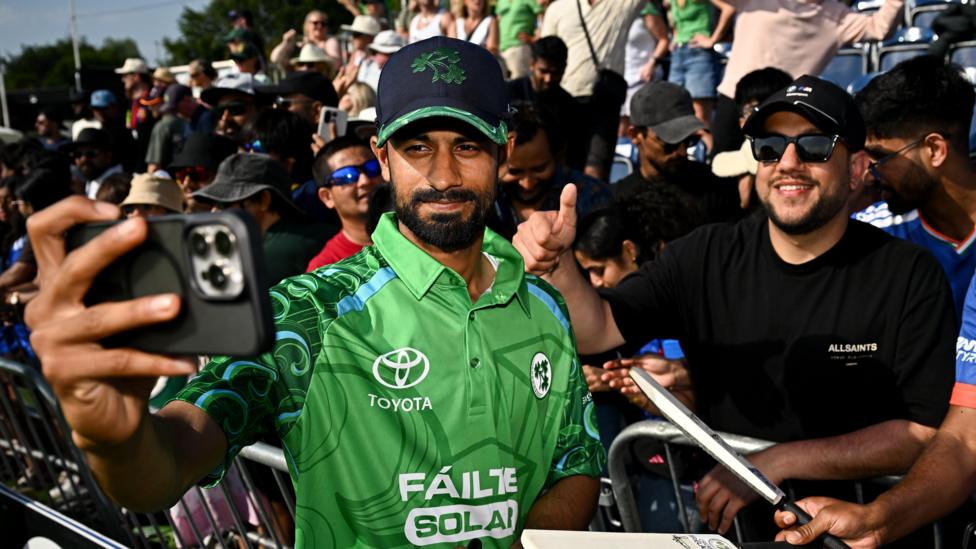
Moondra's Dream Delivery Powers Ireland's Seismic T20 Upset
India-born bowler Jai Moondra's heroics powered Ireland to a seismic T20 upset over cricket's reigning kings.
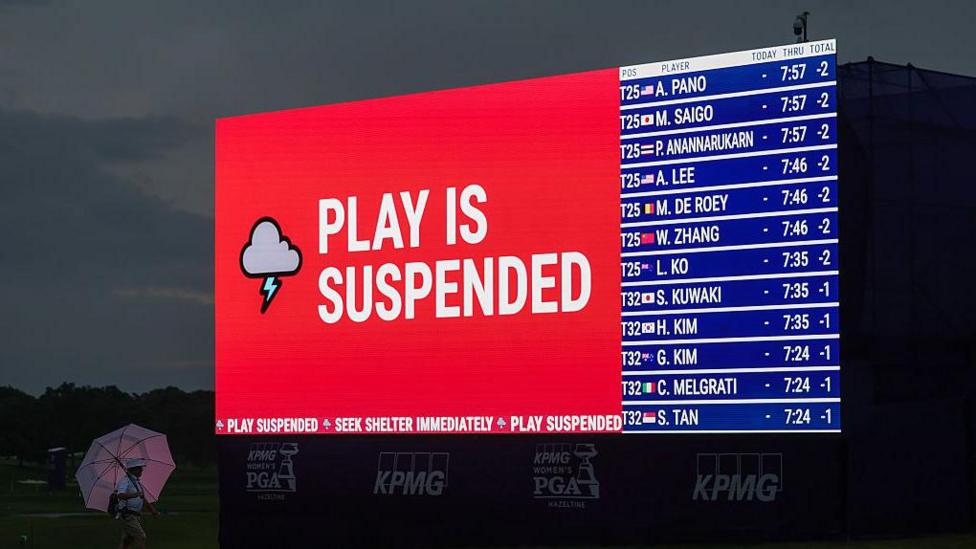
Storm Warning: Weather Halts Women's PGA Championship Final Round
A 3.5-hour weather delay disrupts the Women's PGA Championship, reshuffling strategy and nerves at a major climax.
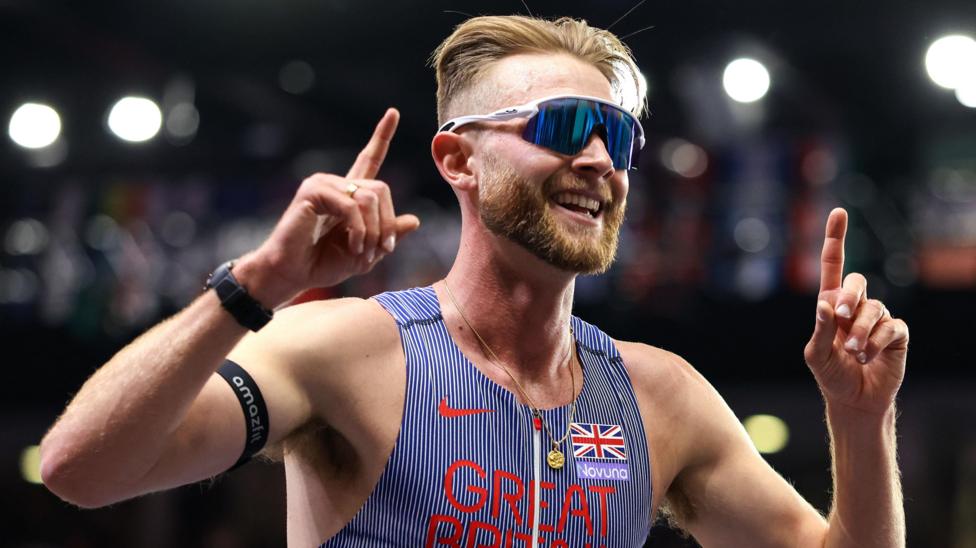
Speed Suits and Altitude Rooms: Inside Kerr's Record Bid
Josh Kerr is deploying cutting-edge tech and altitude training to shatter El Guerrouj's mile world record in London.